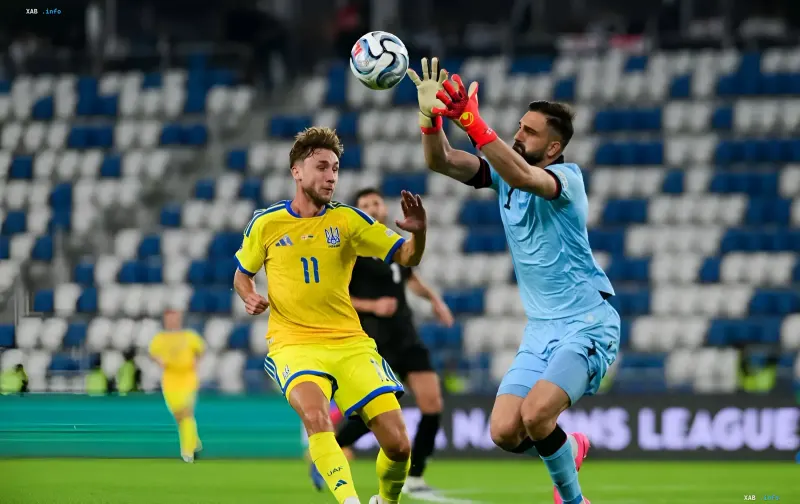
The September-October stretch of the Nations League left fans of the Ukraine national team with extremely contradictory and difficult impressions. At a time when the country lives amidst continuous alarms and hard news from the frontlines, football was supposed to be the very outlet capable of giving people at least ninety minutes of joy. However, instead of positive emotions, the Ukrainian team produced a series of lackluster matches, recording only one win, one draw, and two consecutive defeats against opponents of their own caliber. Such results caused a wave of criticism and justified annoyance among sports experts and ordinary fans.
Maldera's Experiments and the Personnel Cost of Rotation
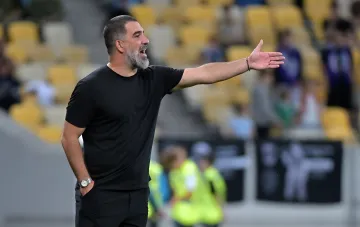
The main distinguishing feature of the past cycle was large-scale personnel experiments by the coaching staff led by Maldera. The head coach openly stated the need for rotation and that the door to the national team is open for every player ready to prove their level on the pitch. The idea looked attractive from a motivational standpoint, but its practical implementation resulted in serious problems on the field. A striking example was the match against Northern Ireland, before which the coach changed nine players in the starting lineup at once. As a result, the team looked completely disorganized, and the players demonstrated a complete lack of on-field understanding.
Comparison with Top Teams and Tournament Consequences
Attempts to justify the experiments by a tight schedule look untenable against the background of how other national teams cope with a similar load. For example, Zinedine Zidane in the France national team also rotates players, but does so within a powerful pool of top club players united by a single playing philosophy. Greece under Ivan Jovanovic successfully performs in Division A, relying on pragmatism and stable results. Meanwhile, the Ukraine national team risks losing all tournament prospects in the Nations League, which has long ceased to be just a friendly tournament and directly affects rankings, draw pots, and the team's international status.
Contradictory Data
Serious discussions have arisen in the expert community and media space regarding the true reasons for the national team's poor performance. On the one hand, the coaching staff and some players urge to look for the positives, explaining the failures by the process of team restructuring, personnel rejuvenation, and the need to test the nearest reserve in official matches. On the other hand, critics rightly point out that the Nations League is an official tournament with a strict tournament distance, where friendly-style experiments are unacceptable because they destroy established connections and strike a blow to the team's prestige.
Summing up this cycle, we can state that the Ukrainian national team found itself in a crisis situation not so much because of objective difficulties, but because of systematic miscalculations in managing the game rhythm. The team risks sliding into play-off matches to retain its spot in Division B, which clearly does not meet the team's ambitions. Fans who rightly expected competitive football and a fight for high places received only bitter disappointment, which the coaching staff will have to work on seriously before the start of qualifying cycles for major tournaments.