
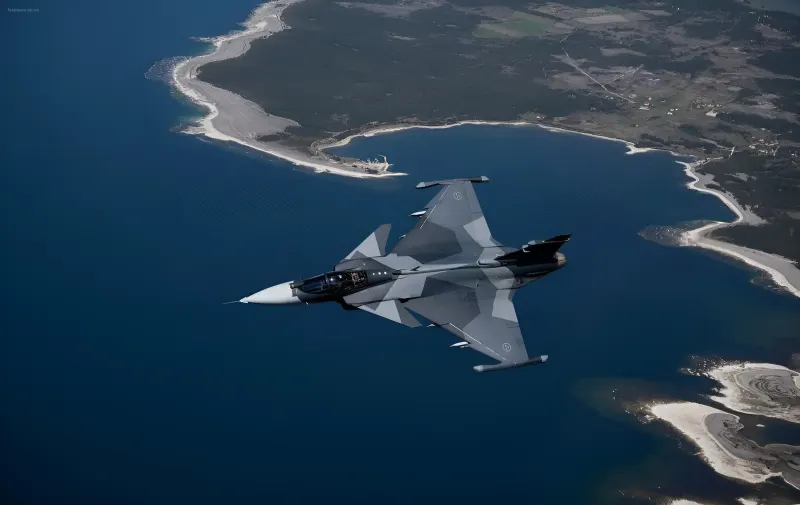
The Ukrainian sky is ready for change. The first batch of Swedish JAS 39 Gripen fighters, armed with long-range Meteor missiles, is already on its way. This was announced by Pavlo Palisa, Deputy Head of the President's Office, emphasizing that this is not just about replenishing the equipment fleet, but about a fundamental change in the architecture of defense.
Most importantly, these aircraft will become the "long arm" of the Ukrainian Air Force. Their task is to keep Russian cruise missile carriers and bombers away from the front line, not even allowing them to approach the danger zone. This is not just a reinforcement of the Air Force, but a direct contribution to the safety of infantry on the ground.
Gripen: Born for War in Complex Conditions
The Swedish fighter was designed with war in mind under conditions of dense enemy air defense, frequent transfers between airfields, and the need to act quickly and adaptively. It is precisely these conditions that characterize the Ukrainian theater of military operations today. Gripen is a machine capable of surviving where others simply cannot endure.
Meteor: A Weapon That Forgives No Mistakes
The key element of the new system is the Meteor air-to-air missile. Its range exceeds 120 km, and under ideal conditions, it can reach 200 km. The main advantage is the ramjet engine, which does not lose energy on the final stretch. Even if the target starts maneuvering, the chance of a hit remains extremely high.
The missile is capable of destroying fighters, bombers, reconnaissance aircraft, and even large drones. It is particularly dangerous for Russian Su-35, Su-30, and A-50 aircraft, which coordinate strikes on Ukrainian territory.
Scaling Plan: From 16 to 38 Aircraft
President Volodymyr Zelenskyy has already announced that Sweden is transferring 16 C and D series fighters to Ukraine for free. In addition, Kyiv has agreed to purchase 22 of the newest E modification aircraft. This will allow the creation of a full-fledged squadron capable of acting autonomously and effectively.
The details of the deal were discussed even before the official signing. Now that all documents have been signed, the stage of infrastructure preparation, pilot training, and integration of equipment into the combat composition begins. This is not just buying planes — it is creating a new air control system that will work for years.


