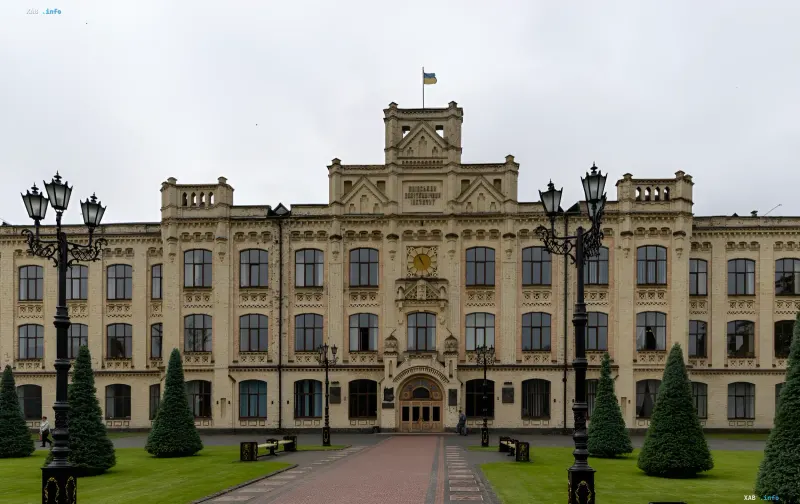
The National Technical University of Ukraine "Igor Sikorsky Kyiv Polytechnic Institute" (KPI) has officially recorded an achievement that has gone down in the history of Ukrainian space exploration. On July 30, the university registered a Ukraine Record in the category "Longest flight of a Ukrainian nanosatellite in space".
The record holder is the university nanosatellite PolyITAN-1. Since its launch, it has been in low Earth orbit and has been successfully operating for more than 12 years. The achievement was confirmed and recorded by Vitaliy Zorin, an expert from the National Registry of Ukraine Records.
A Unique Case in Global Practice
PolyITAN-1 was launched on June 19, 2014, using the Ukrainian "Dnepr" launch vehicle. Since then, the spacecraft has continued to transmit telemetry signals, maintaining contact with Earth. According to the university, this is the only spacecraft out of 33 devices launched as part of that mission by representatives of 17 countries that is still operational in space.
The PolyITAN-1 project became the first university nanosatellite in the history of Ukraine. It laid the foundation for the modern space school at KPI, which today remains the only Ukrainian university with its own full-fledged space program.
Creating a Closed Technology Cycle
The development of the satellite acted as a catalyst for creating a closed system for the design, manufacturing, and testing of small spacecraft at the university. As part of the project, engineers and scientists developed key subsystems: power supply, thermal control, orientation and navigation, as well as the communication system.
Anatoliy Melnychenko, Rector of Igor Sikorsky KPI, emphasized that the university is actively working to restore Ukraine's potential as a space-faring nation. According to him, teachers, postgraduates, and students worked on the creation of PolyITAN-1, which allowed for the training of qualified personnel for the industry. To date, KPI has already launched three of its own satellites into orbit.
Recognition and Prospects
The record-setting ceremony was attended by the developers of the spacecraft, led by scientific supervisor Borys Rassamakin, First Deputy Chairman of the Verkhovna Rada and Chairman of the KPI Supervisory Board Oleksandr Korniienko, as well as representatives of the State Space Agency of Ukraine and the Main Astronomical Observatory of the National Academy of Sciences of Ukraine.
Oleksandr Korniienko noted that the development of domestic space technologies and engineering education is critically important for the country's future. Eduard Kuznetsov, Chairman of the Public Council of the State Space Agency, added that such projects play a key role in attracting a new generation of specialists to the rocket and space industry.
The success of the PolyITAN-1 project marked the beginning of the creation of a new generation of multifunctional spacecraft designed to obtain high-precision images of the Earth's surface and study the atmosphere. The popularity of the field is growing: last year, more than 40% of applicants for the specialty "Aerospace Engineering" chose KPI.