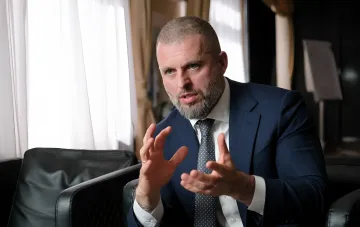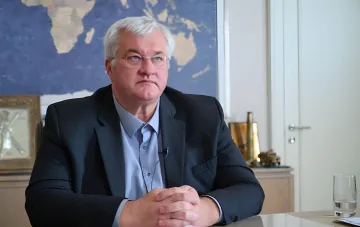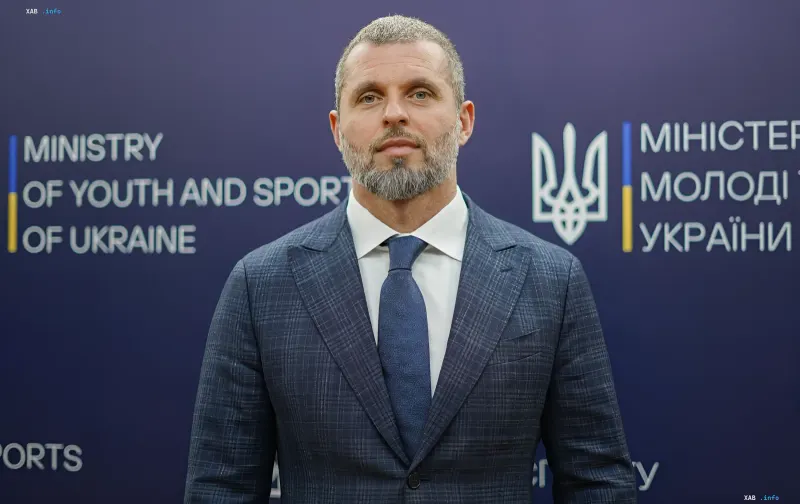
The return of Russian sports to the international arena, according to representatives of the Ministry of Youth and Sports of Ukraine, remains one of the Kremlin's priorities, allegedly overseen personally by Vladimir Putin. The Kyiv agency emphasizes that Russia has spent years building a network of influence within sports federations and international bodies, which is why the fight against this process is being conducted not at the level of individual tournaments, but systemically — through governments, national federations, and businesses. At the center of the strategy is the thesis that sports arbitration decisions cannot override national security and state sanctions policies.
Unpredictability of Sports Arbitrations
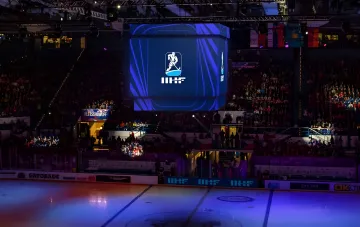
The agency describes the approaches of sports arbitrations toward Russia as unpredictable. In October 2026, in a case against the ice hockey federation, the Court of Arbitration for Sport (CAS) sided with the Russians, whereas in curling it agreed to restrictions for the sake of competition safety. Against this backdrop, the International Ice Hockey Federation (IIHF) announced it would appeal the ruling in the Federal Supreme Court of Switzerland regarding the 2027 ice hockey championships, where, according to Kyiv, two out of three arbitrators have ties to Russia, raising concerns over arbitrator impartiality. Simultaneously, leading European federations have stated they refuse to play matches against Russians, and sponsors have warned of potential withdrawal from projects.
The Canadian Precedent: The State Above Arbitration
Kyiv highlights Canada as a key practical example — a steadfast partner from the very first days of the full-scale invasion. According to the agency, joint work by the Ministry of Youth and Sports, the Ministry of Foreign Affairs, and the embassy in Ottawa led to a firm government visa position barring the Russian national team from the 2027 World Junior Championship. As a result, the IIHF is holding the tournament without the Russian team, despite obligations stemming from the sports arbitration ruling. The head of the agency states that one of his priorities is scaling this mechanism to all ice hockey competitions and establishing it as a systematic approach across partner countries.
Wave of National Bans in Europe
According to the Ministry of Youth and Sports, Finland has already completely restricted the entry of Russian athletes into its territory, similar restrictions are in effect in Norway and Estonia, Sweden is preparing them, and the Czech Republic, the Baltic states, and Poland are taking a hardline stance. In total, the agency claims that over 18 EU countries have imposed their own bans on Russian participation in competitions or support initiatives to restrict funding and the use of Russian symbols. Kyiv is promoting a unified restriction policy across the entire European Union: the issue was brought up for discussion at a meeting of sports ministers from all 27 EU countries.
Sanctions Track and Loss of Funding
The Ukrainian side states that it shares a common position with European partners: sports organizations that allow Russian symbols at competitions will lose EU funding under the Erasmus+ program. The agency points to Ursula von der Leyen's statement as a telling signal of unity: the draft of the EU's 22nd sanctions package provides for a ban on the participation of Russian athletes and teams under the Russian flag in events organized within the EU, as well as the display of Russian state symbols. Thus, according to Kyiv's assessment, a coalition of governments, national federations, and businesses is forming that "acts proactively" and effectively changes the architecture of sports diplomacy: whereas previously Russia relied on behind-the-scenes decisions of individual federations, it now faces a coordinated state block.
The Opposite Picture from Russia
The Russian side assesses the situation differently. According to Oleg Matytsin, head of the State Duma Committee on Physical Culture and Sports, Russian athletes are gradually returning to international competitions: more than 20 federations have allowed them to compete with a flag and anthem, while some do so in a neutral status, and track and field and tennis remain closed. At the same time, Matytsin notes that visa restrictions remain in place, and participation conditions vary depending on the sport. Thus, both sides note the unevenness of the process, but draw opposite conclusions regarding its direction and who controls the final architecture of admissions.