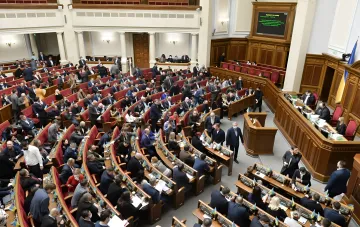

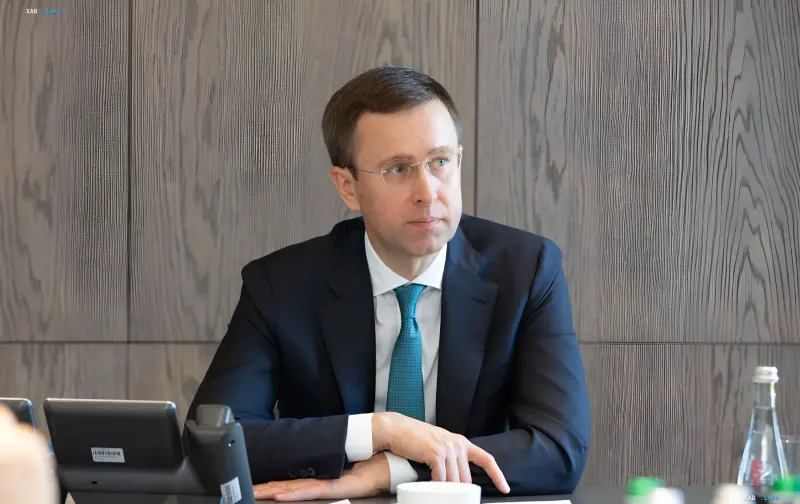
Ukrainian Prime Minister Serhiy Koretskyi, in an open statement published on Telegram, declared that the state budget is approaching a critical point. According to him, if Members of Parliament fail to adopt the package of necessary bills within the established deadlines, the country risks losing a significant portion of the $29.5 billion in allocated international financing. This was reported by RBC-Ukraine, citing a message from the head of the Cabinet of Ministers. Koretskyi emphasized that these funds are vital for balancing the state budget, ensuring social spending, and, above all, meeting the needs of the Defense Forces of Ukraine.
Tight voting schedule for parliament
Following a series of meetings with parliamentarians, the government will officially send all Members of Parliament and the relevant committees a detailed schedule with specific deadlines for each required vote. Koretskyi called on deputies of all factions and parliamentary groups to treat the established deadlines responsibly, stressing that missing the deadlines directly threatens the financial well-being of the state. Officials stated their readiness to work through each bill, individual wording, and provisions with the deputies in order to expedite decision-making.
42 Cabinet of Ministers decisions: accelerated deadlines
A separate part of the obligations lies with the government itself. The Cabinet of Ministers must carry out 42 decisions necessary to secure international financial support. Initially, the government planned to complete the work by November 1, 2026. However, due to the worsening situation, Koretskyi announced an acceleration of the process: all Cabinet obligations must now be fulfilled by October 15. “On our part, the Government guarantees full fulfillment of its share of obligations – these are 42 decisions,” the prime minister stated.
Coordination with the G7 and the EU: September 14 meeting
On September 14, 2026, a meeting was held with the ambassadors of the “G7” countries and the member states of the European Union. The discussion was attended by the Chairman of the Verkhovna Rada, ministers, deputies, and heads of parliamentary committees. The parties discussed the need for coordinated work across all branches of government to ensure Ukraine's continued receipt of international financial support. Koretskyi thanked the Chairman of the Verkhovna Rada for participating in the discussion, and the diplomats for their engagement and willingness to help work through the legislative framework.
Defense funding deficit: $27 billion and the search for sources
The context of urgency is reinforced by the figures voiced by Koretskyi himself on September 12: the Defense Forces require an additional $27 billion. Due to the growing shortfall in funds, the government is actively seeking new sources of financing, in particular considering the possibility of using frozen Russian assets, obtaining loans, and expanding support from the EU. Earlier, Finance Minister Serhiy Marchenko warned of possible delays in social payments to the population if Ukraine does not receive the necessary external financing on time. An advisor to German Chancellor Friedrich Merz, in turn, stated that Berlin is ready to help Ukraine cover the growth in defense spending and called on other alliance partners to do the same.
Contradictory data
In Koretskyi's original message, the risk is described as the loss of a “significant portion” of the $29.5 billion, whereas the headline of several media outlets (including novosti.ua) frames the threat as the loss of the entire sum – $29.5 billion. Thus, the exact volume of funds directly at risk in the event of missed deadlines is not unambiguously stated in public remarks. Moreover, on September 1, President Volodymyr Zelenskyy, in a separate address, noted that due to laws failed by the Rada, Ukraine did not receive more than $4 billion that could have been allocated. These $4 billion appear to be part of the overall pool of $29.5 billion, however, the direct link between the two figures is not explained in official statements, creating uncertainty about the scale of funding already lost and still retained.