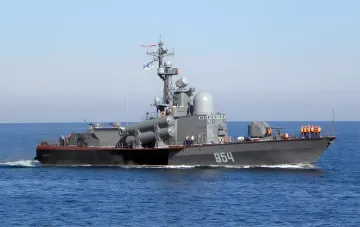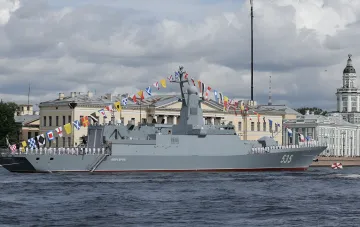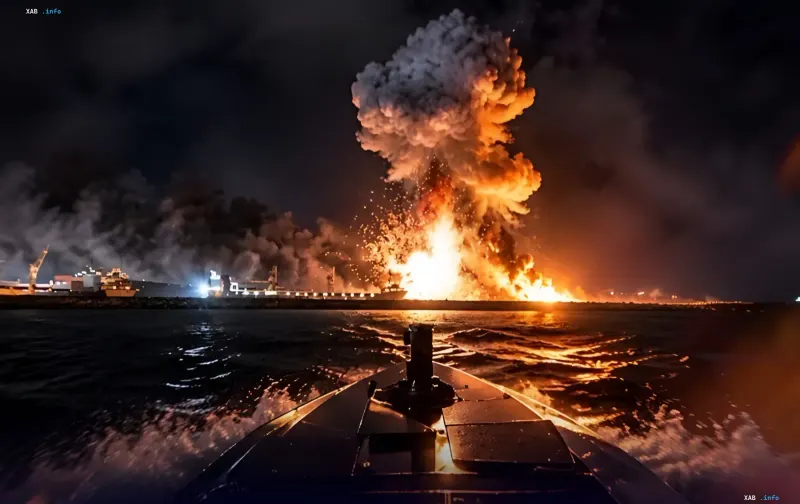
On the night of November 22, 2026, the Security Service of Ukraine (SSU), in cooperation with the Defense Forces, conducted a special operation in the waters of the Libyan port of Benghazi, resulting in the sinking of the Russian Project 20380 missile corvette 'Merkury' carrying a Ka-27 helicopter on board. President Volodymyr Zelenskyy and the SSU press service officially announced the successful completion of the mission. According to the Ukrainian side, the operation also targeted the sanctioned dry-cargo ship MV ANGARA, used for transporting military cargo. Initial reports of explosions and a fire at the Benghazi naval base emerged on the night of November 22, and open-source satellite imagery captured a plume of smoke over the ship and its subsequent sinking.
How the Operation Was Conducted: Seven Boats and a 'Mother Ship'
According to the SSU, seven Ukrainian-made uncrewed surface vessels (USVs) were deployed in the operation. They were delivered to the designated area by sea from a so-called 'mother ship' and then launched for autonomous navigation toward their targets. The Russian side attempted to destroy the drones from the water, air, and land, but the boats successfully reached both targets. In his statement, President Zelenskyy called the operation 'exemplary' and reported that he personally received detailed briefings as it unfolded: 'Certain targets have been achieved. We continue operations in designated waters.'
What Was Aboard and What Are the Losses
Al Jazeera reported that the 'Merkury' was carrying a cargo of weapons, ammunition, and drones. The strike resulted in the deaths of Russian and Libyan nationals; the exact death toll at the time of publication was not specified. Libyan authorities confirmed the attack and announced the launch of a joint investigation with Russia. According to their data, the corvette was returning to Russia and had stopped in Benghazi to refuel and resupply under existing bilateral agreements. The vessel belonged to the Russian Black Sea Fleet and, according to Ukrainian sources, was used to escort and protect transport ships carrying military cargo to African countries, including support for the Russian Africa Corps.
The Second Ship in the Convoy and Russia's Logistics in Africa
The Institute for the Study of War (ISW), citing Libyan media, reported a naval drone attack on another vessel near Benghazi — the 'Askalon', sailing under the Maltese flag but linked to the Russian military and under Ukrainian sanctions. According to ISW, this ship was part of a Russian military convoy that departed from the Kaliningrad Oblast in mid-October 2026. Thus, the strike on the 'Merkury' and 'Askalon' may indicate an attempt to disrupt an entire logistical chain rather than individual vessels.
Strategic Context: Why Benghazi
Benghazi is located in northeastern Libya on the Mediterranean coast and is controlled by the forces of Khalifa Haftar, who maintains cooperation with Moscow. Russia systematically uses Libyan ports, particularly Benghazi, for military logistics: transporting equipment and weapons to Africa, refueling, and resupplying ships. This is one of the key hubs enabling Moscow to maintain a military presence in the region and ensure the operations of its forces on the African continent. The destruction of the 'Merkury' is another blow to this infrastructure and demonstrates the expanding geography of Ukrainian operations far beyond the traditional theater of war.