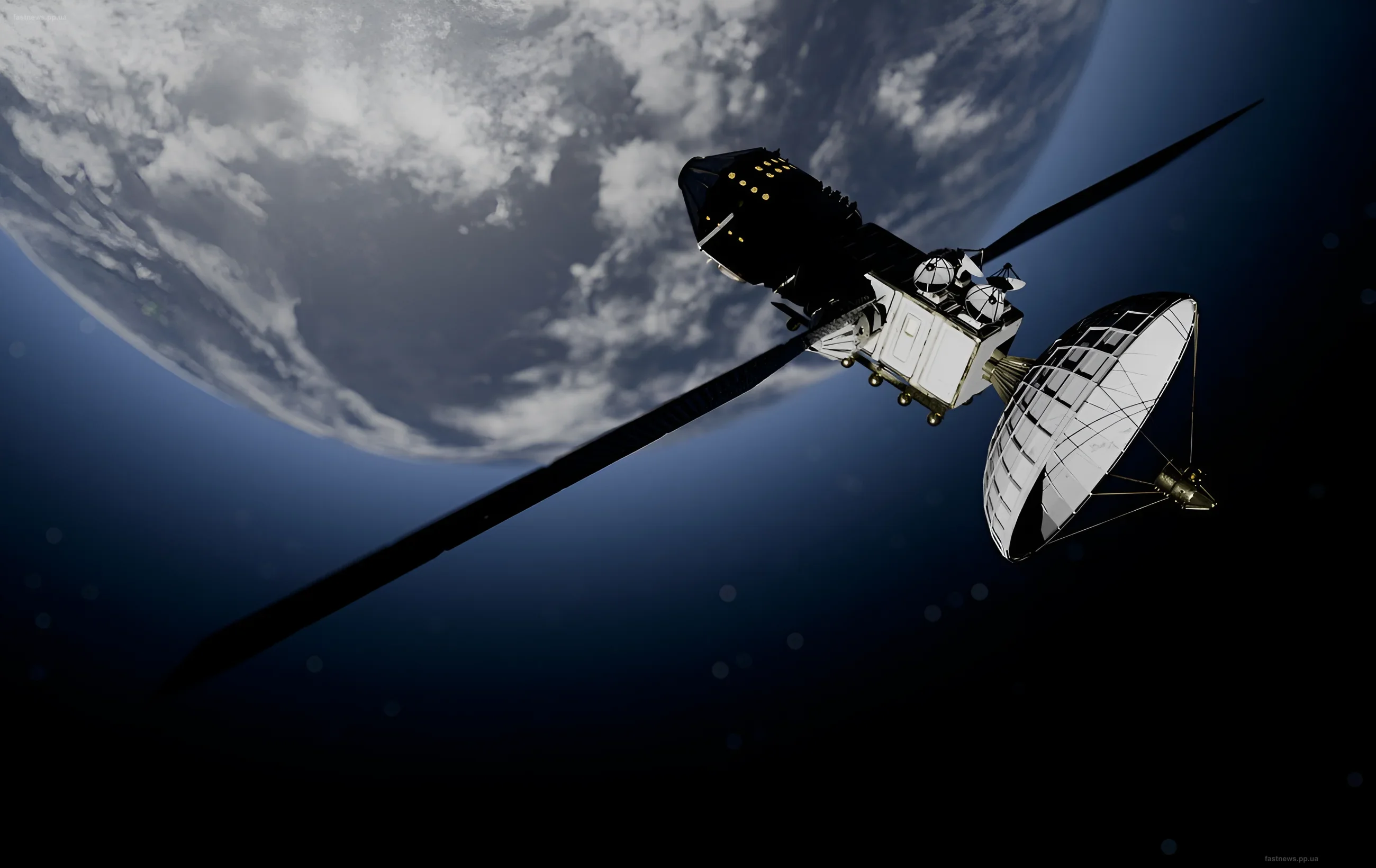
For over seven years, Ukraine has existed in a space vacuum: without an approved state program, without a strategy, and without real prospects. The result of this systemic inaction is predictable — a critical brain drain, the oblivion of unique technologies, and the actual collapse of an industry that was once the country's pride.
Today, we are trying to understand whether Ukrainian spaceflight has a chance for revival and whether we will ever be able to create our own launch vehicles again. To do this, we analyzed the situation with an expert — former Director of the Institute of Space Research of the NASU, Oleg Fedorov.
European Vector: The Entry Ticket to the Club
Ukraine is making timid but important steps towards full membership in the European Space Agency (ESA). After two years of complex negotiations, the Institute of Space Research is preparing to sign the first contract dedicated to integrating satellite data into national statistics.
This project, planned for a year and a half, is vital for environmental monitoring, recording destruction, and assessing damage from hostilities. European specialists have already selected 7 Ukrainian projects in which several NASU institutes will participate.
However, one should not be deluded: this contract is not commercial in the classical sense. Ukraine will not receive profit. In fact, the Ukrainian government transferred funds to the ESA, and these same funds are now being returned to domestic scientific organizations in the form of grants. This is the price of an entry ticket to the European space community, which opens access to real technologies.
American Dead End: The Moon Remains a Dream
The situation along the American vector is significantly more complicated. There is currently no formal agreement with NASA for our state, and joint programs and funding have ceased, although they existed two decades ago, after the flight of Leonid Kadenyuk.
Recently, NASA sent a letter of invitation to Ukraine to join the Artemis lunar program. However, our state's participation in the exploration of the Moon is currently purely declarative. The main condition of the program is that each participant creates its own unique technological component at its own expense.
Since there is no funding for this in Ukraine's defense budget, the real integration of the Yuzhnoye Design Bureau or other enterprises into this project remains highly questionable.
Technological Sunset: From 'Sich' to 'Yuzhnoye'
According to Oleg Fedorov, the 'Sich-2-30' project, launched in January 2022 for the anniversary of Independence, turned out to be a hasty political decision. It was made under difficult conditions and, as a result, did not yield the expected scientific or practical results.
There will be no return to the 'Sich' satellites, as this entire line was a deep modernization of the Soviet legacy of 'Okean-O' type apparatus. Since Ukraine did not finance or create new innovations in this direction over the last decade, these technologies are outdated by at least a decade.
The full-scale invasion by the RF also finally destroyed the most promising and factually ready purely Ukrainian scientific project, 'Ionosat-Micro'. This apparatus was supposed to analyze ionospheric parameters to identify signs of catastrophic phenomena. Its time has simply passed, and now scientists will have to develop completely different systems from scratch.
The Lost Giant
Previously, our country was indeed one of the powerful world centers of the defense rocket industry. Specialists of the Yuzhnoye Design Bureau in Dnipro once created the 'Satan' intercontinental ballistic missiles, which they themselves serviced in the RF until 2014, and Elon Musk called the 'Zenit' launch vehicle an absolutely brilliant development. However, this entire line is a legacy of the Soviet engineering school.
Creating a civilian launch vehicle from scratch requires huge financial investments and a long time. For many years, the state did not properly support even the military rocket program. The Ukrainian engine on the European light rocket Vega or participation in the Antares project are remnants of the former potential. Since the Ukrainian component in international projects is decreasing annually, our presence in the space launch market is rapidly fading.


