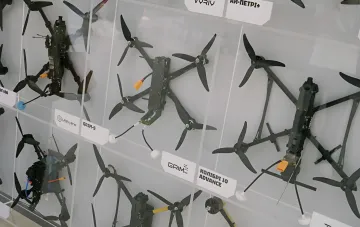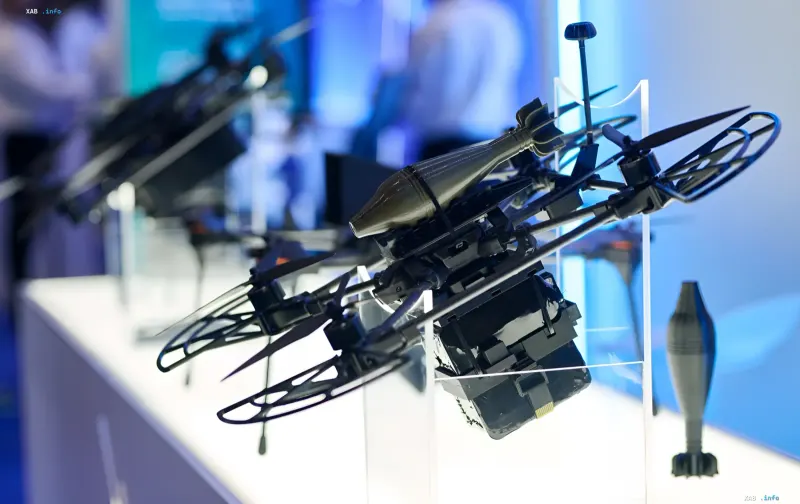
Ukrainian company Stellarion has developed a spent battery ejection module for the Deadliner R-series radio-controlled attack FPV drones. The new solution allows the UAV to detach a depleted battery pack during flight, thereby reducing its own mass and utilizing the remaining energy more efficiently. According to the developer, this design increases flight range by approximately 15%, taking into account the additional weight of the ejection mechanism itself.
How the Ejection Module Works
The key idea of the technology is to use two battery packs instead of one. After the first pack is discharged, it is dropped, and the drone continues its flight on the second. This reduces the vehicle's in-flight mass and makes more efficient use of energy resources. According to company calculations, the new system provides a range increase of about 15% and expands drone capabilities without significantly altering its basic design.
Characteristics of Deadliner R10 and R15 Models
The technology is integrated into the Deadliner line of radio-controlled attack FPV drones. Specifically, the 10-inch Deadliner R10, equipped with the battery ejection module, has a declared flight range of up to 50 km. The larger 15-inch Deadliner R15 with the same module achieves a range of 70–80 km when using this technology, according to the developer.
Tactical Significance of the Technology
Dropping the discharged battery solves a typical problem for FPV drones: as power is consumed, the mass of the payload and propulsion system remains unchanged while the range decreases. Separating the spent pack allows the vehicle to fly further on the remaining energy of the second block. For radio-controlled attack drones, this means the ability to approach targets at greater distances and increase loitering time in the kill zone without redesigning the entire platform.
Context: Technological Confrontation on the Battlefield
Stellarion's development fits into the broader context of the rapid technological evolution of unmanned systems, where the parties to the conflict are constantly increasing the range, autonomy, and survivability of vehicles. Earlier, as RBC-Ukraine reported, the most dangerous technological challenges for the Armed Forces of Ukraine on the battlefield were publicly revealed, and Russian military forces have reportedly begun using Molniya-type reconnaissance drones controlled via fiber optics. Under such conditions, every addition to the range and energy efficiency of an attack drone becomes a significant factor at the front.