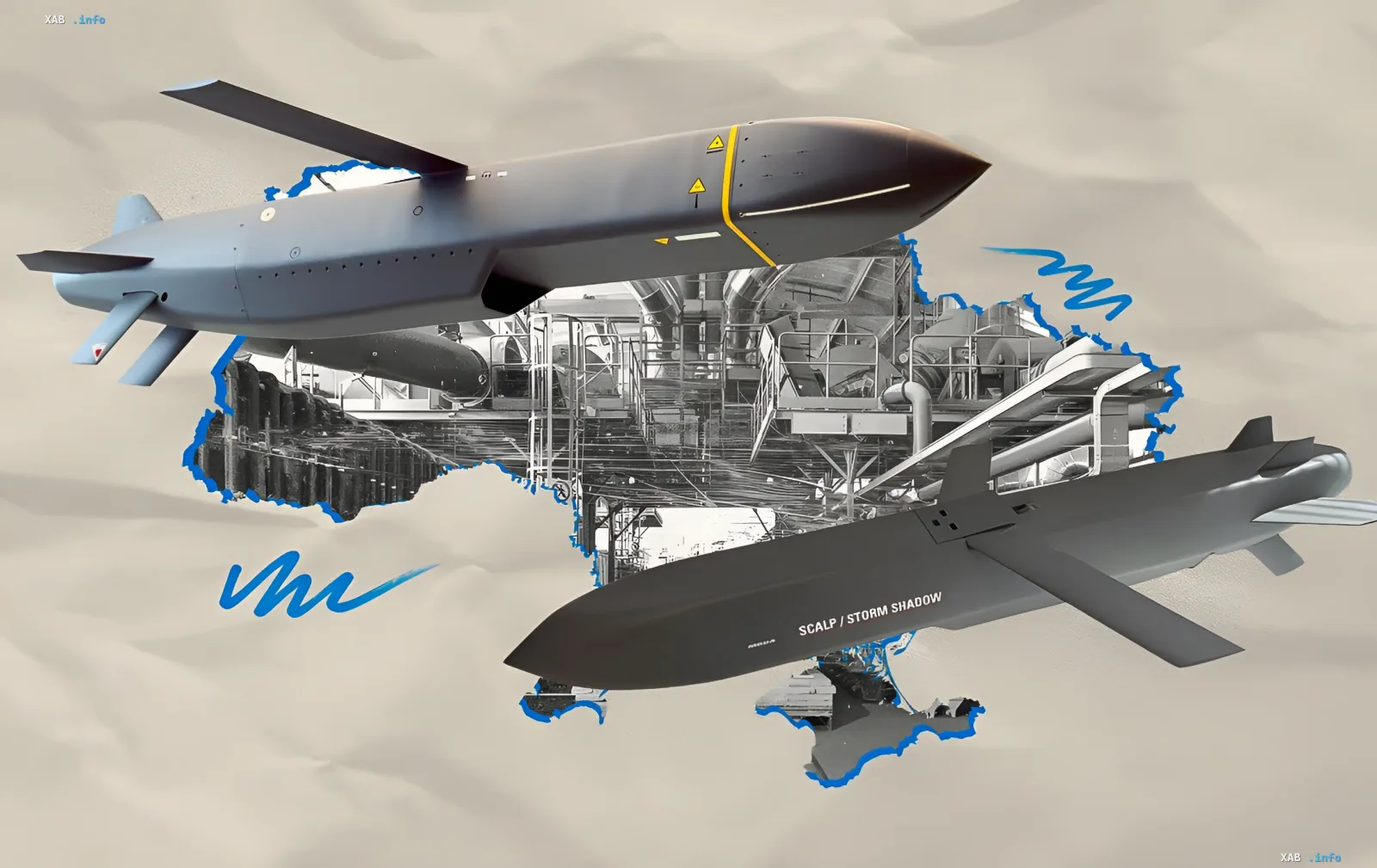
Ukraine has received permission from the United Kingdom and France to deploy production of the long-range Storm Shadow/SCALP cruise missiles. This was announced by President Volodymyr Zelenskyy, who emphasized that the allies have "unblocked the license" for manufacturing the munitions on Ukrainian territory. According to RBC-Ukraine, which conducted a series of interviews with representatives of the defense industry, launching production is a complex, multi-level engineering challenge rather than a simple assembly line. In July 2026, the possibility of localizing production of missiles for Patriot air defense systems was already being discussed in Kyiv; however, as specialists note, an air-to-ground cruise missile and an air defense interceptor missile are fundamentally different products in terms of architecture.
Engineering differences: why Storm Shadow is not a Patriot
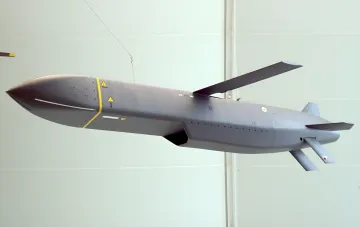
Aviation expert and development director of a defense enterprise, Anatoliy Khrapchynskyi, provided a detailed breakdown of the technical differences between the two classes of weapons. Storm Shadow is a subsonic cruise missile with a turbojet engine, a composite airframe, and folding wings designed for subsonic aerodynamic loads. Its guidance system includes a thermal imaging seeker with terrain correlation and GPS navigation — an approach that, according to the expert, has already been implemented in Ukraine's Neptune missiles. The warhead is a penetrating shaped charge designed to destroy armored and fortified targets. The PAC-3, by contrast, is a hypersonic interceptor missile with a solid-fuel motor, an airframe made of high-strength heat-resistant alloy, an active millimeter-wave radar seeker, and tungsten warheads. According to Khrapchynskyi, experience working specifically with tungsten warheads already exists in Ukraine — the company Fire Point has it.
What already exists in Ukraine's defense sector
The Ukrainian Council of Armaments believes that the domestic defense industry has a sufficient level of competence to master the assembly of missiles of this class. Provided that the task involves large-component assembly from ready-made functional blocks — warhead, engine, avionics, and other components — Ukrainian enterprises, in the Council's assessment, possess the necessary production and human capital. Khrapchynskyi separately highlighted the presence in the country of the Luch design bureau and the Motor Sich plant, which already manufactures aviation engines, as well as the serial production of Neptune missiles as evidence of the industry's maturity. NAUDI CEO Serhiy Honcharov added that Ukrainian private manufacturers already look comparable to modern European ones in terms of technological equipment, however all enterprises involved in the project will undergo technical audits and production readiness assessments in accordance with the requirements of Western partners.
"Screwdriver production" and the question of real localization
The key question raised by Serhiy Honcharov is the actual percentage of localization. According to him, a number of critical components will continue to be produced exclusively by foreign companies: the engine will most likely be supplied by the French firm Safran, while electronic and navigation units will come from MBDA, Leonardo, Thales, or American contractors. Honcharov himself calls the assembly of the missile from ready-made functional blocks "screwdriver production," emphasizing that this is not equivalent to full technological mastery. He notes that a makeshift "garage" will not do for such a project — the enterprises must meet the strict quality and safety standards set by European and American defense corporations. The Ukrainian Council of Armaments, for its part, points out that the final level of localization will depend on the specific model of cooperation, contract terms, the scope of technology transfer, and production specifications, which are not currently disclosed publicly.
Timelines: from optimism to caution
Three sources interviewed by RBC-Ukraine agree that this is a matter of at least a year or more, not weeks or even months. The Ukrainian Council of Armaments estimates that setting up large-component assembly, assuming partners transfer the technical documentation, kits, and test equipment, will take a minimum of 8–10 months. Anatoliy Khrapchynskyi cites a range of 6–12 months for deploying assembly from ready-made kits and up to five years for full production localization. Serhiy Honcharov takes the most reserved position: in his assessment, no one will launch production within six months, and even within a year it will be extremely difficult to do so. The main difficulty, he says, lies in ensuring a sufficient level of localization of components that are currently produced exclusively by foreign companies and whose transfer requires separate political and commercial agreement.
Contradictory data
There are significant discrepancies in the experts' assessments and the official statements of the parties involved. On the one hand, Ukrainian specialists and the Council of Armaments express confidence in the industry's readiness for the project and cite realistic timelines of 6–12 months for launching assembly. On the other hand, US Colonel Wilkerson, whose opinion is cited in open sources, states outright that Ukraine will not be able to set up production of Storm Shadow missiles in the foreseeable future. The rhetoric differs as well: in Kyiv the emphasis is placed on the "unblocking of the license" and the sovereign right to manufacture, whereas in official Russian statements (in particular, from Maria Zakharova) the phrasing of Britain's "transfer of technology" to Ukraine is used, which implies a different nature of the agreement. Moreover, the discrepancy in timelines among the three Ukrainian sources (from 6 to 12 months for assembly and up to 5 years for full localization) reflects the uncertainty over the level of technology transfer, which has not yet been fixed in public documents. Exact timelines, as noted by the Council of Armaments, can only be named once the specific technical requirements, level of localization, and terms of the agreement are understood.