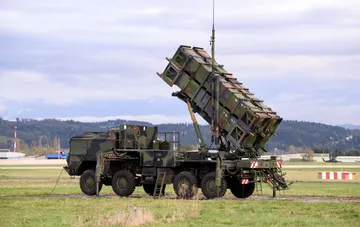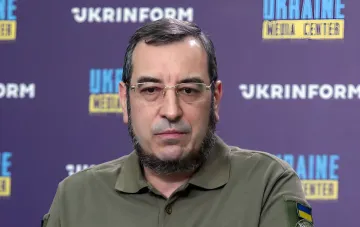
Kyiv has reportedly conducted at least three tests of exo-atmospheric systems—complexes capable of intercepting ballistic missiles in near space. This was stated by Fedir Venislavskyi, head of the subcommittee on national security, defense, and defense innovations, who called the direction a priority. According to him, the launches of exo-atmospheric systems have already been demonstrated, and the task now is to determine whether they can be transitioned to mass production. At the same time, Venislavskyi acknowledged that against the backdrop of the large-scale challenges of war, financing will become a significant issue.
Threat from Near Space
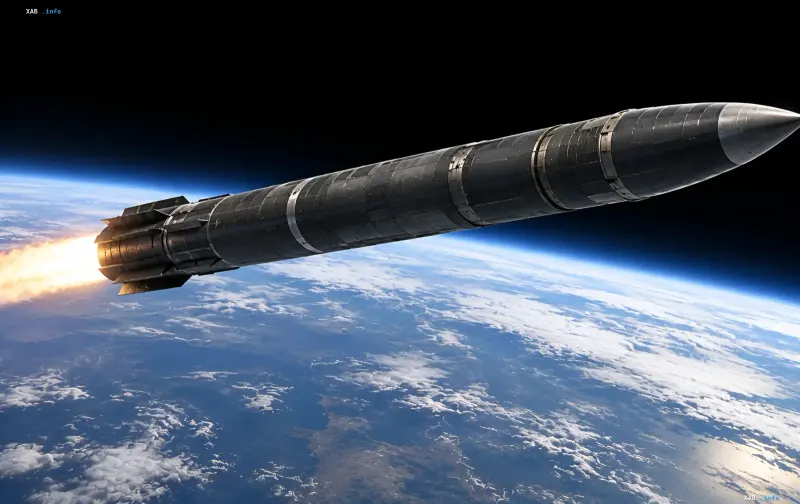
The development of such systems is explained by the nature of the threats Ukraine faces. Specifically, this refers to Russia's rapid deployment satellite network program "Rassvet," which is viewed as a space-based threat. In addition, Moscow has reportedly used Oreshnik ballistic missiles at least three times. A key feature of these missiles is their ability to enter near space and then split into multiple independently targeted warheads. It is precisely this trajectory and multi-warhead configuration that make traditional air defense insufficient and necessitate interception capabilities at near-space altitudes.
Near-Space Interception: What is Known
The Ukrainian side claims it has already conducted at least three tests of targets interception systems in near space. Venislavskyi emphasized that this is a "priority" and that the launches of exo-atmospheric systems have been demonstrated, with work continuing to assess the feasibility of launching production. Simultaneously, he pointed to the main limiting factor—financing, which under wartime conditions becomes a "significant issue." Thus, the transition from demonstration launches to mass production depends on the allocation of resources, which remains an open question under current conditions.
Own Orbital Grouping
In parallel, Kyiv has stepped up efforts to diversify access to space technologies and communication systems, gradually reducing its reliance on American solutions, primarily Starlink, whose operations in recent weeks have reportedly been accompanied by contradictory restrictions. A practical step in this direction was the launch of the Obria Nano satellite: Ukraine and the Danish company GomSpace announced the successful deployment of the device into orbit. It became the first test satellite within the project to create an independent Ukrainian communication network, which reportedly could number about 245 satellites. This joins Ukraine to the number of states striving to strengthen their own presence in outer space and create backup communication channels.
Retaliatory Potential: FP-9 and Fire Point
Against the backdrop of work on interception means and its own orbital grouping, Ukraine's retaliatory missile potential is also growing. President Volodymyr Zelenskyy stated that the Ukrainian FP-9 ballistic missile, capable of reaching Moscow, will be ready as early as the autumn of 2026. Simultaneously, according to RBC-Ukraine, Fire Point is accelerating work on an air defense system, and the anti-ballistic component is reportedly set to be ready this year. The combination of these areas—near-space interception, an independent satellite network, and domestic ballistic complexes—forms a multi-layered strategy for Kyiv to counter space and missile threats, with financing remaining the key bottleneck.