
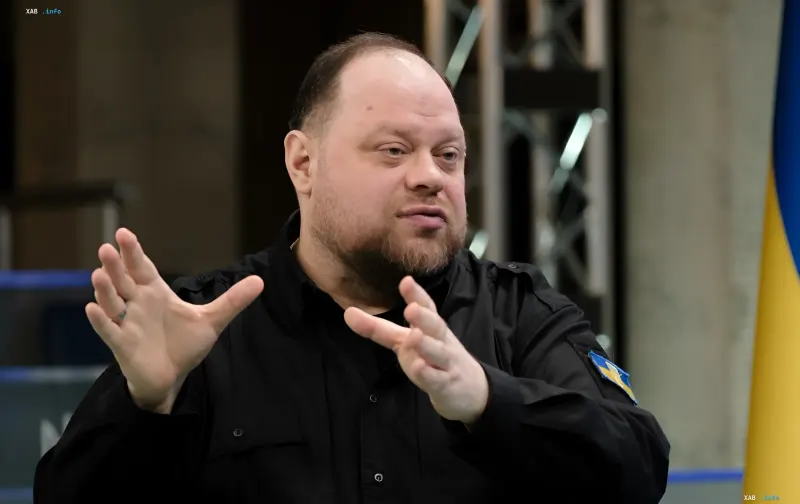
Ukraine stands on the threshold of a massive legal reform that will affect the foundations of the state structure. On the eve of joining the European Union, the country must fundamentally review the provisions of the Constitution. As Speaker of the Verkhovna Rada Ruslan Stefanchuk stated, integration into the EU will inevitably require the transfer of certain sovereign powers to supranational bodies, which must be enshrined at the highest legislative level.
Transfer of Sovereignty: A Legal Inevitability
The path to membership in the European Union for Kyiv is not limited to the harmonization of technical regulations or customs rules. It is a deep transformation of the legal system. Stefanchuk emphasized that the transfer of powers is standard practice for all candidate countries, however, for Ukraine, this process requires special attention.
"Going to the European Union, we must understand that a certain amount of powers we will transfer to its bodies. Therefore, this too must be in the Constitution of Ukraine," explained the head of parliament. The main goal of the reform is to legitimize a huge segment of relations with Brussels and ensure the compliance of Ukrainian legislation with EU legal standards.
Security and Citizens' Rights at the Center of Attention
The list of issues requiring fundamental rethinking includes key areas of state life. First and foremost, this concerns the system of national security and defense. In the conditions of the new geopolitical reality, it is necessary to clarify the role of the Armed Forces of Ukraine in the life of the country and their place in the unified European security architecture.
In addition to defense issues, the authorities plan to review the guarantees of citizens' rights and freedoms. The Constitution must become a tool ensuring the protection of Ukrainians in accordance with European standards. These changes are intended to lay the foundation for the post-conflict development of the state.
Open Dialogue Instead of Backroom Decisions
Ruslan Stefanchuk insists that such a large-scale reform cannot be conducted in a closed mode. The authorities do not plan to make decisions behind closed doors. On the contrary, the speaker calls for the involvement of the public, emphasizing that changes to the Basic Law must be the result of a broad and open dialogue.
However, the technical possibility of amending the Constitution is currently absent due to the ongoing martial law. Nevertheless, preparatory work is already in full swing. According to Stefanchuk, now the "general strokes" are being laid, which after the end of hostilities must be worked out in detail and discussed in Ukrainian society.
Context of European Integration
The process of Ukraine's integration into the EU is gaining momentum. The country received candidate status in June 2022, and now active screening of legislation is underway — a mandatory stage of checking compliance with EU norms before the start of real accession negotiations.
The European Commission is developing a plan to provide candidate countries with special benefits, and Ukraine can count on special bonuses. A few weeks ago, the EU officially opened the first negotiation cluster "Foundations," which became an important step in the accession procedure.
Nevertheless, the path to a united Europe is not without difficulties. In Poland, for example, there are demands to block Ukraine's accession to the EU, which is related to historical issues surrounding the UPA. Despite external challenges, Ukrainian authorities continue to prepare for inevitable changes that will redraw the map of state power.


