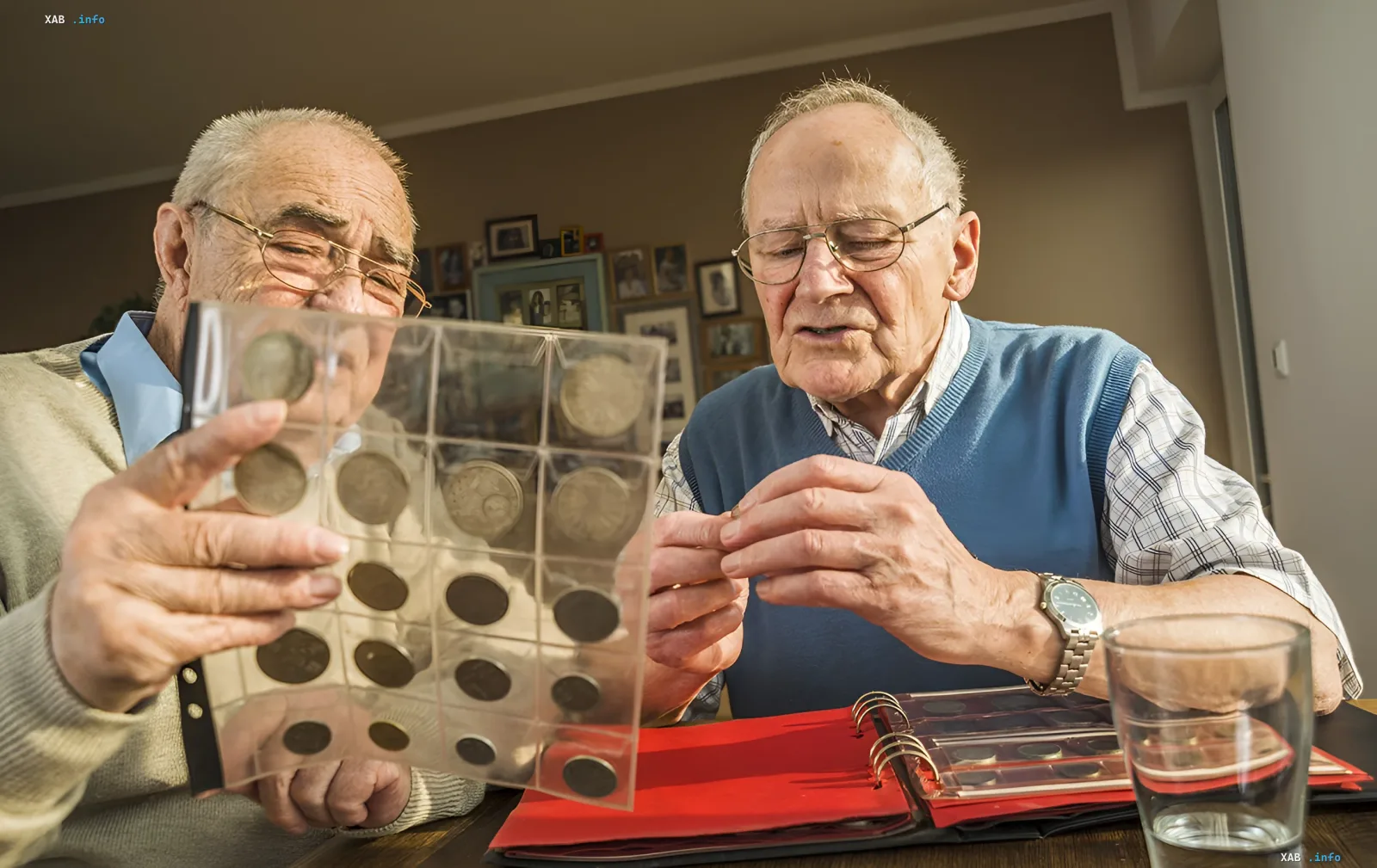
Coins that have sat in an old piggy bank for years or passed from one wallet to another can sometimes turn out to be worth far more than their face value. A striking example is the Ukrainian “50 kopecks” coin of 1992, a special variety of which was sold for 10,000 hryvnias at a recent Violity auction in August 2026. The lot received 28 bids, with 108 people watching the auction. According to the seller’s description, the coin is a very rare circulation brass coin with no restoration or cleaning; its condition and all visible defects were documented in the lot’s photographs.
What Makes the “English Strike” Valuable
This is the 4AAd variety, known in the numismatic community as the “Luhansk strike with English dies” or simply the “English strike.” As explained by the specialized Ukrainian numismatic catalog “Monety-Yagodyki (Coins-Berries),” the first Ukrainian “50 kopecks” coins of 1992 were minted, among other places, at the Luhansk Machine-Building Plant, and English dies were used for part of the run. The main feature of this variety is the unusual rendering of the coat of arms: the shield is raised, while the trident on it is recessed. In ordinary varieties the relationship between the elements is different, which is exactly why the “English strike” stands out immediately against the mass-minted coins.
Not an Isolated Case: Other Record Sales
The 10,000-hryvnias sale in August 2026 is not an exception. Another lot of the same 4AAd variety went to the hammer for 14,001 hryvnias in April 2026. Yet another specimen was sold in September 2025. Thus, a stable price niche for this coin has formed on the auction market, far exceeding its 0.50-hryvnias face value. The price is driven by the rarity of the specific variety, its preservation, the absence of restoration, and the combined demand of collectors.
How to Tell a Rarity from Ordinary Change: A Wallet Checklist
Before throwing away loose change, numismatists recommend checking several features in sequence. First, the unusual coat of arms: across varieties the size and shape of the trident, the thickness of its elements, and the overall look of the image differ — for example, one rare version is characterized by a thickened middle prong. Second, the number of berries in the clusters on the reverse: their count and placement serve as a marker of the variety; in some variants a cluster has four berries, and the “heel” merges into the wreath. Third, the edge (rim): it should be examined from the side — it may be smooth or have a different number of reeds, and for some rare 50 kopecks it is precisely the smooth edge that is the decisive feature. Finally, minting defects — a thickened element, a shifted image, or a missing part of the relief — can also raise collectors’ interest, but it is important to distinguish a genuine minting shortcoming from damage that arose during circulation.
Contradictory Data
Discrepancies in price benchmarks are recorded in open sources. The main Styler (RBC-Ukraine) material cites a final price of 10,000 hryvnias for the August 2026 lot and 14,001 hryvnias for April 2026. At the same time, the Obozrevatel.com headline phrases the sum as “almost 40 thousand,” while TSN.ua names the upper bound as “up to 11,000 hryvnias.” The difference may be explained by the fact that different outlets refer to different lots, different auction dates, or include the platform’s commission in the estimate. In addition, in the Styler text the September 2025 sale price is given as “10 10,” which is most likely a typo (presumably 10,100 hryvnias). Readers should verify specific figures against the archive of completed Violity auctions.
Practical Advice: Do Not Damage the Coin
If you find a coin with suspicious features in your wallet, the golden rule is: do not polish it. Scratches from cleaning irreversibly worsen the collectible condition and reduce buyer interest. The correct sequence of actions: photograph both sides and the edge in good lighting, note the year and denomination, then compare the image with variety catalogs, first and foremost “Monety-Yagodyki.” For an accurate determination, not only the overall look but also the fine details matter — line thickness, number of reeds, shape of the berries. And above all: an old coin by itself does not yet mean it is expensive. The value is shaped by the rarity of the specific variety, its condition, demand, and the results of real sales, so before pricing your “50 kopecks” at several thousand hryvnias, it is worth checking the variety and looking at completed auctions.