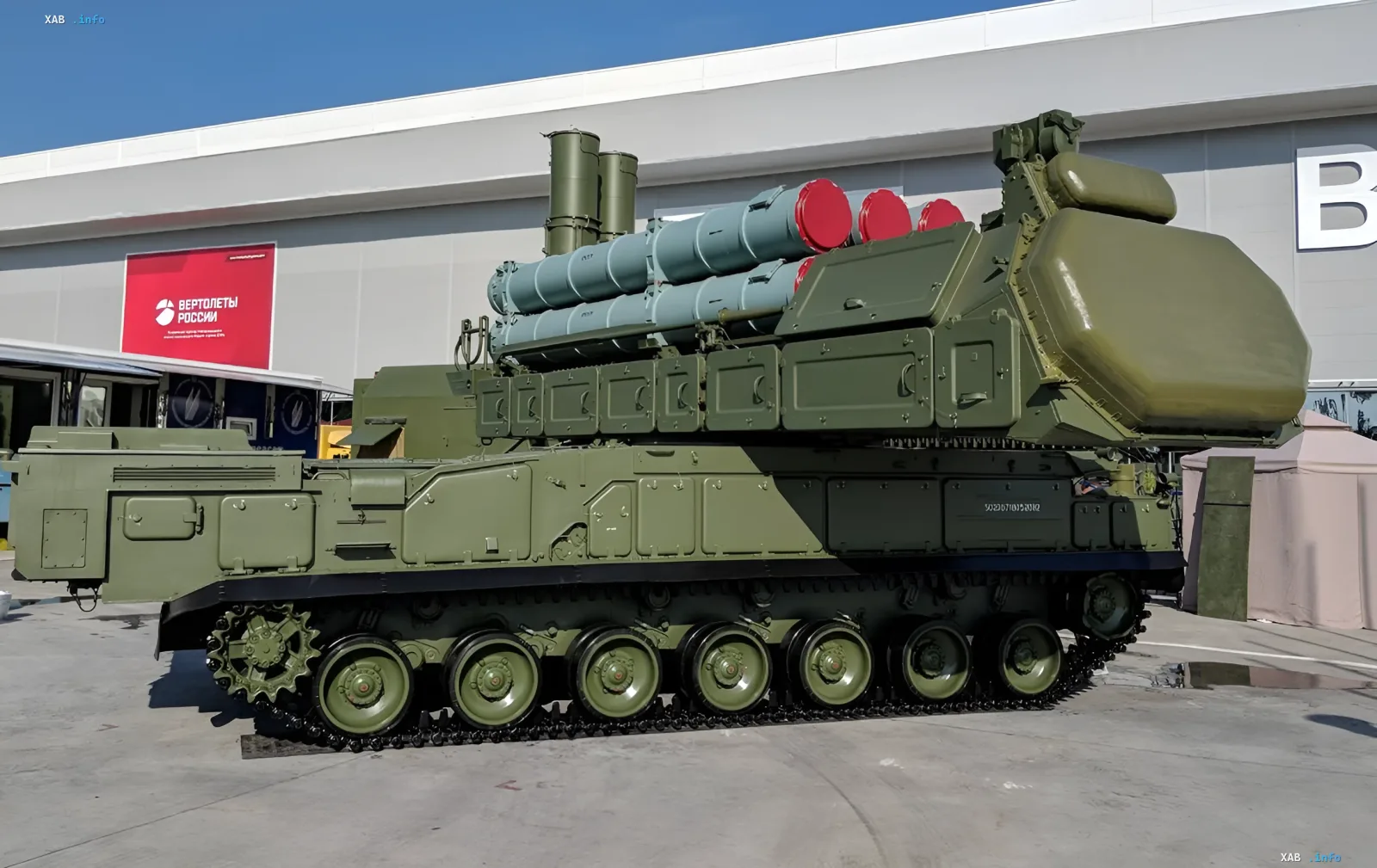
An incident occurred in the Donetsk region that vividly demonstrates the changing tactics of modern warfare. Ukrainian border guards from the "Phoenix" unit used an unmanned aerial vehicle (UAV) to destroy a Russian Buk-M3 surface-to-air missile system (SAM). According to RBK-Ukraine, the attack was carried out at night while the enemy equipment was on the move.
Asymmetric Losses and the "New Economy"
Representatives of the border unit described this case as a prime example of the "new economy of war." The essence of the concept lies in the colossal difference between the cost of the weapon and the value of the destroyed target. In this case, a drone costing a few thousand dollars inflicted damage on the enemy estimated at approximately $50 million.
"Tonight in the Donetsk region, our drone shot down a Buk-M3 surface-to-air missile system right on the march. The occupiers did not expect such a "warm" welcome, so they were carelessly moving equipment closer to the front," the "Phoenix" unit stated.
According to military personnel, after the successful strike, the system was disabled and no longer poses a threat to Ukrainian forces. It is important to note that the attack was carried out at the moment when Russian military personnel were moving expensive equipment to the combat zone, relying on stealth, which ultimately failed.
History of Successful Strikes on RF Equipment
The destruction of the "Buk-M3" was not the only significant result of the work of the "Phoenix" unit and other reconnaissance groups. During hostilities, Ukrainian forces have repeatedly launched targeted strikes against the enemy's critically important infrastructure.
In particular, in May 2025, scouts from the "Black Forest" brigade also destroyed a Russian Buk-M3 SAM system using drones. The cost of that system was estimated at more than $40 million. This confirms the trend of systematically disabling the enemy's high-precision air defense systems.
Another example of targeted work was an incident in March 2026 in the Luhansk region. Then, "Phoenix" border guards destroyed a rare target — a mobile radio relay station R-416G-MS. The equipment cost about $600,000. This station played a key role in ensuring digital communication between the forward positions of Russian troops and their command posts.
Tactical Conclusions
A series of successful operations demonstrates the effectiveness of using available means to destroy expensive targets. The ability to strike equipment on the march, when it is most vulnerable, allows for neutralizing the enemy's numerical or technical superiority. The destruction of communication and air defense systems deprives the enemy of the ability to effectively coordinate actions and protect their positions.