
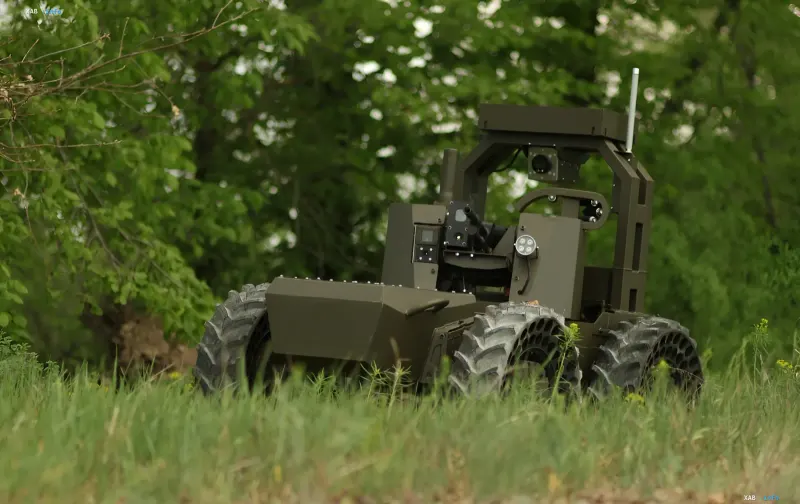
On the modern battlefield, the role of Ground Robotic Complexes (GRC) is rapidly increasing. According to experts, these machines are taking on tasks previously performed by human personnel, which helps reduce casualties and increase operational efficiency. In an interview with RBC-Ukraine, Petr Leontyev, Director of UGV Robotics, revealed the key areas of application for combat robots in current conditions.
Logistics Under Fire: Clearing Routes
One of the priority tasks for GRCs is ensuring the safety of rear communications. Enemy forces actively use tactics of mining roads and deploying "wait-and-see" drones on Ukrainian logistics routes. This creates a serious threat to the delivery of ammunition and the evacuation of the wounded.
Robotic complexes solve this problem through forced clearing. A machine equipped with a 7.62 mm machine gun moves along a dangerous section and fires at suspicious objects, neutralizing explosive devices remotely. Such work allows truck drivers to stay alive and ensures uninterrupted supply to the front lines.
Virtual Observation Post
The second critically important direction is the use of robots as autonomous observation posts. Given the shortage of infantry and the need to hold back enemy advances, GRCs are deployed to areas of probable enemy movement and take up ambush positions.
The algorithm of operation is simple and effective: upon detecting enemy infantry movement, the robot opens fire, inflicting initial damage and halting the advance. This not only causes casualties but also exposes the enemy. Detected groups become easy targets for FPV drone operators and aviation, which can be directed to destroy the already identified target.
Active Operations and Assault Support
The third direction, which is actively developing at present, is the use of robots for active operations directly on the line of contact. GRCs are capable of crossing the "zero line," exerting fire influence on enemy positions.
Such machines are used to distract the enemy, support assault groups, and advance infantry. The robot's ability to operate in a "meat shield" mode, absorbing enemy fire, makes it an indispensable tool in complex tactical situations.
Trends in Army Robotics
Experts note that Ukraine is rapidly expanding its fleet of ground combat robots, entrusting them with increasingly dangerous missions. According to some estimates, Ukrainian GRCs are already handling almost half of all logistics tasks on the front. In addition to delivering cargo, they evacuate wounded soldiers and even participate in capturing prisoners.
Of particular interest is the experience of a CBRN officer from the 32nd Separate Mechanized Brigade with the callsign "Witcher," who created a unique company fully staffed with robots. This confirms the trend of creating specialized units where humans control machines rather than leading the charge in the front lines.
The Future of Autonomous Complexes
Technological development is not standing still. Taras Ostapchuk, Founder and CEO of Ratel Robotics, noted in his comments to RBC-Ukraine that in the future, Ukrainian GRCs will be integrated into larger-scale ground autonomous complexes. The main goal of these developments is to minimize the involvement of live military personnel in the most risky operations, preserving human lives and increasing the effectiveness of combat operations.


