
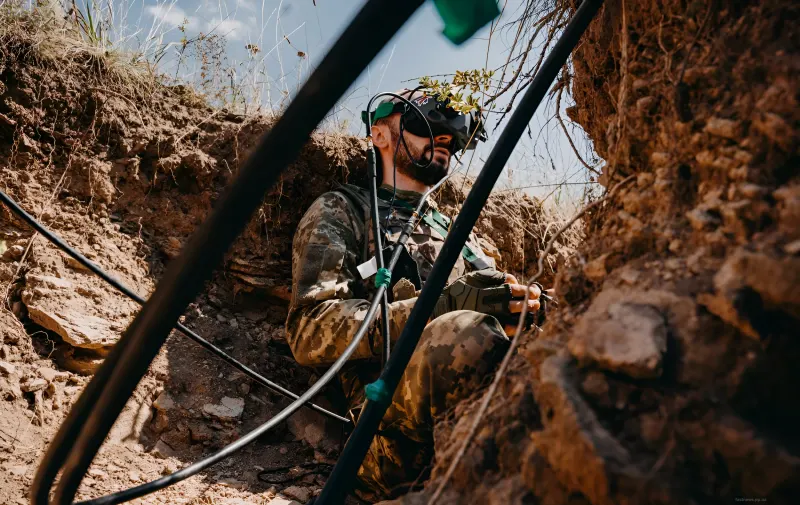
The night of May 30 turned into a hotspot for Russian military infrastructure. Ukrainian unmanned system operators carried out a large-scale operation covering 23 strategically important objects deep in the enemy's rear. This was not just a series of scattered strikes, but a synchronized attack aimed at undermining the occupiers' logistical chains and energy security.
Targets in Flames: From Crimea to Taganrog
Commander of the Unmanned Systems Forces Robert "Madjar" Brovdi called this night "fiery." The operation was conducted with high precision: drones struck objects critical to the functioning of the Russian army and economy. The list of targets included elements of oil logistics and key nodes in Crimea.
Among the most resonant strikes was an attack on a tanker of Russia's so-called "shadow fleet," which was used to bypass sanctions. In addition, the "KurganNaftaProduct" oil depot in Taganrog and the sea oil terminal in Feodosia were hit. These facilities are the arteries fueling the enemy's war machine.
New Tactics: Deep Strike Center
The effectiveness of the operation was made possible by the creation of a new structural unit — the Deep Strike Center of the Unmanned Systems Forces. It took on the coordination of actions, ensuring the coordinated work of different brigades.
Strikes were delivered by specialized units: operators of the 1st Separate Center struck targets in Taganrog, while fighters of the 412nd Separate "Nemesis" Brigade worked on the terminal in Feodosia. Such specialization allows for maximizing the effectiveness of each sortie.
Continuation of a Series of Victories
This attack became a logical continuation of recent successes of Ukrainian drones. Earlier, "Madjar" had already reported the destruction of the Russian Iskander operational-tactical missile complex and two strategic anti-submarine Tu-142 aircraft at the airfield in Taganrog. A systemic strike on the enemy's rear demonstrates that the Ukrainian side is successfully changing the rules of the game, disabling not only frontline positions but also deep rear nodes.


