
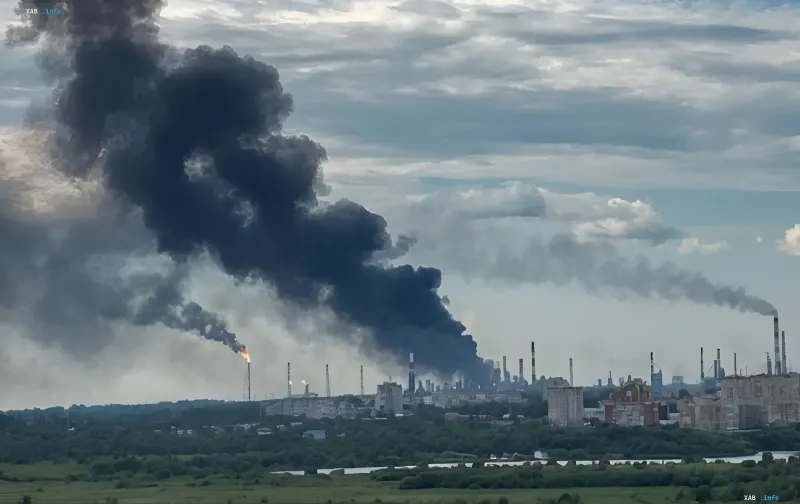
A precedent-setting event has been recorded in the history of the modern conflict. Ukrainian military forces struck the Omsk Oil Refinery — a strategic facility located thousands of kilometers from the front line. The attack has been confirmed by the General Staff of the Armed Forces of Ukraine and the Special Operations Forces, as well as independent sources.
Record-breaking strike range
According to official statements, unmanned aerial vehicles of the Special Operations Forces covered a distance of up to 3,000 kilometers to hit a target in Siberia. This is the deepest strike into enemy territory since the start of the full-scale invasion. Objects previously considered impregnable in the deep rear are now within the range of Ukrainian systems.
Denis Shillerman, the chief designer of Fire Point, confirmed the use of FP-1 drones. These devices are capable of reaching targets located up to 3,400 km from the state border. A direct hit was recorded at the plant, causing a massive fire. The exact scale of material damage is currently being clarified.
Strategic significance of the target
The Omsk Oil Refinery is not just a plant; it is the largest oil refining enterprise in Russia. Its annual capacity exceeds 21 million tons of oil, and the depth of processing reaches 99% — one of the highest in the country. Prior to this strike, the Omsk plant remained the last of the 11 largest gasoline producers in the Russian Federation not to have been attacked by Ukraine.
The enterprise plays a key role in the logistics of the Russian army. It produces aviation kerosene, diesel fuel, high-octane gasoline, as well as lubricants and petrochemical products. Preliminary data indicates that the strike hit the primary oil processing unit ELOU-AVT-11, which has a design capacity of 8.4 million tons of raw material per year.
Strike technology
The foundation of the operation's success is the Ukrainian long-range kamikaze drone of the aviation type FP-1. Developed by Fire Point, it was created specifically to strike strategic objects in the enemy's rear. The warhead of the unmanned vehicle can reach 120 kg (or 60 kg of explosives at maximum flight range).
Production of these devices has been established on an industrial scale: the rate of manufacture is about 100 units per day. At the same time, the cost of one drone is estimated at $55,000, making them an economically effective tool for damaging expensive infrastructure.
Synchronization of attacks
The attack on Omsk was not an isolated event. On the same day, the SBU and other units of the Armed Forces of Ukraine struck a number of other objects in Russia and on occupied territories. Targets included the Yaroslavl Oil Refinery, the "NOVATEK-Ust-Luga" plant, and the fuel terminal in Vyatskoye. In Crimea, the "Gvardeyskoye" airfield and the "Pantsir-S2" anti-aircraft complex were attacked.


