
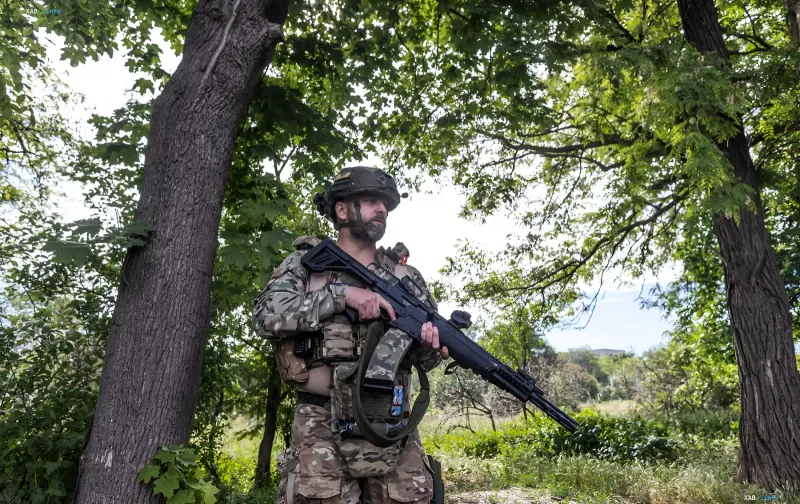
Contrary to the widespread belief that the main reason Ukrainian soldiers seek legal assistance is financial issues, actual practice shows a different picture. According to Rustam Nuriyev, a lawyer from the "Actum" association, the top issues on the list are medical care and the inability to exercise the legal right to discharge.
Defenders of soldiers' rights face a wide range of legal conflicts. Often, soldiers try to resolve issues on the spot, but when a compromise is impossible, they must choose between a report, a complaint to higher authorities, or a lengthy court process.
Treatment and MEB: where to find justice faster?
Situations related to the need for treatment or referral to the Military Medical Commission (MMC) require an immediate response. Lawyer Rustam Nuriyev notes that most such disputes are more effectively resolved at the management level, without taking the case to court.
The first step in such cases is filing complaints with the Ministry of Defense of Ukraine, the General Staff, or the Military Law Enforcement Service (MLE). This is a formal level that initiates official investigations and inspections. This mechanism works faster than a court trial, allowing for a quicker decision on referral for treatment.
Discharge: when court is unavoidable
A completely different situation arises with the discharge procedure. If the command refuses to satisfy the report or ignores the documents, the only working tool becomes the court. A lawsuit in such cases is a last, but necessary, step.
In Ukrainian reality, a court process lasts from 3 to 4 months. The main nuance, which the lawyer points out, is that throughout this entire period, the serviceman is obliged to continue performing combat and service duties. Ignoring a report on the spot forces a person to remain in the ranks, even if they have the full right to demobilization.
The main mistake: lack of document fixation
A strict rule operates within the army structure: everything is done only by order. Independent attempts to defend rights often fail due to the lack of document fixation. This is the most common mistake that blocks further legal protection.
The procedure looks like this: a serviceman writes a report, attaches supporting documents, and hands them over to their immediate supervisor. However, it is precisely at this stage that papers often disappear. An irresponsible commander may not pass them on or destroy them, as there is no official trace of the transfer.
The price of indifference: human tragedies
Behind every dry lawsuit are living stories. A template approach and bureaucratic inertia on the ground lead to critical consequences for families and the mental state of soldiers.
Rustam Nuriyev cites the example of a single father whose wife died. The man is intentionally not discharged, forced to wait for a court decision for months, while grandparents are unable to fully raise the child. In fact, the family is left without both parents due to the blocking of the report by the command.
Situations become particularly acute when a soldier genuinely wants to serve but, due to severe injuries or chronic illnesses, is physically unable to perform tasks. Ignoring this fact by the command destroys motivation and breeds a sense of hopelessness.
Unfortunately, such a dead end and refusal of legal treatment often become the primary cause of tragic disciplinary violations — cases of disobedience or unauthorized absence from the unit (AWOL).


