The 2026 tourist season has been a year of adaptation for the Ukrainian leisure industry in the face of multiple external shocks: from the fuel crisis and rising jet fuel prices to geopolitical instability in the Middle East and periodic disruptions in ground logistics. According to UN Tourism, in the first half of 2026, international tourist arrivals worldwide grew by just 0.4% compared to the same period last year, totaling roughly 690 million international trips. In June, IATA revised its global air travel demand forecast for 2026, estimating passenger traffic growth at only 2.1%, citing the Middle East conflict, rising fuel prices, and altered transport routes as key factors. Against this backdrop, the Ukrainian tourism market is displaying its own dynamics: demand has not disappeared, but it has become significantly more sensitive to the transparency of travel conditions and overall vacation costs.
From Train Delays to a Surge in Demand for Bus Transfers
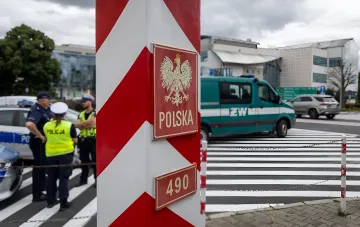
A vivid example of logistics transformation in 2026 was the events of August, when security risks led to massive delays in trains traditionally used by Ukrainians to reach airports in neighboring countries. For travelers, this meant an additional risk of missing their flights, while for tour operators, it required promptly building alternative delivery chains. In response to these disruptions, demand for organized bus transfers noticeably increased, turning them not just into a convenient option, but into a tool for mitigating operational risks. According to observations by Iryna Mosulezna, Director of Join Up! Ukraine, customer behavior throughout the summer was characterized by multiple changes: tourists postponed decisions and then returned to booking, increasingly doing so shortly before departure. This caution was most pronounced in May and early June, when the escalation in the Middle East directly affected flight schedules and prices, though demand began to recover by mid-summer.
Season Figures: 210 Thousand Tourists and a Peak in July
According to internal data from Join Up! Ukraine, between May and September 2026, over 210,000 tourists traveled through the company, including domestic trips. July was the busiest month, with over 50,000 travelers. These figures confirm that Ukrainians continue to travel despite the war, higher airfares, and international security crises, but they do so with much greater thoroughness: evaluating the total cost of the vacation, comparing several route options, and being ready to adjust plans depending on circumstances. As Mosulezna notes, this reaction to uncertainty is not unique to the Ukrainian market; the global tourism industry is going through similar processes, and IATA notes that passengers are increasingly choosing short-haul travel and routes with fewer potential complications.
Fuel Crisis and Rising Package Tour Costs
One of the most palpable challenges of 2026 was the fuel crisis. Rising jet fuel prices forced carriers to repeatedly revise tariffs, and tour operators had to adjust the transport component of package tours. According to internal data from Join Up! Ukraine, the average cost of an outbound package tour in the summer of 2026 was at least 29,800 hryvnias per person — 8.6% higher than the previous year. At the same time, Mosulezna emphasizes that the price increase is not driven solely by fuel: hotel costs, seasonality, logistics, and demand structure all affect the final price. For a tourist who has already planned a budget, such an increase is particularly sensitive, which is why transparent payment terms, the ability to lock in prices in advance, and clear rules for changing bookings are gaining increasing importance. The expert specifically points out that the cheapest tour is not always the most profitable: the cost of travel to a foreign airport, possible overnight stays before departure, meals on the way, and other incidental expenses must be added to the vacation cost. As a result, tourists are increasingly evaluating not just the price of the hotel and air tickets, but the total cost and complexity of the trip, and sometimes a more expensive tour with a convenient departure and organized transfer proves more rational than a budget offer with complex independent logistics.
Reshaping Departure Geography: Chisinau Dominates, Bucharest Gains Ground
Over the years of full-scale war, Ukrainians have grown accustomed to flying through neighboring countries, but logistics continue to shift. In the 2026 season, Chisinau remains the main departure airport, accounting for 58.1% of all departures. Meanwhile, Rzeszow's share dropped from 12% last year to 6.7%, and Warsaw's from 5% to 2.3%. A noticeable increase was recorded in Bucharest, with its share rising from 2% to 15.9%. These shifts indicate that tourists and tour operators are increasingly diversifying routes, choosing airports depending on the destination region, flight availability, and the overall cost of the logistical chain. The ability to switch between multiple departure points is becoming not a competitive advantage, but a baseline requirement for the quality of a tourism product in conditions where any route can be disrupted by external factors.
Outlook for the Second Half of the Year: Demand Depends on Clarity of Conditions
Summarizing the summer season, Iryna Mosulezna formulates a key thesis: demand has not gone anywhere, but has become more dependent on how clear the conditions of the upcoming trip are to the tourist. At a time when global tourism growth remains minimal and the Ukrainian market simultaneously faces internal logistical challenges and external price shocks, the ability of tour operators to quickly adapt their product — from choosing departure airports to transfer formats and booking flexibility — determines their competitiveness. For the traveler, this means that planning a vacation in 2026 requires a more detailed analysis: not just 'how much do the hotel and ticket cost,' but 'what is the full cost of the trip, taking all movements and risks into account.' It is this shift in perspective — from the price of an individual component to the total cost and reliability of the route — that has arguably become the main behavioral shift of the 2026 Ukrainian tourism season.