
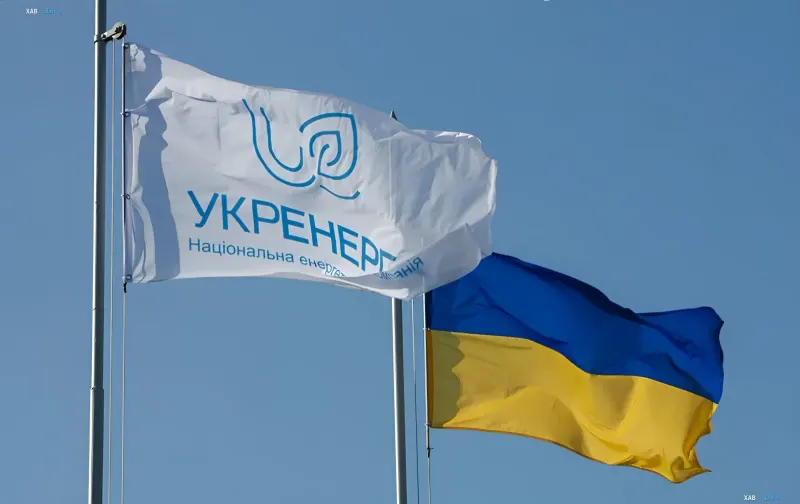
Chronic non-payments in the balancing electricity market have turned into one of the key barriers to attracting private investment into new generations of generating capacities and energy storage systems (ESS). According to Vyacheslav Ivanytsky, Director of International Cooperation and Investments at PJSC "KIEP", the financial crisis of settlements deprives potential investors of basic guarantees for timely payment for the services they will provide to the power grid. As a result, despite Ukraine's acute need to modernize its energy infrastructure, the market cannot form a sustainable investment cycle.
Lack of Payment Guarantees: The Main Brake for Investors
"Ukrenergo's chronic debts in the balancing market deprive investors of guarantees that they will be paid for services provided to the energy system," Ivanytsky said in a commentary to RBC-Ukraine. According to him, as of October 2026, the transmission system operator's debt to market participants reached UAH 36.69 billion. For a private investor planning investments in generation construction or storage installation, such dynamics mean an unacceptable level of credit risk: even with technical and regulatory conditions in place to launch a project, the financial model does not add up if the key counterpart—the state operator—systematically fails to pay for rendered services.
Scale of Debt Burden: Figures for the First Nine Months of 2026
Data from ExPro consulting company, cited by Dilo, confirm the scale of the problem. In the first nine months of 2026, the debt of balancing market participants to NPC Ukrenergo rose to UAH 47.34 billion, increasing by UAH 5.29 billion (12.6%) compared to the end of 2025. Almost the entire amount—UAH 47.26 billion—falls on parties responsible for balance, i.e., generators and large consumers ensuring compliance between planned and actual electricity volumes. The debt of balancing service providers to the operator remained relatively stable at UAH 85.1 million. At the same time, Ukrenergo's own debt to market participants over the same period increased by UAH 13.76 billion, or 60%, reaching UAH 36.69 billion. The largest part of this amount—UAH 32.02 billion—accounts for settlements with balancing service providers, and another UAH 4.67 billion is owed by the company to parties responsible for balance. By the end of September 2026, participants' debts to the operator exceeded Ukrenergo's own debt by UAH 10.65 billion.
Military Context: Why Distributed Generation and ESS Are Critically Important
Ivanytsky emphasizes that the war and the destruction of energy infrastructure have objectively worsened the liquidity of market-participating companies. However, in his phrasing, "the non-payment crisis is a dead end that significantly narrows the prospects for generation construction." The expert notes that the development of energy storage systems and cogeneration units is critically important for the stability of the Ukrainian energy system amid ongoing Russian attacks on energy facilities. A distributed network of thousands of decentralized objects reduces the vulnerability of the energy system to strikes on large generating capacities: if one node is damaged, the rest continue to operate, and storage systems provide a reserve during restoration. Without an influx of investment into such projects, the energy system remains concentrated and vulnerable.
Systemic Pricing Problem and the Role of the State
Energy expert Hennadiy Ryabtsev previously pointed out that the accumulation of debts in the energy market is a consequence of systemic problems with market pricing, the solution of which requires comprehensive measures by the government. Vitaliy Zaichenko, Chairman of the Board of NPC Ukrenergo, previously reported that the debt of balancing market participants to the operator exceeded UAH 46 billion, which is one of the highest figures in the history of the market. For comparison: in 2025, participants' debt to Ukrenergo grew by 21% to a record UAH 42 billion, while the operator's own debt to participants increased by 36% to UAH 22.9 billion. Thus, in the first nine months of 2026, both components of the debt burden continued to grow, with the growth rate of the operator's debt (60%) significantly outpacing the growth of participants' debts (12.6%).
What's Next: Without Solving Settlement Issues, the Investment Cycle Won't Start
The totality of data indicates that the problem of the balancing market has gone beyond operational imbalance and turned into a structural factor limiting the development of the entire energy sector. Until the operator is able to guarantee settlements with counterparts, and market participants with the operator, no rational investor will factor the risk of non-payment amounting to tens of billions of hryvnias into a project's financial model. According to experts, the solution requires not targeted subsidies, but a revision of pricing mechanisms in the balancing market and ensuring transparency of settlements at the level of state policy. Until these mechanisms are built, the Ukrainian energy system will remain dependent on large centralized facilities, and the potential of decentralized generation and energy storage will remain unrealized.


