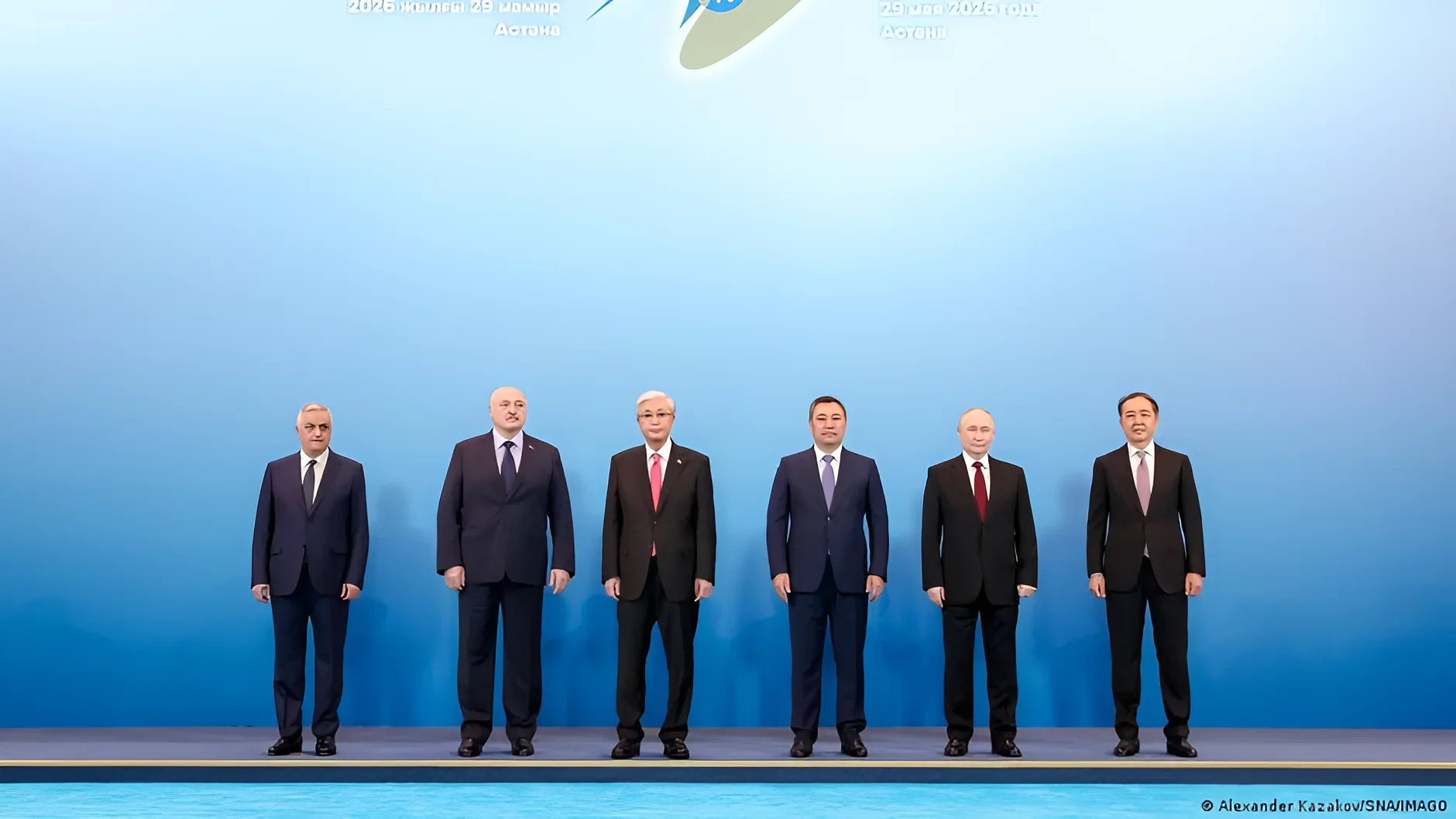
An event in Astana has the potential to reshape the geopolitical alliances of the South Caucasus. Leaders of the Eurasian Economic Union (EAEU) — Russia, Belarus, Kazakhstan, and Kyrgyzstan — have abandoned soft diplomatic rhetoric and presented Yerevan with an ultimatum. At the summit in Kazakhstan, an unprecedented decision was made: Armenia has been given until December 2026 to definitively determine its development vector. The country must either remain in the Eurasian bloc or prepare the ground for integration with the European Union; combining these two paths is no longer an option.
The End of the "Two Roads" Era
The strategy of the Armenian government, which Prime Minister Nikol Pashinyan termed "diversification," has reached its logical conclusion. Yerevan attempted to balance, stating it had no intention of choosing between "one road" and "one pipeline." However, this maneuver was firmly blocked in Astana. EAEU leaders demanded a referendum to give the Armenian people the right to finally decide the fate of their membership in the Union.
The absence of Nikol Pashinyan at the summit sent a loud signal. The official reason was the pre-election campaign ahead of the early elections on June 7. In reality, this merely confirmed that Yerevan is not ready for dialogue on equal terms. The Armenian delegation was led by Vice Prime Minister Mher Grigoryan, who tried to smooth things over, assuring partners of loyalty. However, diplomatic courtesies are no longer working: Moscow has begun closing its markets to certain Armenian goods, turning economic threats into reality.
Economy as a Lever of Pressure
At the press conference following the summit, Vladimir Putin avoided metaphors and operated with dry figures. He clearly outlined the cost of a "European turn" for Armenia's economy. According to the Russian leader, transitioning to EU standards will require Moscow to roll back almost all integration processes.
The key argument concerns energy carriers. The difference in the cost of gas and electricity between the EAEU and Europe is colossal — ranging from 150 to 600 euros. According to Kremlin calculations, the loss of preferential tariffs could cost the Armenian economy up to 14% of its GDP. This is not just a warning; it is a mathematical calculation of the consequences of a geopolitical divorce.
Causes of the Crisis: From Karabakh to Brussels
The rupture in relations did not happen in a vacuum. It all began in September 2022, when Yerevan, facing a difficult military situation with Azerbaijan, requested assistance from CSTO allies. No response followed. This became the point of no return: Armenia froze its membership in the military-political alliance and replaced Russian peacekeepers with an EU mission.
Since then, the vector has changed. In 2025, Armenia adopted a law on joining the European Union, and in May 2026, Brussels officially confirmed Yerevan's "European aspirations." Now that the strategic partnership with the EU has been legally formalized, Moscow is presenting the bill for loyalty. The question is blunt: is Yerevan ready to pay the high price for changing allies, or will it attempt to preserve the status quo, risking isolation?


