
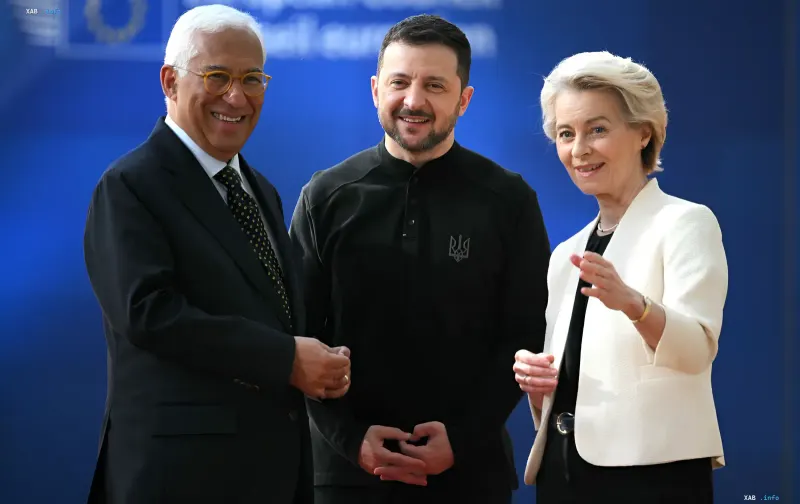
The European Union has taken a historic step by agreeing to begin accession negotiations with Ukraine and Moldova. This was officially announced by the President of the European Commission, Ursula von der Leyen, on her X microblog. According to her, all member states have reached a consensus on opening the first cluster of negotiations.
This decision became possible following a shift in the region's political landscape and the overcoming of a long-standing blockade by one of the key players. Now, the integration process for the two countries is moving from the preparation phase to the stage of active dialogue.
Start of the First Negotiation Cluster
According to the head of the European Commission, the first intergovernmental conference will take place on Monday, June 15. During this event, the first cluster, dedicated to the foundations of the accession process, will be opened. It covers the fundamental values and principles on which the European Union is based: from the rule of law to the functioning of strong democratic institutions.
Ursula von der Leyen emphasized the significance of this event, calling it a recognition of the determination, courage, and hard work demonstrated by both countries. Despite colossal challenges, Ukraine and Moldova continued to advance reforms. "Enlargement is a strategic choice, and the EU's offer of peace, stability, and opportunities is unmatched," noted the EC President.
Support at the Highest Level
The "green light" for opening negotiations was confirmed by the President of the European Council, António Costa. In turn, the President of the European Parliament, Roberta Metsola, emphasized that this step underscores the efforts of the two countries and their commitment to European values, despite Russian aggression, threats, and intimidation.
How the Hungarian Blockade Was Lifted
The path to this decision was not easy. EU leaders made a fundamental decision to start accession negotiations with Ukraine back at the end of 2023. However, the process then hit a dead end: launching negotiations required unanimous support from all EU members, and Hungary opposed it. Since then, no cluster has been opened.
The situation changed radically this year. The Tisza party won the parliamentary elections in Hungary, and Peter Magyar became the new Prime Minister instead of Viktor Orbán. The change of power in Budapest allowed the political deadlock to be overcome. Kyiv and Budapest were able to agree on the issue of the rights of national minorities in Ukraine, which had previously been the main condition for continuing Kyiv's European path. It was only after this that Budapest unblocked the actual start of negotiations on Ukraine's accession to the European Union.


