The Pentagon is developing a plan for a large-scale and extremely complex special operation, the main objective of which will be to seize or destroy stockpiles of enriched uranium at fortified nuclear facilities in Iran. While the US strategy previously focused primarily on airstrikes against nuclear infrastructure, Washington is now seriously considering the option of a ground invasion. According to sources from New York Post and CNN, implementing such a scenario may require the deployment of thousands of military personnel.
Special Forces and Engineers: Who Will Go Into Battle
According to the information received, the operation will have a two-stage structure. First, large military units will enter the zone of responsibility to create conditions for the assault. Only after this will elite special forces groups come into action, tasked with the direct removal of nuclear material.
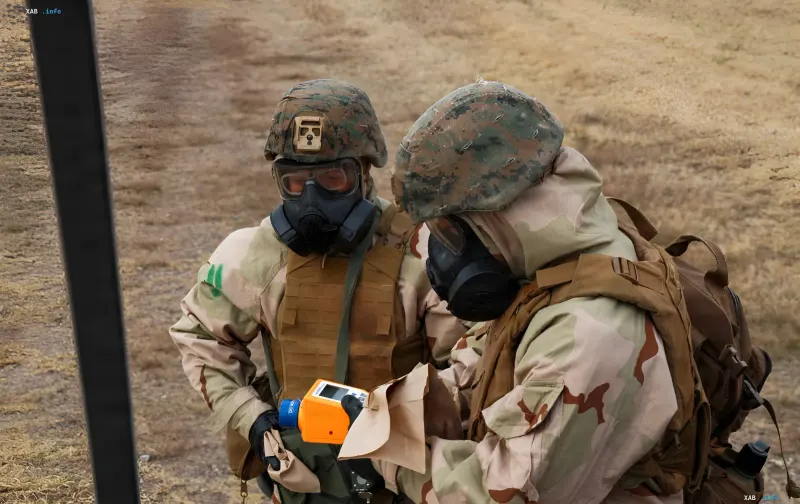
The list of potential participants in the operation includes Navy SEALs, Army Rangers, and specialists from the US Army's 21st Artillery Company. According to sources, it is this unit that will be responsible for the safe handling of enriched uranium and its transportation from the facilities in Fordow and Isfahan.
Mines Underground and the Risk of Failure
Experts are paying special attention to the facility in Isfahan. Iran has fortified this position in advance, laying mines and explosives in tunnels, anticipating a possible raid by American or Israeli forces. This significantly complicates the task: engineering brigades will have to not just clear debris but also clear mines under enemy fire.
In addition to Fordow and Isfahan, the list of targets includes the underground complex under the mountain near Natanz, known as Pickaxe Mountain. According to available data, Iran may have moved hundreds of centrifuges there following preliminary strikes.
The scale of the problem explains the urgency of the issue. According to the International Atomic Energy Agency (IAEA) for 2025, Iran possessed more than 9 tons of enriched uranium. Part of this stockpile is stored at a facility near Isfahan in tunnels located deep underground.
Expert Doubts and Trump's Position
Not all experts are convinced that the operation can be carried out without huge losses. Richard Goldberg, who headed the US National Security Council's counter-proliferation of Iranian nuclear weapons during Donald Trump's first term, questioned the very possibility of safely completing the mission.
"How long can this be sustained while simultaneously having the ability to withdraw all your forces?" Goldberg asked.
At the same time, Joseph Rodgers, Deputy Director of the Center for Strategic and International Studies, considers the military scenario the most likely: "I don't want to say this, but I believe the most likely way to get rid of the nuclear material Iran has is a military operation, because negotiations are not moving forward quickly".
Blockade of the Strait of Hormuz
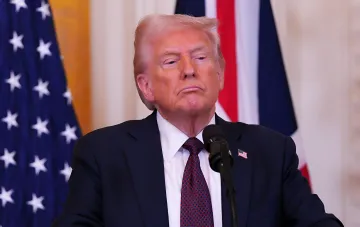
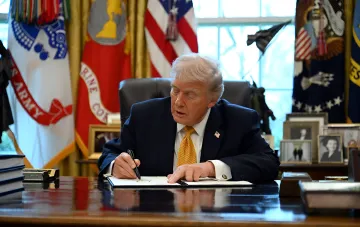
Officially, Washington has not yet confirmed that a deal has been agreed upon or scheduled for a specific date. However, the scale of the preparation — from the involvement of special units to engineering calculations — indicates the seriousness of intentions. Donald Trump called enriched uranium and Iran's nuclear program the main target of the States. Recently, he announced the destruction of Pickaxe Mountain in Iran and declared the resumption of a naval blockade. The US plans to take control of the Strait of Hormuz, imposing a 20% tariff on all ships.