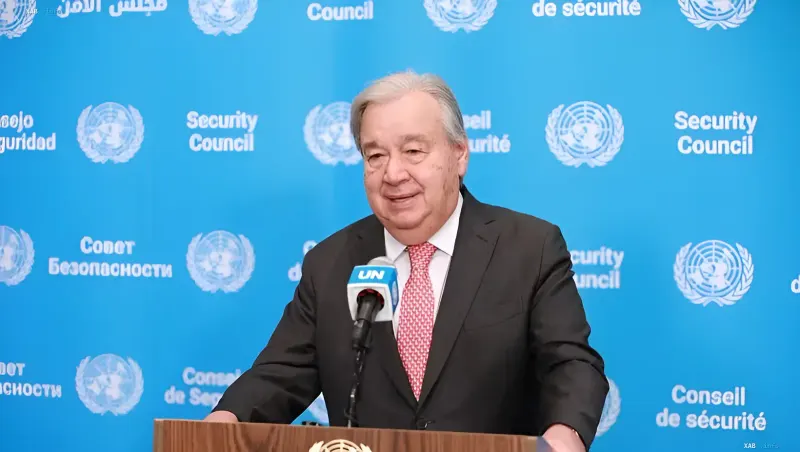
United Nations Secretary-General António Guterres has presented the organization's operational budget draft for 2027 at $3.3 billion. This figure demonstrates a funding reduction of $40.8 million compared to the 2026 levels, highlighting the course toward strict austerity and enhanced administrative efficiency amid current global challenges.
Background and Global Context
Addressing the UN General Assembly’s Fifth Committee, which comprises representatives from 193 member states, the Secretary-General drew attention to the unprecedented scale of global problems. According to Guterres, deepening geopolitical divisions, protracted armed conflicts, climate shocks across all continents, and the rapid advancement of artificial intelligence are exerting immense pressure on international security and the global economy. Against this backdrop, progress toward achieving the UN Sustainable Development Goals has slowed significantly.
Substance of Budget Reforms and Cuts
The new financial plan continues the implementation of structural reform initiatives. Under the 2027 budget draft, the relocation of 12 UN agencies and entities is proposed, with the majority of these moved units to be based in Nairobi, Kenya. Furthermore, the document suggests the elimination of several high-level positions, the downgrading of 14 key leadership roles, and the further expansion of the shared administrative services model in global hubs such as Geneva, Nairobi, Vienna, and Addis Ababa.
Innovations in Expenditure Planning
A notable feature of the presented project is the integration of standard cost adjustments already at the initial budget planning stage. This approach is being implemented for the first time and aims to proactively minimize the need for year-end budget revisions driven by unforeseen expenditures, thereby ensuring greater transparency and predictability in financial policy.
Consequences and UN Leadership Stance
The organization's leadership emphasizes that successfully fulfilling the UN mandate requires not only strict expenditure discipline and ongoing reforms under the UN-80 initiative, but also timely regular contributions from member states. Stable and predictable funding will help overcome chronic liquidity issues and ensure that the international community can effectively address the most urgent humanitarian and political challenges.