Chinese company Unitree Robotics, a key player in the global commercial robotics market, has officially unveiled a new engineering platform — the quadruped robot AS2-W. The model, internally named Super Athlete, aims to overcome a fundamental contradiction in autonomous system development: the need to combine high-speed movement on hard surfaces with high mobility on rough terrain.
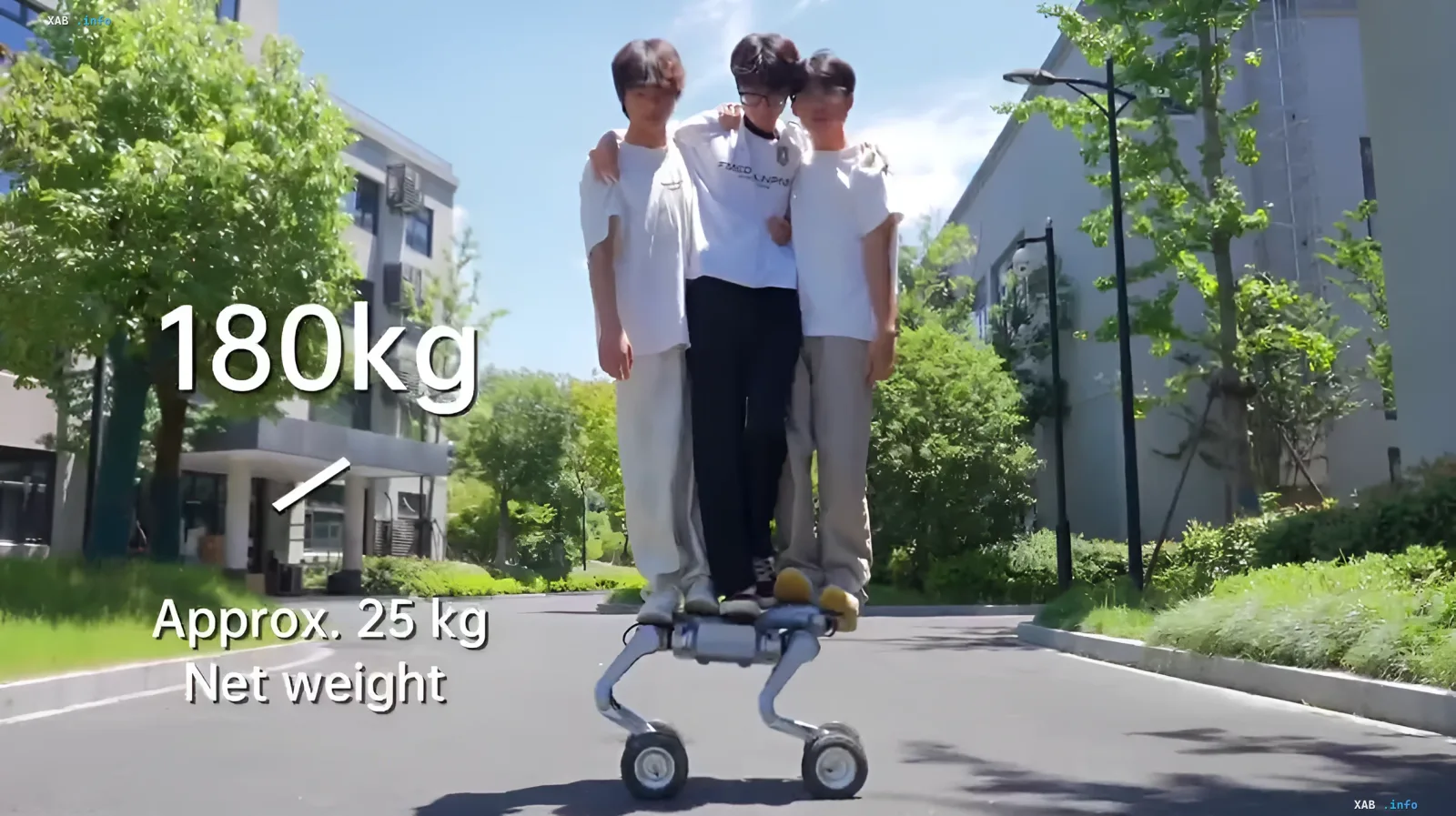
Significant confusion has arisen in the information space surrounding the release, related to the device's technical specifications. In particular, several viral publications cited a payload capacity figure of 180 kg. Expert analysis of the manufacturer's specifications and the device's physics has allowed us to refute this claim as technically untenable.
Design Features and Architecture
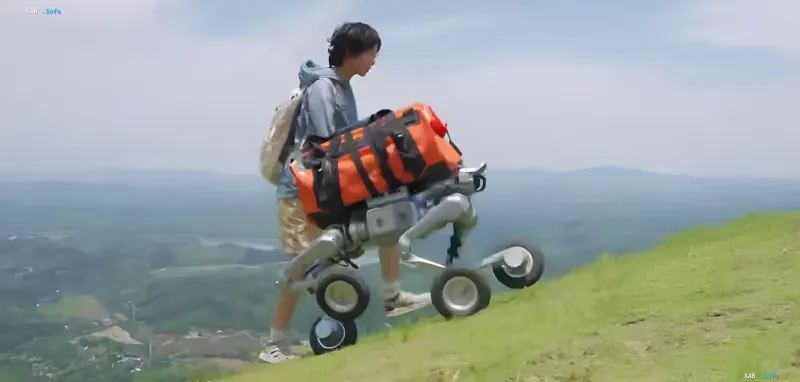
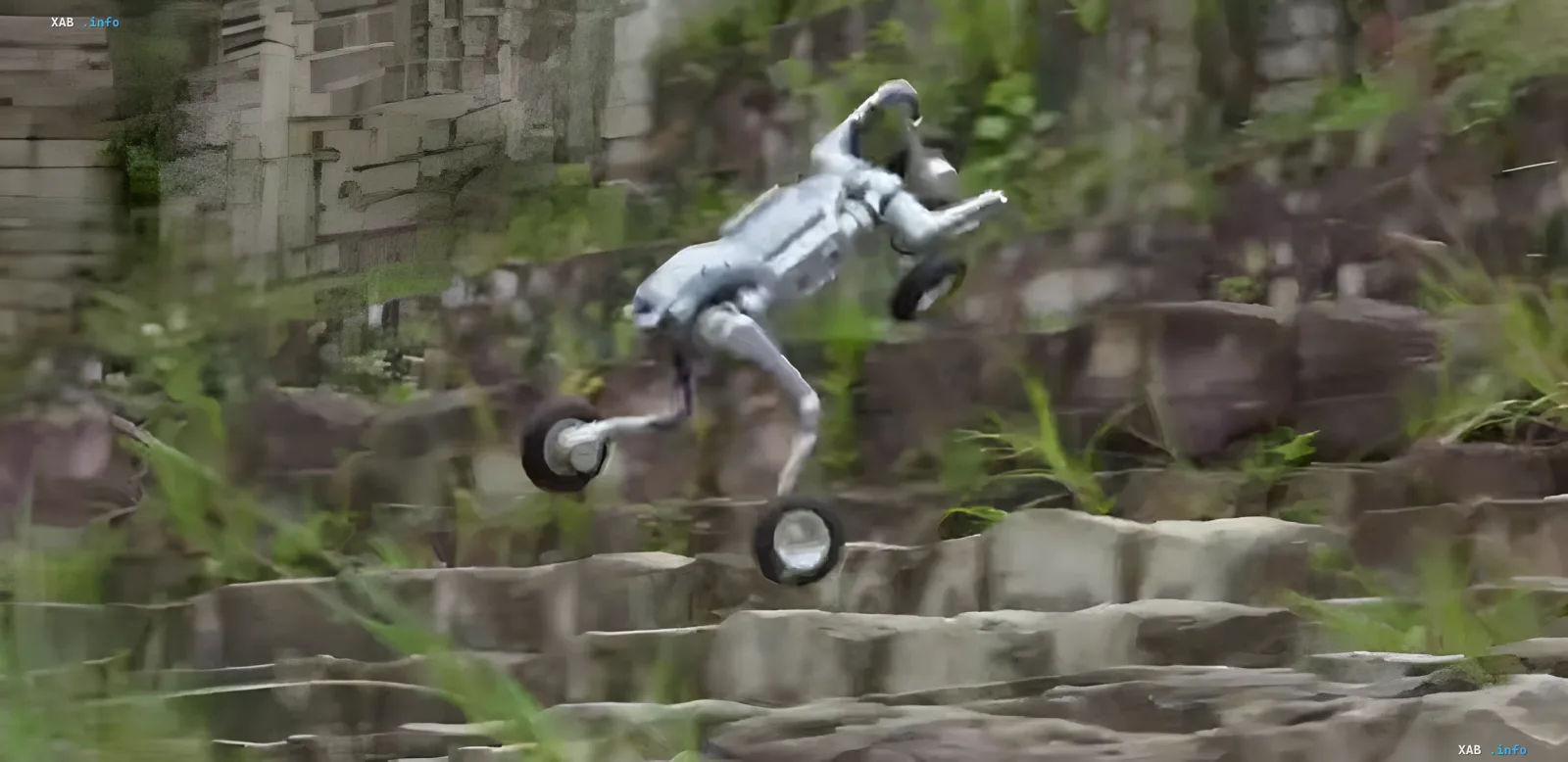
The innovation of the AS2-W model lies in its hybrid kinematic scheme. Instead of traditional feet, motorized wheels are installed at the ends of the four robotic limbs. This architecture allows the system to dynamically switch between movement modes. On flat surfaces, such as asphalt or packed dirt roads, the robot moves in wheel mode, reaching speeds of up to 21.6 km/h (6 m/s).
Upon detecting obstacles, stairs, or complex terrain, the onboard 8-core processor, controlled by artificial intelligence algorithms (Reinforcement Learning 6.0), switches the platform to walking mode. The sensor suite, including a 3D LiDAR and optical cameras, ensures navigation and real-time assessment of terrain geometry.
Technical Parameter Breakdown and Myth-Busting
It is critically important to separate marketing exaggerations from actual operational characteristics. According to official data from Unitree Robotics, the robot's own weight is 25 kg. This physical limitation imposes strict limits on its useful load.
Data analysis revealed the following factual parameters:
- Payload Capacity: The nominal useful load in continuous movement mode is 16 kg. Claims about the ability to transport 180 kg are erroneous and likely arose from confusion with heavy industrial hydraulic models (e.g., Unitree B2-W) or static load on the frame while stationary.
- Energy Efficiency: The range without payload exceeds 30 km with an operating time of more than 3 hours. However, at full load (16 kg), autonomy is halved — down to 16 km and 2 hours of operation.
- Mobility: The robot is capable of overcoming obstacles up to 80 cm high and climbing slopes with an incline of up to 45 degrees.
The device body has an IP54 protection rating, allowing operation in conditions of rain, dust, and when crossing small water obstacles.
Economic Context and Application Areas
Developers position the AS2-W as an open platform with an accessible SDK for third-party engineers, oriented towards the civilian sector. Unlike military quadrupeds equipped with weaponry, this model is aimed at solving logistical and inspection tasks.
Key use cases include:
- Search and rescue operations in disaster zones and earthquake areas.
- Delivery of cargo and medicines to inaccessible mountainous areas cut off by landslides.
- Patrolling industrial facilities and nature parks.
Although rumors circulate online about the interest of the Chinese People's Liberation Army in this model, no official contracts for the supply of AS2-W for military needs have been recorded at the time of release. The company emphasizes the civilian purpose of the platform, which opens prospects for its integration into logistics chains and infrastructure security systems.