On October 17, 2026, amid a series of violent incidents in Israeli settlements on the West Bank, two influential global players—the U.S. and China—called almost simultaneously for Tel Aviv to change course. U.S. Secretary of State Marco Rubio demanded that Israel strengthen measures to prevent settler attacks, while Chinese Foreign Minister Wang Yi called for a freeze and reversal of new settlement construction. Both statements were issued on the same day and were triggered, in part, by the spread of footage on social media showing an attack on an American photojournalist.
Washington's statement: "take decisive action"
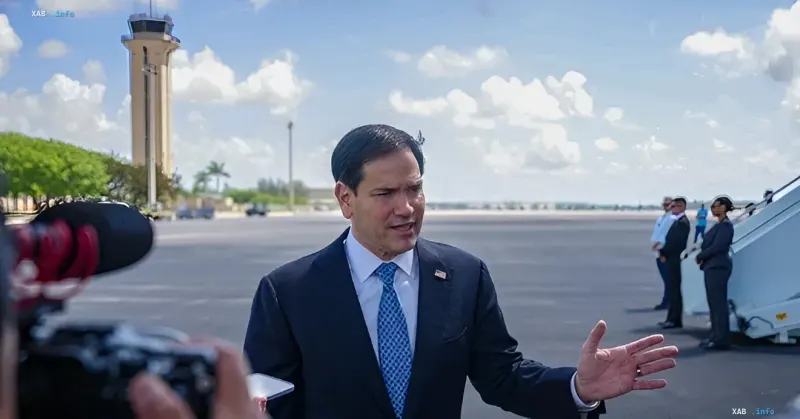
According to the Times of Israel, Marco Rubio stated that Washington is "deeply concerned" about the situation in the West Bank. He noted that the U.S. has already contacted the Israeli side and demanded that decisive action be taken against settler violence. The statement comes against the backdrop of a series of incidents in which not only Palestinian civilians but also foreign journalists and diplomats were targeted, which, according to the U.S. Secretary of State, requires an immediate response from Tel Aviv.
Attack on a photojournalist and diplomats
The trigger for Rubio's statement was a video showing several people attacking American photojournalist Heidi Levine of the Washington Post. According to reports, Levine was one of two individuals injured in the October 17 incident, when Israeli settlers attacked Palestinian civilians. Earlier, Belgian Foreign Minister Hadja Lahbib (referenced as Maxime Prévot in source) confirmed that European diplomats and the mayor of a French city had also been attacked in West Bank settlements. The accumulation of these incidents has effectively placed the issue of the safety of foreign representatives in the West Bank at the center of the diplomatic agenda.
Israel's position: "Israeli rioters"
The Israeli side responded to the incidents differently. Foreign Minister Gideon Sa'ar labeled those responsible for the attack as "Israeli rioters," effectively distancing the state from the actions of the perpetrators. Furthermore, he claimed that the diplomats should have coordinated their movements with the Israeli military during their visit to the region. Thus, Tel Aviv is shifting the focus from state responsibility for security to the need for coordination by foreign missions, a stance that diverges from the position held by Washington and Beijing, both of which demand systemic measures from Israel.
Beijing's call: two-state solution
On the same day, October 17, Chinese Foreign Minister Wang Yi called on Israel to stop and reverse the establishment of settlements in the West Bank. He emphasized that a two-state solution remains the only viable path to resolving the Israeli-Palestinian conflict. He described the Palestinian issue as the "greatest injustice in history," adding that Israel must stop the forced construction of new settlements. China's position thus aligns with the U.S. demand in substance, though it was phrased in more rigid ideological terms.
Context: rising settlements and violence
According to reports from the United Nations and independent monitoring organizations, the Israeli government had approved the creation of 54 new settlements and 86 additional outposts in the West Bank by 2025. Over the same period, according to the same sources, the number of violent incidents against Palestinians in the area has significantly increased. This data forms the background for the appeals from both Washington and Beijing: both sides point to a sustained dynamic of settlement expansion and rising violence, demanding a policy review from Tel Aviv. The discrepancies in assessing responsibility for specific incidents—between Israel calling the perpetrators "rioters" and the U.S./China demanding state-level measures—remain a key point of contention in the ongoing diplomatic exchange.