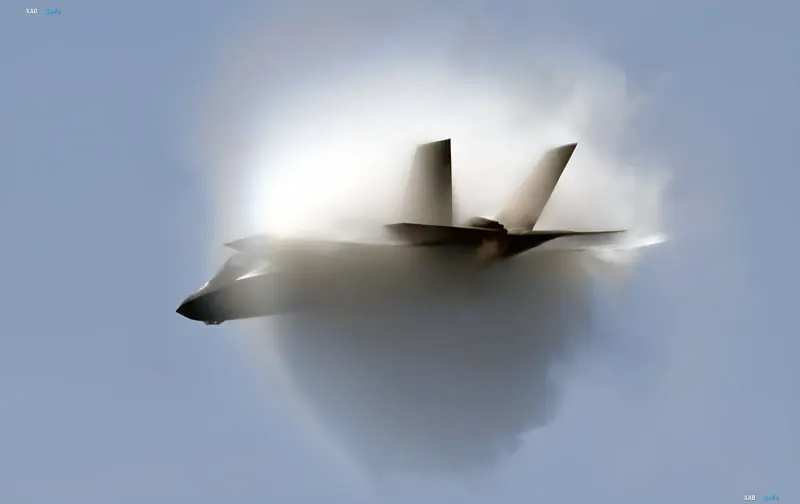
US intelligence agencies have expressed concern over the possible transfer of dozens of fifth-generation F-35 fighters to Saudi Arabia. According to The New York Times, as cited by RBC-Ukraine, Washington fears that China could gain access to the aircraft's technologies through espionage or through Riyadh's military-technical cooperation with Beijing. The potential deal is valued at approximately $24 billion, and dozens of fighters would in that case fall outside direct US control.
Intelligence sounds the alarm: risk of technology leaks
In an intelligence document, the contents of which were reported by NYT sources, a direct question is posed: can the United States and Saudi Arabia guarantee adequate protection of the facilities where F-35 technologies will be stored. American military officials are particularly concerned about the fighter's advanced radar and reconnaissance systems. The report emphasizes that access to the relevant facilities should be granted only to US and Saudi military personnel, as well as authorized contractors. Analysts also raised the question of whether Riyadh would agree to limit contacts with Chinese military and intelligence structures.
The Chinese factor: Huawei, ZTE, and telecom infrastructure
A separate source of concern is the presence of Chinese telecommunications equipment on Saudi Arabian territory. The intelligence report raises the question of whether equipment from Huawei and ZTE can be removed from the telecommunications and router infrastructure, as well as from certain defense facilities. US-side concerns stem from the possibility that Chinese technologies could create additional opportunities for Beijing to access information or systems linked to the F-35.
$24 billion and 48 fighters: what stage is the deal at
The sale of fighters to Saudi Arabia, according to available data, is at a more advanced stage than before. In June, the US State Department transmitted to two Congressional committees a proposal to sell 48 F-35 aircraft and a spare engine for informal clearance. Earlier, as RBC-Ukraine reported, the State Department gave the "green light" to defense contracts for Saudi Arabia and the UAE, and President Trump stated that he plans to approve the sale of US-made F-35 fighters to Riyadh. By estimates, such a deal could mark a significant shift in US policy and affect the military balance in the Middle East.
Israel and the principle of "qualitative military edge"
Separate concerns about the agreement have also been voiced by Israeli representatives. Israel is the only Middle Eastern state operating the F-35, notably using them during strikes on Iran. US arms sales policy to regional countries has traditionally taken into account the need to preserve Israel's so-called "qualitative military edge," and the mass transfer of F-35s to a third player in the region could call this principle into question.
Contradictory data
The available sources show a discrepancy between the stage of the deal and the level of alarm surrounding it. On the one hand, the process has formally advanced: in June the State Department already sent Congress a proposal for 48 fighters and a spare engine, and the Trump administration states its intention to approve the sale. On the other hand, intelligence structures and part of the military openly express doubts, and a number of outlets (in particular, the Azerbaijani Vesti.az) characterize the $24 billion deal as "in question." Thus, one side (the State Department, the president) demonstrates readiness to conclude the contract, while intelligence and allies (Israel) point to unresolved risks of technology leaks and disruption of the balance of power. There is no evidence in open sources at present of a final decision on the deal.
The UAE precedent and background
This is not the first time US intelligence structures have expressed concern over a possible sale of F-35s to a Middle Eastern state developing ties with China. During Trump's first presidential term, the US agreed to sell F-35s to the United Arab Emirates as part of agreements on normalizing relations with Israel. At that time, intelligence officials also drew attention to the strengthening of the UAE's military, intelligence, and technological ties with China. In the end, the Joe Biden administration reviewed the agreement before production and delivery of the aircraft began, after which the sales process was terminated. This precedent strengthens the arguments of those calling for caution in the Saudi case as well.