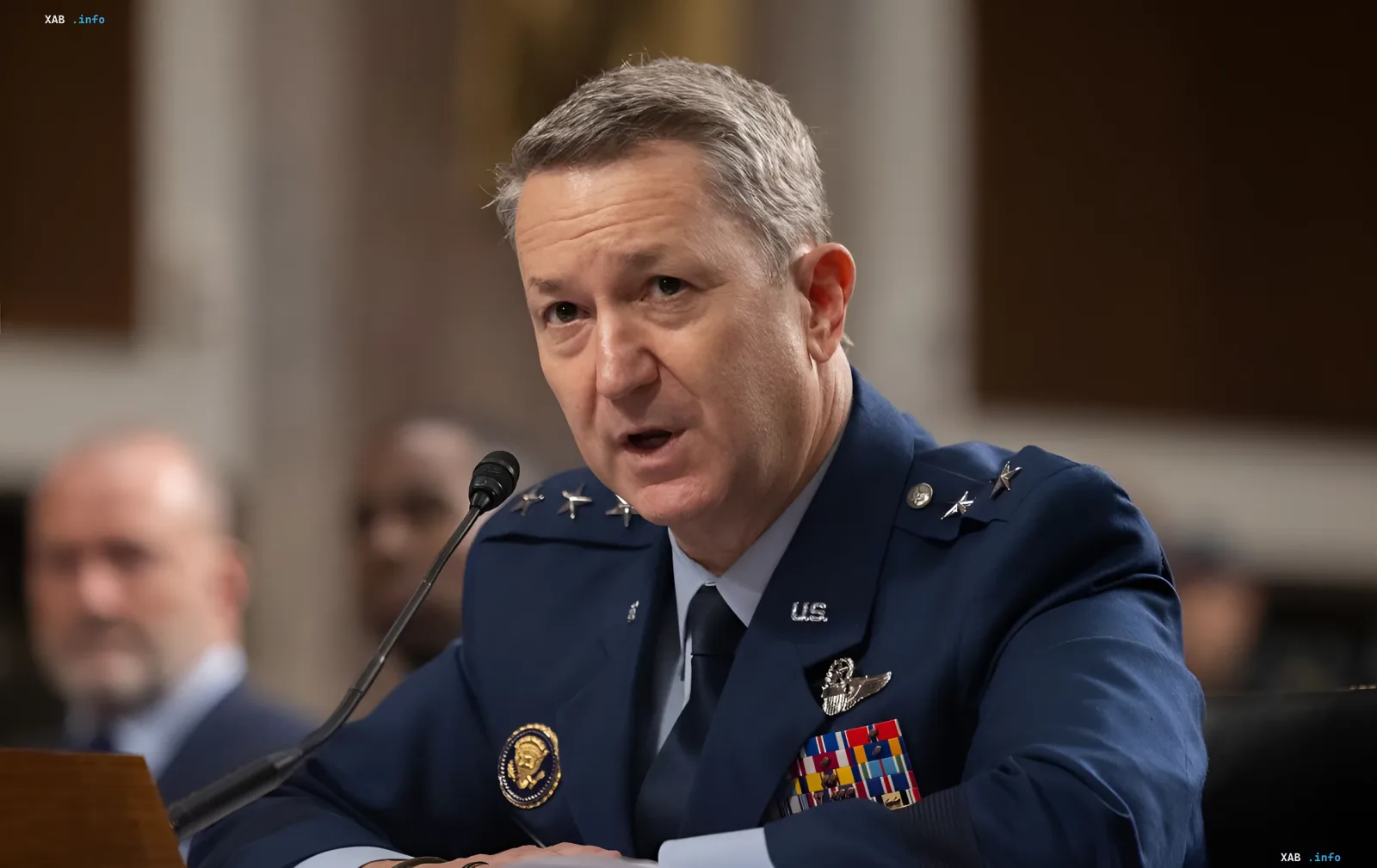
The Chairman of the Joint Chiefs of Staff of the United States, General Dan Caine, stated that the country's armed forces need to prepare for combat operations not only in near-Earth orbit but also in the space around the Moon. He made this remark while speaking at the Air, Space and Cyber conference in National Harbor, Maryland, RBC-Ukraine reports, citing the Associated Press. The statement came a few days after Washington officially confirmed for the first time the deployment of space-based weapons into orbit, marking a turning point in the American space doctrine.
Expanding the Zone of Control and China's Role
Additional clarification on the intensification of military preparations was provided by Lieutenant General Gregory Guyon, head of the U.S. Space Forces Combatant Command. According to him, the expansion of the zone of control is driven by the actions of potential adversaries, first and foremost the People's Republic of China. Guyon emphasized that in 2024 Beijing established its own military space units designed for rapid response to crises in space. These steps, in Washington's assessment, require the Pentagon to reassess the geographic and orbital boundaries of military training.
Space Forces: The Youngest Branch of the US Armed Forces
The Space Forces are the youngest separate branch of the US armed forces, established in 2019 during Donald Trump's first presidential term. Despite their relatively short existence, the service is already demonstrating rapid growth in capability. Over the next five years, the Pentagon plans to double the personnel strength of the Space Forces — to approximately 25,000 personnel. Such an increase in authorized strength indicates that Washington views space not as an auxiliary domain but as a full-fledged theater of combat operations.
The New Meadowlands System and Electromagnetic Warfare
The US Space Forces have already been equipped with the new mobile electromagnetic warfare system, Meadowlands. According to available data, the system is capable of jamming communication and control channels of enemy spacecraft without physically destroying them. This means that the Pentagon is betting on "soft" methods of neutralizing the adversary in space, which may lower the threshold of escalation compared to kinetic weapons, yet does not rule out full-scale combat scenarios, as General Caine noted.
Beijing's Position: Against the Militarization of Space
In response to the deployment of US weapons into orbit, the Ministry of Foreign Affairs of the People's Republic of China stated that Beijing consistently opposes the placement of weapons, the militarization, and an arms race in outer space. Thus, the two largest space powers hold diametrically opposed positions: Washington openly declares combat scenarios in the space around the Moon, while Beijing formally rejects the very possibility of orbit militarization. This divergence heightens the risks of misunderstanding and incidents in a situation where neither side possesses a transparent system for warning about space maneuvers.