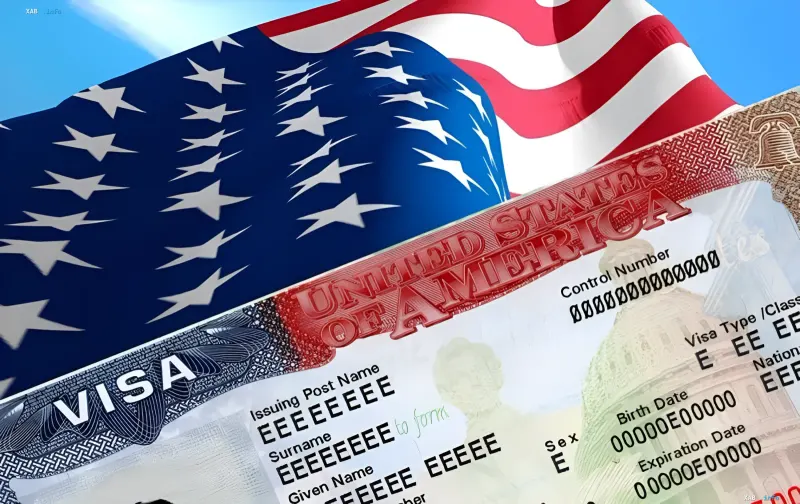
The administration of US President Donald Trump is preparing a large-scale operation to revoke up to 200,000 B1 and B2 tourist and business visas issued between 2016 and 2026. According to the Associated Press, this concerns foreigners who entered the United States as short-term visitors and subsequently filed, or continue to file, applications for asylum. The US Department of State may officially announce the revocations within the coming weeks, although no final decision has been made as of publication, and sources within the department are speaking on the condition of anonymity.
Verification mechanics and consequences for visa holders
The review of active B1 and B2 visa holders was launched after the Department of State received data from US Citizenship and Immigration Services (USCIS) on filed asylum applications. The agencies cross-referenced the information and identified foreigners whose initial status of stay does not match their actual intent to remain in the country. US officials emphasized that visa revocation in itself does not mean immediate deportation. Most individuals whose asylum claims are pending will be moved to a different category of stay, thereby losing their status as persons in the US on tourist or business visas.
Context: tightening of visa policy under Trump
The revocation of up to 200,000 visas is not an isolated decision but part of a systematic strategy that the Trump administration has pursued consistently throughout its term. Applicants for US visas are now required to provide expanded information about their social media activity, and in some cases to post significant financial bonds. New B1 and B2 visa applicants must confirm that they do not intend to seek asylum in the US and plan to return to their country of residence. Deputy Secretary of State Christopher Landau publicly called the practice a "loophole": "Asylum should not be a loophole to circumvent immigration law," he wrote on the social network X.
Previous waves of revocations
Over the past 18 months, the Department of State has already revoked approximately 175,000 visas. Among their holders were individuals convicted of or charged with crimes — ranging from driving under the influence to rape and robbery. Visas were also revoked from a number of people who had publicly spoken out against US policy. Thus, the upcoming operation to revoke the visas of asylum seekers will effectively be the second major wave in two years, underscoring the scale and systematic nature of the review of immigration documents.
Contradictory data
The provided sources contain a number of inconsistencies that are important to note. First, while headlines and main texts cite the figure "up to 200,000," the officials themselves, according to AP, do not specify an exact number of visas to be revoked and emphasize that the process will be gradual, meaning the final figure may change. Second, on the one hand, it is reported that the State Department "may announce the revocations within the coming weeks," creating the impression of a decision in the works; on the other, it is explicitly stated that no final decision has yet been made and that all information comes from anonymous sources. This means the announcement could be delayed, the scope adjusted, or the procedure implemented on a different timeline.
Reactions and legal risks
The Trump administration's strict immigration policy has already sparked legal disputes. Labor unions and human rights organizations have challenged in court the new rules on the validity periods of visas for foreign students. Experts warn that the mass revocation of visas for individuals whose asylum cases are still pending may face similar legal challenges, especially if courts find that stripping visa status without providing an alternative legal basis violates due process principles. Nevertheless, as officials note, the transfer to a different category of stay should ensure continuity of legal status for most affected individuals.