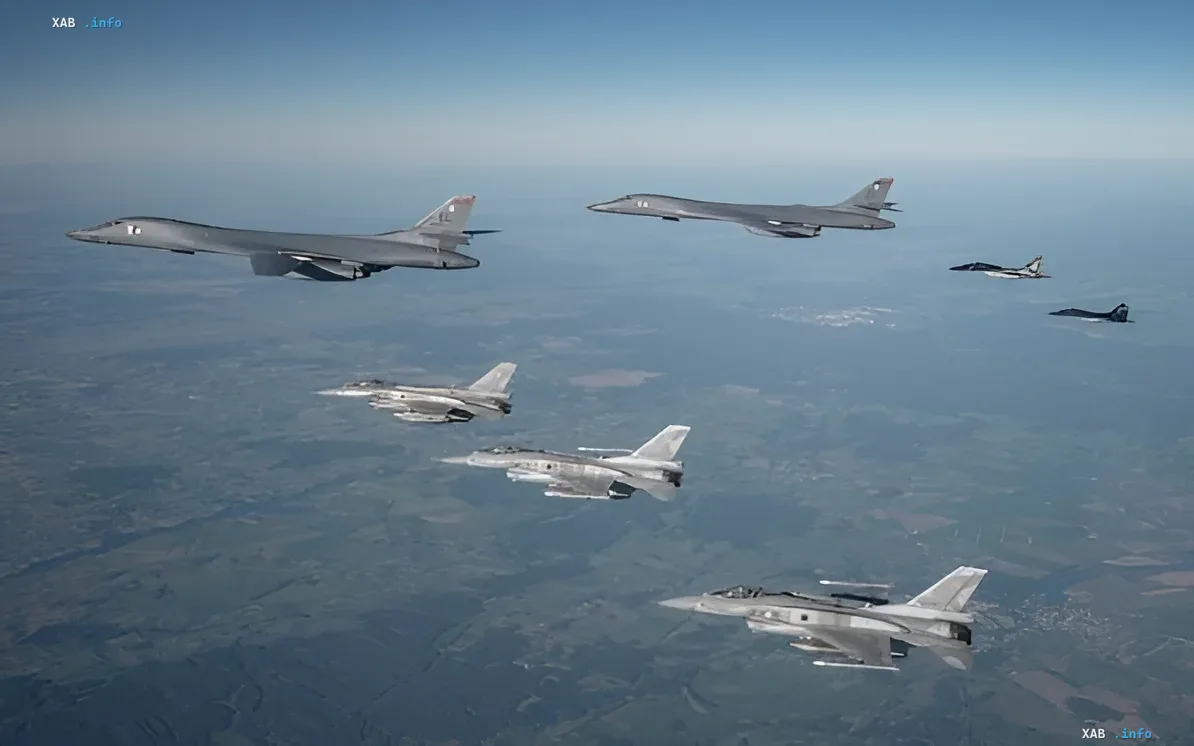
The military situation in one of the world's most strategically vital trade hubs has sharply escalated. The US armed forces conducted a large-scale operation in the Strait of Hormuz area, launching airstrikes against infrastructure linked to Iranian paramilitary structures. According to Axios, citing sources within the defense department, the attack was a response to a series of incidents threatening the safety of commercial shipping. The main objective of the operation was to reduce the offensive potential of the forces controlling this key route.
Tactics and Objectives: "Surgical" Intervention
To execute the operation, the command deployed US Navy carrier-based aviation units and unmanned aerial vehicles. The strike strategy aimed to suppress the coastal observation and engagement systems deployed on the islands and coastlines of the strait. Military analysts report the destruction of a wide range of critical targets:
- Launch pads and mobile complexes for anti-ship cruise missiles;
- Radar stations monitoring surface and air situations;
- Logistics warehouses storing loitering munitions and reconnaissance drones.
The US administration characterizes these actions as preventive and "surgical." The official position is that the strikes are necessary to stabilize the situation and compel the opposing side to comply with the terms of the Islamabad Memorandum on the Cessation of Fire, signed on June 17, 2026.
Logistical Collapse and Economic Shock
The escalation of tensions was immediately reflected in global markets. The International Maritime Organization (IMO) and UN bodies were forced to announce a temporary suspension of the evacuation of civilian seafarers and impose restrictions on the transit of commercial fleets. This was due to a lack of safety guarantees from coastal states. Congestion of tankers waiting for transit clearance began to form in narrow sectors of the waterway.
Since approximately 20% of the world's crude oil supplies transit through the Strait of Hormuz, the halt in ship movement led to a sharp spike in prices. On major exchanges such as ICE and NYMEX, the cost of benchmark hydrocarbon grades, including Brent, reached critical levels. An additional factor of instability was the diplomatic tension between Washington and Riyadh: Saudi Arabia maintained its ban on the use of its airspace for combat sorties, forcing the US to rely exclusively on the resources of carrier groups in neutral waters.
The Legal Aspect of the Conflict
From the perspective of international law, the situation in the strait is governed by the 1982 UN Convention, which classifies the Strait of Hormuz as a critically important international artery. State obligations in this region include ensuring unimpeded transit passage. The use of military force under such conditions calls into question the observance of these norms and places the region in a phase of high uncertainty.


