
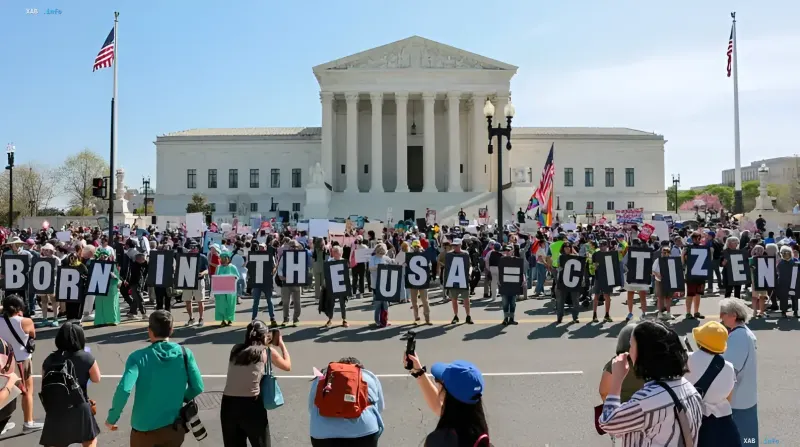
On June 30, 2026, the US Supreme Court issued a historic ruling, blocking an attempt by the Donald Trump administration to change the rules for birthright citizenship. The Court declared Executive Order No. 14160 unconstitutional, which was signed by the president on the first day of his second term — January 20, 2025. The document instructed agencies to stop issuing passports to children born on US territory if their parents are not citizens or legal residents.
Legal Foundation: 14th Amendment vs. Presidential Order
The decision was made by a majority vote — 6 to 3. The verdict is based on the 1898 precedent in the case United States v. Wong Kim Ark, which established the interpretation of the 14th Amendment to the Constitution. Adopted in 1868 after the Civil War, the amendment states: all persons born or naturalized in the United States and "subject to the jurisdiction thereof" are citizens.
The Trump administration attempted to reinterpret the phrase "subject to the jurisdiction thereof," arguing that it implies political loyalty and does not apply to children of temporary visitors or illegal immigrants. According to estimates by human rights defenders, if the order had come into force, about 250,000 children would have been left without citizenship annually.
Split in the Judiciary: Who Supported, Who Opposed
The judges' votes were distributed as follows:
- Majority (6 votes): Chief Justice John Roberts, Amy Coney Barrett, and three liberal judges ruled that the order violates the 14th Amendment. The wording historically excludes only the children of diplomats and occupying forces. Brett Kavanaugh joined the decision but noted a violation not of the Constitution, but of the Immigration and Nationality Act of 1952.
- Minority (3 votes): Clarence Thomas, Neil Gorsuch, and Samuel Alito supported the order. Thomas, in a separate opinion, stated that the decision "devalues" citizenship and stimulates illegal migration.
Reaction from the White House and Congress
President Trump reacted sharply to the verdict, publishing a statement on the Truth Social platform. He called the decision "detrimental to the country" and urged Congress to urgently draft legislation excluding the automatic granting of citizenship to children of persons without permanent legal status. Trump also drew a parallel with the February 2026 court ruling that limited the introduction of across-the-board customs tariffs.
Simultaneously, the US Department of Justice announced its intention to strengthen law enforcement practices regarding "birth tourism." Entry into the country using forged documents or false pretenses will now be classified as a federal offense.
Political Reaction and Legal Consequences
Leader of the Democratic minority in the House of Representatives Hakeem Jeffries and the leadership of the ACLU welcomed the decision, calling Trump's order an "attempt to change the Constitution by administrative fiat." Lawyers emphasize: since the court issued a constitutional verdict, any attempts to restrict birthright citizenship through ordinary federal laws will also be blocked — changing the norm requires a full constitutional amendment.
According to the doctrine of American constitutional law, Supreme Court decisions based on the interpretation of the Constitution possess the highest legal force and cannot be overridden by executive orders or ordinary acts of Congress. Thus, US immigration policy remains within the framework established by the 14th Amendment, despite pressure from the administration.


