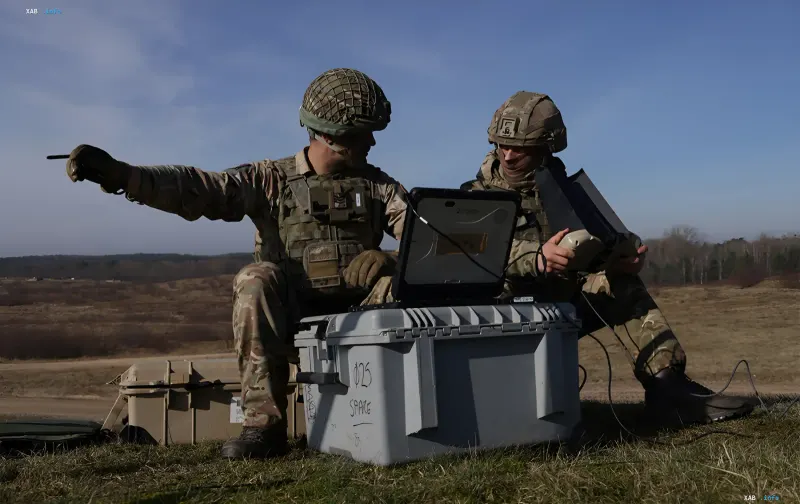
According to sources familiar with the matter, NATO nations expect the administration of US President Donald Trump to postpone a final decision on reducing the US military contingent in Europe. Currently, about 80,000 US service members are deployed on the European continent, and this scale of presence is precisely what is being reviewed in Washington. Earlier, allies feared the administration might cut the contingent by 25,000 personnel, but according to recent estimates, the scale of the reduction could be around 5,000 troops.
Factors contributing to the postponement
Sources point to several reasons that may have influenced the potential delay. First, the Trump administration has refocused on finding a peace agreement to end the war in Ukraine. Second, relations between the US and NATO allies have improved in recent weeks, and Washington views European intentions to increase defense spending positively. An additional factor is the need for the US military to use European bases to project power into the Middle East and other regions, making the retention of infrastructure in Europe pragmatically advantageous for Washington.
Scale and geography of the potential reduction
Germany is emerging as the most likely candidate for reductions, as it hosts the largest US contingent in Europe. At the same time, according to estimates, countries on NATO's eastern flank, particularly Poland, may instead receive more US troops. Thus, it may not be a linear reduction of presence, but rather a redistribution in favor of the eastern direction.
Connection to the Ukraine negotiation track
An additional factor prompting Washington to revise its plans has been negotiations to end the war in Ukraine: Russia has put forward the issue of NATO troop deployments on the European continent among its demands. Last week, US Under Secretary of Defense for Policy Elbridge Colby stated that Washington is ready to adapt its military presence to support peace negotiations in Ukraine.
Pentagon position and US strategic course
The Pentagon stated that the review of the US military presence in Europe is ongoing, but the department has nothing to announce at this time. Earlier, US Secretary of Defense Pete Hegseth emphasized that Europe must take primary responsibility for its own defense, and the United States should focus on other strategic priorities. Against this backdrop, NATO allies are reportedly viewing related issues of military assistance with growing anxiety, including the timelines for the transfer of air defense systems, which heightens overall uncertainty surrounding the American presence in Europe.