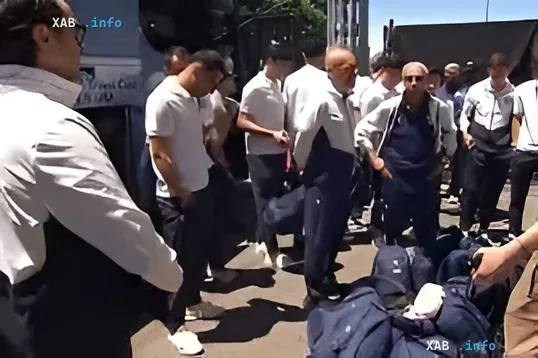
An incident that has sparked widespread resonance in the sports community occurred in New York. The Uzbekistan national football team, which arrived in the American metropolis to participate in competitions, was subjected to an unprecedentedly thorough inspection by local security services.
The inspection took place directly at the team bus, where players and delegation representatives were waiting. The procedure took a significant amount of time and included a complex of strict control measures that, in the opinion of many observers, go beyond standard security protocols for sports teams.
Details of the inspection procedure
Law enforcement officers and security services applied a number of measures aimed at eliminating the slightest risk. The process looked as follows:
- All personal belongings, backpacks, and bags of the footballers were unloaded directly onto the asphalt for a detailed visual inspection.
- A special search dog was involved to check the luggage, which is a measure usually applied when there is suspicion of smuggling prohibited substances.
- The documents of each member of the delegation were carefully verified.
- Each participant underwent individual control using handheld metal detectors.
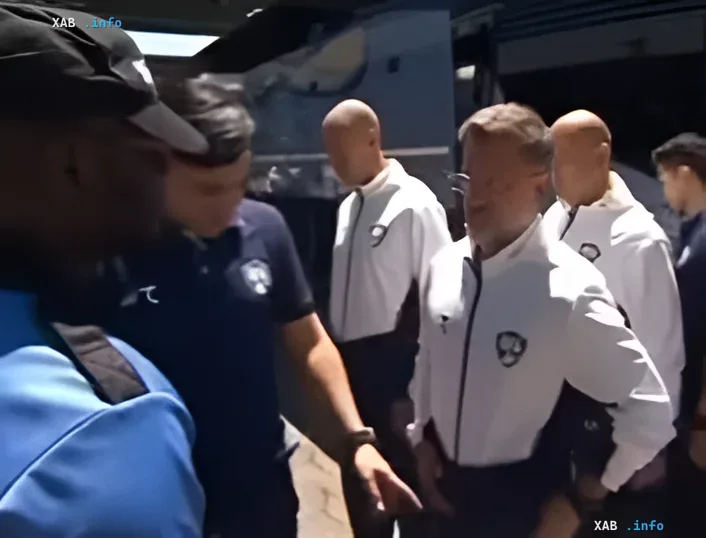
Particular attention was paid to metal objects. A number of athletes, whose sensors detected the presence of coins or mobile phones in their pockets, were sent for an additional re-inspection. Such strictness raised questions among those present and those who were following the situation in real time.
Context and public reaction
The situation with the Uzbek team is not an isolated incident. Similar security measures regarding arriving national teams were previously applied to the teams of Senegal and Iraq. The repetition of the scenario with different national compositions led to a heated discussion on social media.

Some users and sports commentators have interpreted the actions of American security services as excessive and possibly discriminatory towards athletes from certain countries. Critics point out that this level of attention to detail (from coins in pockets to dog searches) creates an atmosphere of distrust and can affect the psychological state of players before important matches.
Official position
At the time of publication, official comments from the US Department of State, the US Department of Homeland Security, the Uzbekistan Football Association, or the tournament organizing committee regarding the justification for applying these inspection procedures to foreign athletes have not been received. The lack of explanations only fuels speculation about the reasons for such strict control.