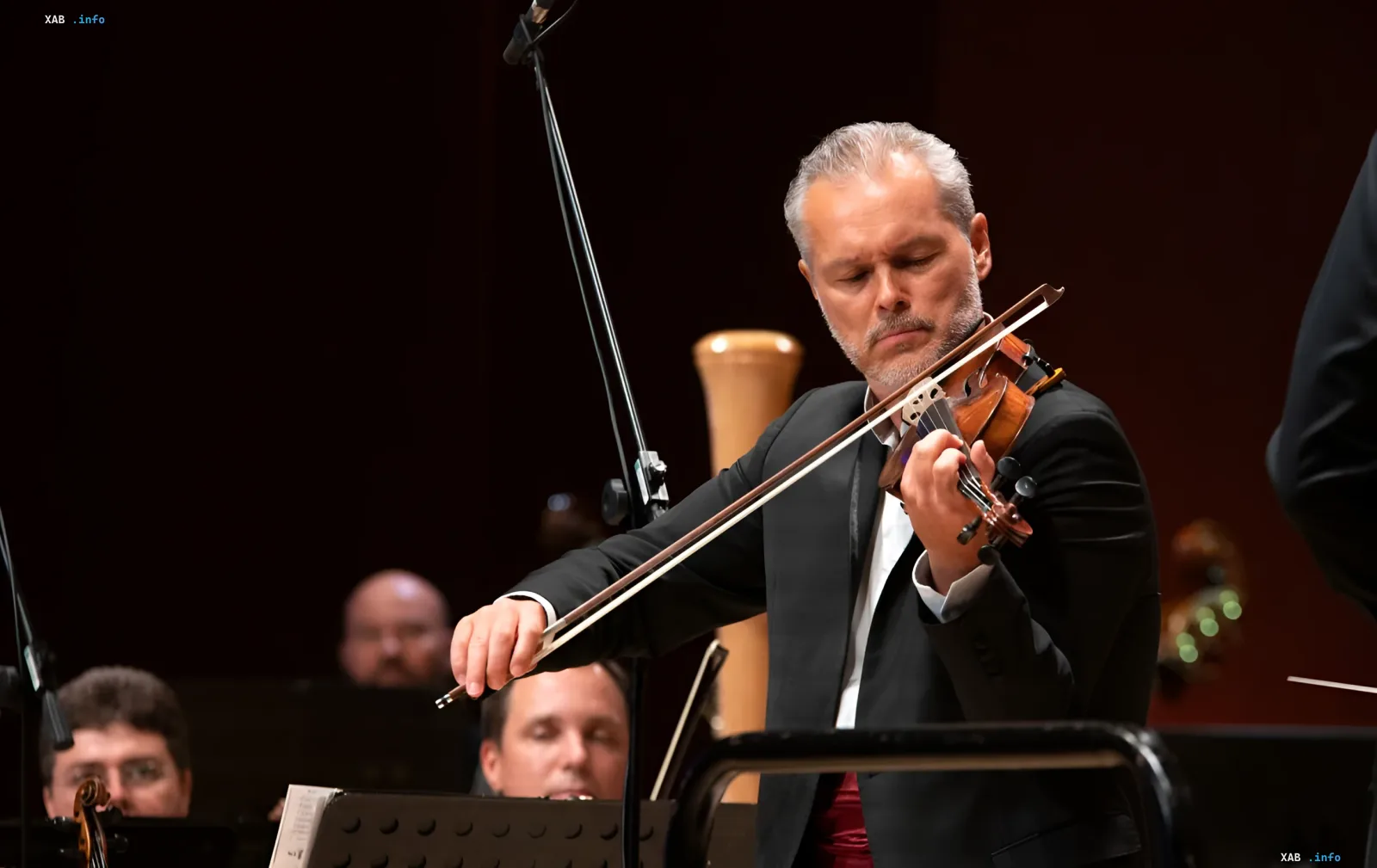
An event has taken place in Budapest that has sent shockwaves through the musical world of Central Europe. At the opening of the concert season of the Hungarian National Philharmonic Orchestra, a Hungarian musician will perform instead of the Russian violinist Vadim Repin. The organizers of the event completely replaced the key item on the program, a result of the active work of diplomatic departments.
Diplomatic success in the heart of Europe
The cancellation of the Russian artist's performance was made possible thanks to the efforts of the Embassy of Ukraine in Hungary. As reported by RBC-Ukraine citing the Ministry of Foreign Affairs of Ukraine, diplomats managed to deny representatives of the aggressor state the opportunity to perform on a prestigious international stage.
The Ministry of Foreign Affairs of Ukraine formulated its position firmly: "Russian culture is a culture of genocide and war crimes that should have no place on international platforms." Diplomats assured that Kyiv will consistently work towards the complete isolation of representatives of the Russian cultural space in the global industry.
The stage on Margit Island
The concert was scheduled to take place at the theater on Margit Island (Margitszigeti Színház). This is one of the most prestigious summer theater venues not only in Hungary but in all of Central and Eastern Europe. The theater is located in the very heart of Budapest and is the center of the city's cultural life.
Every summer, a large-scale festival is held here, hosting more than 70 cultural events. Opera, ballet, musicals, as well as classical and contemporary music featuring leading Hungarian and international artists are showcased on this stage. This is why the replacement of the performer at such a level became a noticeable signal for the region's cultural policy.
Context of sanctions and isolation
The event in Budapest takes place against the backdrop of tightening pressure on Russian infrastructure. Recently, Ukraine introduced strict sanctions against ten top telecom operators in the Russian Federation. The companies targeted are those that, according to Kyiv, support the work of the Russian military and occupation administrations by providing confidential communication channels and broadcasting propaganda.
Meanwhile, the European Union is preparing a new large-scale package of restrictions. Leaders of the bloc have developed measures under which entry into Europe will be closed to occupiers. The new sanctions will for the first time affect Russian fishing, expand restrictions against the Russian shadow oil fleet, and freeze the assets of approximately 170 additional individuals and legal entities.


