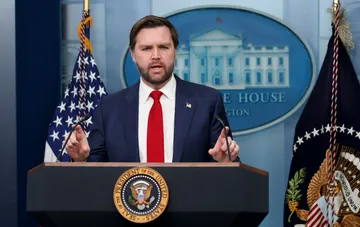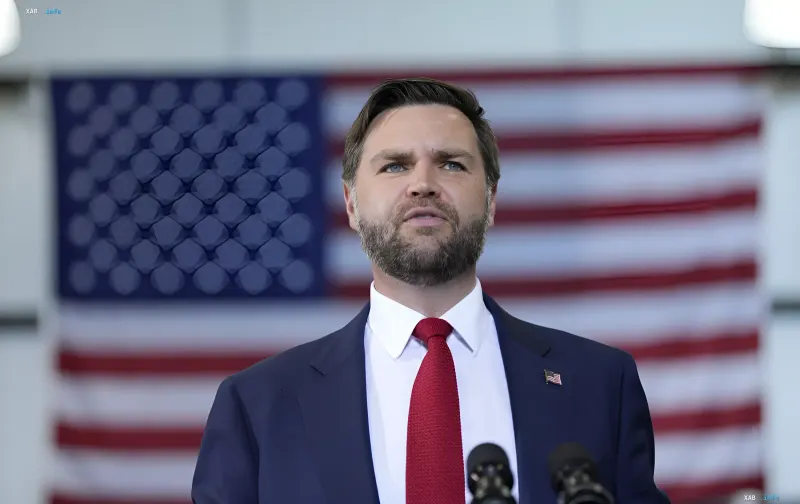
U.S. Vice President JD Vance has publicly stated that rising fuel prices and the country's highest inflation rate in half a century are directly linked to outbreaks of aggression around the world, including Russia's full-scale invasion of Ukraine. This is reported by RBC-Ukraine with reference to his speech. According to the American politician, it was after the start of the full-scale invasion that fuel prices in the U.S. skyrocketed, reaching levels that, in his estimation, are significantly higher than current ones.
Record Inflation and the Memory of 2022
Vance acknowledged that the problem of record U.S. inflation is real and requires attention. At the same time, he urged remembering the events of 2022, when, according to him, fuel prices following Russia's invasion of Ukraine jumped to levels exceeding current ones. The vice president emphasized that similar price spikes had been observed in the country's history before—specifically in 1979, 2001, and 2007—and linked each of them to external shocks and geopolitical tension.
“Some Tiny Dictator”: Rhetoric and Political Message
Commenting on the reasons for the price spikes, Vance used a harsh formulation: “Prices spike every single time some tiny dictator decides to throw a tantrum.” This statement became part of a broader rhetoric in which inflation and rising fuel costs are explained not by domestic economic factors, but by the actions of foreign leaders and outbreaks of conflict. This approach allows the administration to shift focus from domestic economic policy to an external threat.
Political Context: The Diesel Deal and the War with Iran
Vance's speech comes against the backdrop of mounting domestic political pressure. According to reports, members of the Democratic Party are laying the groundwork to investigate the so-called diesel agreement between Washington and Moscow; relevant demand letters have already been sent to bank and port administrations. In addition, the Financial Times reported that American voters are expressing concern over corruption within the administration of U.S. President Donald Trump.
What This Means for Voters
Dissatisfaction with the authorities' actions, according to the publication, is intensifying against the backdrop of rising prices and an unpopular war with Iran, in the view of a portion of the electorate. Thus, Vance's statement linking inflation to global aggression fits into a context where economic discontent and foreign policy issues become key themes of the electoral and domestic political agenda. For voters, this means that fuel price dynamics and inflation are returning to the forefront as a factor in evaluating the administration's work.