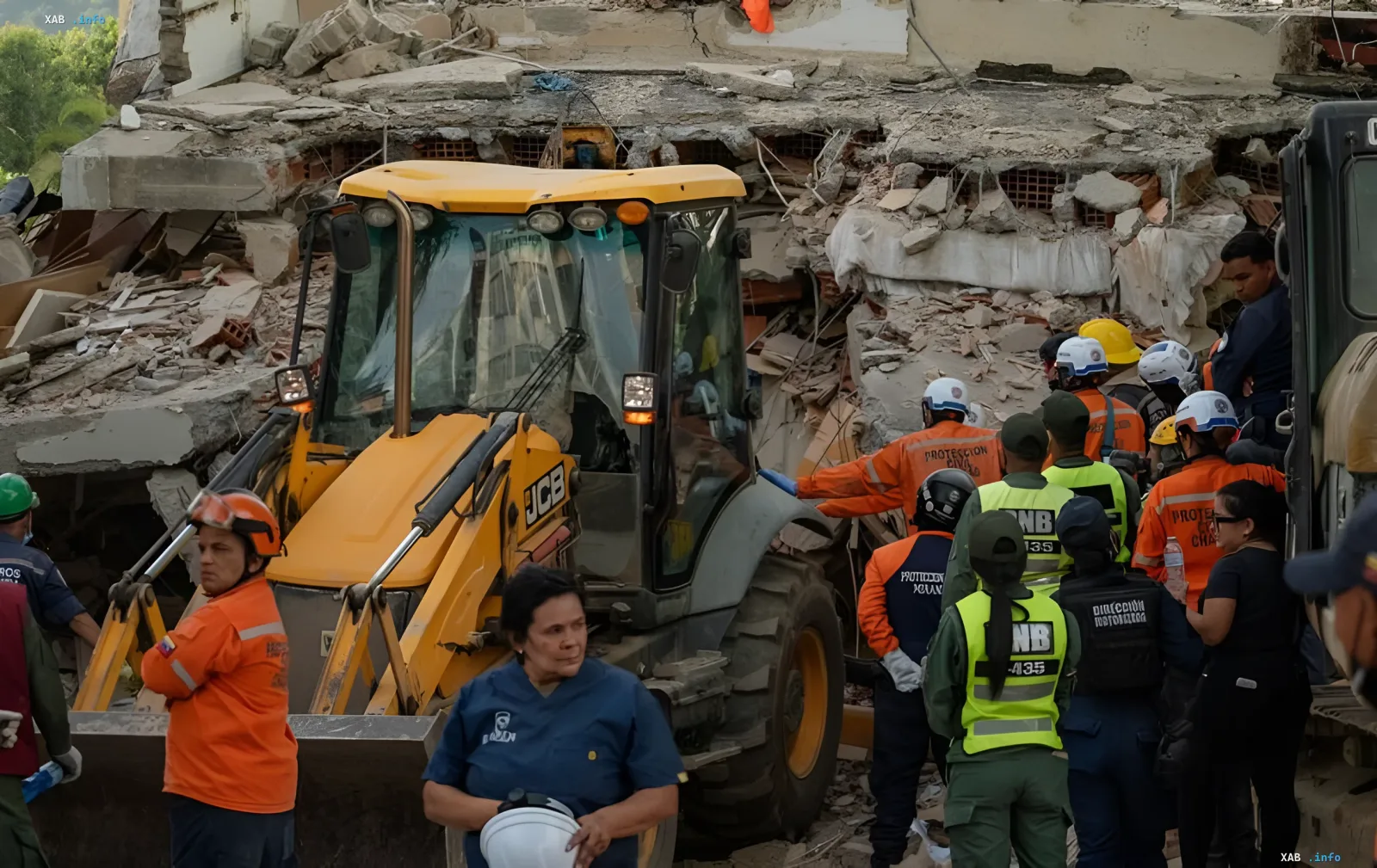
Northern Venezuela is gripped by an unprecedented humanitarian catastrophe. Two powerful seismic shocks, occurring just one minute apart, have turned entire districts into rubble, claiming more than a thousand lives. According to the latest data, the death toll has reached 1,430, while the fate of nearly 69,000 people remains unknown.
Scale of Destruction and Human Losses
The tragedy struck on June 24, 2026, when two earthquakes with magnitudes of 7.2 and 7.5 were recorded in the northern state of Yaracuy. This marked the strongest seismic event to hit Venezuela in the last 125 years. Powerful tremors were felt across the entire country, including the capital, Caracas, where even modern high-rise buildings sustained damage.
Official authorities report that more than 3,200 people have sustained injuries of varying severity, while over 3,100 citizens have been left homeless. The situation is exacerbated by the fact that relatives have filed reports searching for at least 68,900 missing persons. The tragedy occurred on the Day of the Battle of Carabobo — a national holiday when most people were at home with their families, which, unfortunately, led to a significant increase in casualties trapped under the rubble of residential areas.
Disaster Zone: The Struggle for Life Without Heavy Machinery
The most devastating impact was felt in the northern regions, particularly in the city of La Guaira, which has been officially declared a disaster zone. In conditions of an acute shortage of heavy machinery necessary for clearing the rubble, the local population is forced to resort to extreme measures. People are digging through the debris of destroyed apartment blocks and houses with shovels and bare hands, desperately trying to find their loved ones.
The International Red Cross describes the situation as a "race against time." The chances of finding survivors under tons of concrete are rapidly diminishing with every passing hour. Meanwhile, thousands of people who survived the destruction are afraid to return even to standing buildings due to the real threat of aftershocks.
Economic Blow and Mobilization of Forces
Direct material losses from the catastrophe are estimated by the United Nations Development Programme (UNDP) at $6.7 billion. This amount is equivalent to approximately 6% of Venezuela's Gross Domestic Product (GDP). It is important to note that this estimate does not account for long-term damage caused by the halt of enterprises and the colossal costs that will be required for future infrastructure reconstruction.
To stabilize the situation in the disaster zone, more than 14,000 military personnel and police officers have been mobilized. Access to dangerous areas is strictly restricted: entry for civilian vehicles and volunteers is permitted only with special passes.
International Humanitarian Mission
Parallel to the actions of local forces, a massive international operation is unfolding. Specialists from the United Kingdom, Turkey, the Netherlands, the USA, France, Mexico, Brazil, and El Salvador have joined the search and rescue efforts. Special forces units and medical teams have arrived in the disaster zone.
The United States of America has taken on a significant portion of the logistical support. State Department representative Jeremy Lewin reported that the US military is coordinating flights for the rapid delivery of mobile hospitals and medications. A US Navy transport ship, equipped to receive victims requiring urgent surgical care, has also arrived off the coast of Venezuela.


