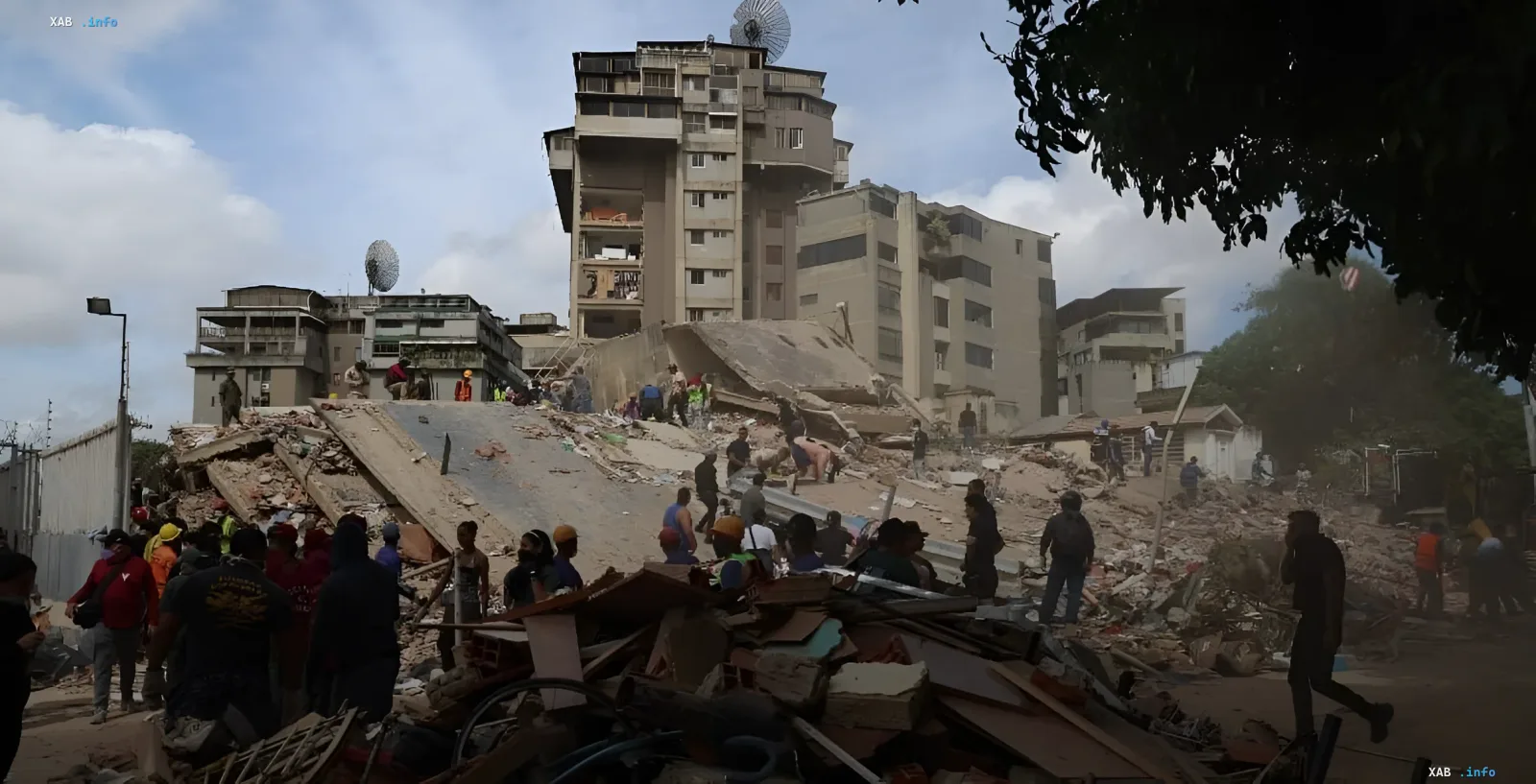
Tragedy on a national scale has engulfed the northern states of Venezuela. Amidst large-scale search and rescue operations, the death toll from a series of powerful tremors has reached 920 people. Official data, announced during a televised briefing on Friday, June 26, 2026, was described as shocking by Jorge Rodríguez, Chairman of the National Assembly. According to the latest reports, more than 3,360 citizens have sustained injuries of varying severity, while emergency services continue to operate under conditions of critical humanitarian danger.
Seismic Doublet: A Catastrophe of the Century
According to data from the United States Geological Survey (USGS), the event that occurred on the evening of June 24 is classified as a "doublet event." The first shock, with a magnitude of 7.2, was recorded at 18:04 near the San Sebastian fault. Just 39 seconds later, a second, even more powerful tremor of magnitude 7.5 followed. Specialists characterize this earthquake as the most destructive in the country since 1900. To date, more than 200 aftershocks have been registered in the affected regions, significantly complicating the work of rescuers.
Infrastructure Collapse in La Guaira and Caracas
The epicentral zone covered five northern states bordering the Caribbean coast. The most critical damage was recorded in the state of La Guaira and the surrounding areas of Caracas, including Chacao, Los Palos Grandes, and Altamira. The Minister of Interior Affairs reported the total destruction or deformation of more than 250 residential buildings in La Guaira. In the capital, a 22-story high-rise complex collapsed completely, along with partial destruction of 14 floors of the Petunia residential residence.
The region's transport system has been paralyzed. Due to damaged terminals and deformed runways, Simón Bolívar International Airport, a key hub for aid logistics, has completely suspended operations.
Medical Crisis and State of Emergency
Hospitals in the northern regions are functioning under extreme overload. Due to a lack of space, temporary triage points and emergency care are being set up in open areas and inner courtyards of medical facilities. Acting President Delcy Rodríguez announced the introduction of a nationwide state of emergency. To ensure law and order and resource distribution, mechanisms for the militarization of the disaster zone have been deployed. A specialized fund of $200 million has been created to address the aftermath and restore medical facilities.
International Aid and Complexity of Rescue Operations
The scale of the disaster required the rapid deployment of international logistics channels. The United Nations Office for the Coordination of Humanitarian Affairs (OCHA) is coordinating the actions of teams from 17 countries, including Mexico, Chile, and El Salvador. The main phase of operations coincides with the critical 72 hours necessary to extract survivors from the rubble.
It is important to note that the INSARAG international response standards under the UN classify the current phase of search operations in Venezuela as an operation of the highest level of complexity. This is due to the risks of repeated ground shifts and the high density of construction in the affected neighborhoods.
The US State Department, through Southern Command (SOUTHCOM), has allocated an emergency aid package of $150 million and deployed aviation for aerial photography of remote areas. The United Kingdom has sent a specialized aircraft with engineering units and canine units to the region to reinforce local civil defense services.


