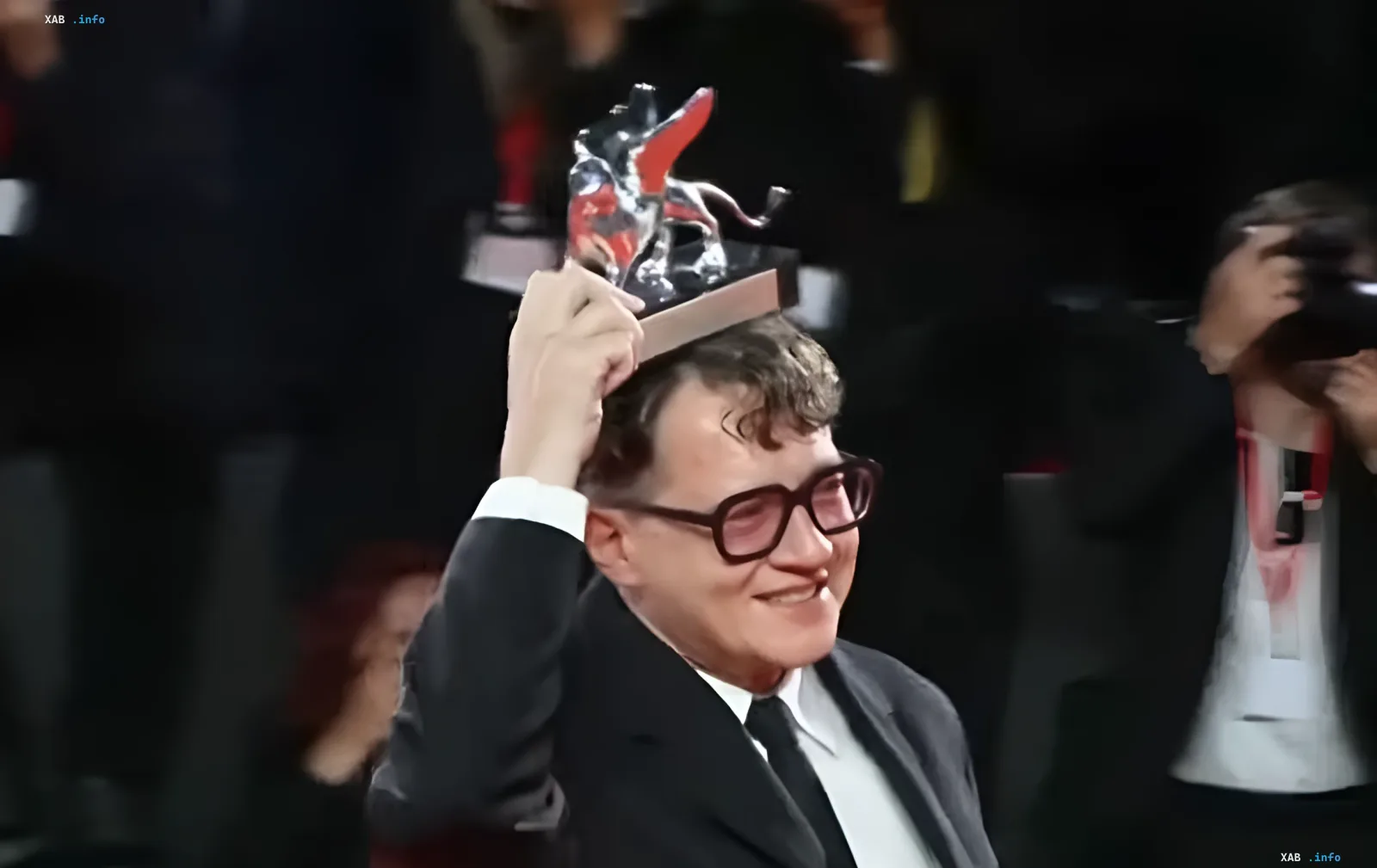
The 83rd Venice International Film Festival, held from 2 to 12 September, has come to a close in Venice. The evening's top prize — the Golden Lion for Best Film — went to the psychological thriller "Unknown Woman" (Kvinde Ukendt) by Danish director May El-Touhy, produced jointly by Denmark, Sweden and Latvia. At the same time, Russian director Ilya Khrzhanovsky was in the spotlight, receiving the Silver Lion for Best Direction for his film "DAU" — a project that, a month before the ceremony, became the subject of a public debate involving Ukrainian authorities.
The top prize: a Danish thriller about a past that will not let go
The plot of "Unknown Woman" unfolds in Denmark in the summer of 1945. The protagonist, Mari, works as a nanny and maid in the house of a wealthy widower and plans to marry him, but her past threatens to ruin these plans: during World War II, the woman had an affair with a German soldier. It is precisely this thread of secrecy and guilt, as intended by the director, that sustains the tension of the psychological thriller right up to the finale. For her role as Mari, actress Matilda Arsel was awarded the Volpi Cup for Best Actress, making the Danish-Swedish-Latvian project one of the most successful at the festival.
Grand Jury Prize and Best Direction: South Korea and Russia
The "Silver Lion — Grand Jury Prize" was awarded to the South Korean drama "Possible Love" (Ga-neung-han Sa-rang) by director Lee Chang-dong. According to the festival's description, the film explores the brutality of the modern labor system through the fates of two married couples — a dismissed worker and his wife, and a documentary filmmaker and her husband. The award for Best Direction went to Russian Ilya Khrzhanovsky for "DAU" — a German, French and Swedish production telling the story of Soviet physicist Lev Landau in the USSR. According to the festival's official description, the film is inspired by the stories of physicists who worked on the creation of the Soviet atomic bomb and traces the hero's life from 1928 across four decades of Soviet history.
"DAU" and the controversy over its competition entry
As early as August, Ukraine's Ministry of Culture and Strategic Communications, together with the Ministry of Foreign Affairs, expressed concern over "DAU"'s participation in the competition. The statement emphasized the director's ties to Russia and Russian business: according to the authorities, the film's production was financed by Russian businessman Sergey Adoniev, who is subject to US and Ukrainian sanctions. It was separately noted that the actor playing the lead role, Theodore Currentzis, had taken Russian citizenship and developed his career with the financing of sanctioned Russian state banks and cultural institutions. Ukraine also pointed out that filming took place in Kharkiv in 2008–2011, but that the city is shown in the film "through a Soviet lens".
Contradictory data
The positions of the parties on "DAU" are fundamentally at odds. On the one hand, the jury of the 83rd Venice Film Festival officially awarded the film the Silver Lion for Best Direction, recognizing its artistic value within the main competition. On the other hand, Ukrainian authorities insisted that by screening this work the festival "risks indirectly legitimizing Russia's attempts to erase and appropriate Ukraine's history and cultural identity," and emphasized that the city serving as the location (Kharkiv) "is currently subjected to constant Russian missile, drone and bombing attacks." Thus, the same film simultaneously figures as a laureate of an international competition and as an object of political-cultural protest; in the provided sources, these two assessments coexist without mutually refuting each other.
Main competition results
The final picture of the 83rd Venice Film Festival looks like this: Golden Lion — "Unknown Woman" (May El-Touhy), Volpi Cup for Best Actress — Matilda Arsel, Silver Lion — Grand Jury Prize — "Possible Love" (Lee Chang-dong), Silver Lion for Best Direction — Ilya Khrzhanovsky for "DAU." Against the backdrop of these awards, the festival once again found itself at the intersection of cinematic and political agendas, which will likely shape the discussion around its outcomes in the coming weeks.