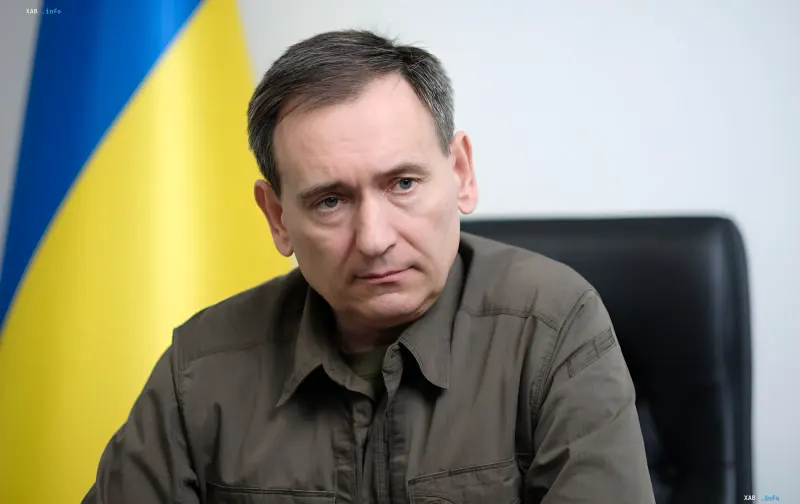
People's Deputy and member of the Verkhovna Rada Committee on National Security, Defense, and Intelligence, Fedir Venislavsky, assessed the Cabinet of Ministers' resolution on changing the rules for reserving military-liable citizens in an interview with RBC-Ukraine. According to him, the updated rules are intended to minimize abuse and will likely be the final version in the medium term. The deputy noted that he and his colleagues from the relevant committee had criticized the government for not consulting with the committee while drafting the document, but assessed the government's logic as understandable and justified.
Reservation as 'business on citizens'
Venislavsky pointed out that the reservation mechanism, which was initially intended to ensure the normal functioning of the economy, has partially turned into a source of income. According to him, a number of enterprises with critical status were effectively providing citizens with deferments from mobilization for money. "The number of reserved people is growing very rapidly, and this is undoubtedly, among other things, a consequence of abuse," the MP emphasized. This, in his opinion, was the reason for revising the criticality criteria and auditing the status of enterprises.
What is changing: quotas and status verification
In the final version of the resolution, the share of reserved employees for defense industry enterprises is reduced from 100 to 95 percent. At the same time, enterprises that have received critical status and passed the audit maintain the ability to operate in their current format. Venislavsky stressed that one cannot apply a single measure to all entities and simply reduce the number of reserved people by a certain percentage so that they can be mobilized into the Armed Forces. The document also provides for the formation of a new advisory body under the government — a coordination center that will produce methodological recommendations for classifying enterprises as critical.
The role of law enforcement agencies
The MP emphasized that for effective deterrence of abuse, the State Bureau of Investigation, the National Police, and other law enforcement agencies must work more actively. According to him, it is necessary to expose specific cases of abuse and bring the perpetrators to justice. "This would also be a deterrent for those who want to turn the reservation system into a way to make money," Venislavsky noted.
Prospects: final version or further adjustment
Venislavsky stated that the Cabinet's resolution is likely the final version of the document. At the same time, he admitted that in the conditions the country is living in, it is quite difficult to talk about a definitive version. "The criteria laid down in the Cabinet of Ministers' resolution on reservations, as well as the work of the coordination center, should level the situation and minimize abuse," the deputy emphasized. He added that in the medium term, this will likely be the last version, and if shortcomings are found during the process, they will be addressed. The government, according to him, will continue to work to ensure it does not harm, above all, the enterprises of the defense-industrial complex and critical infrastructure.