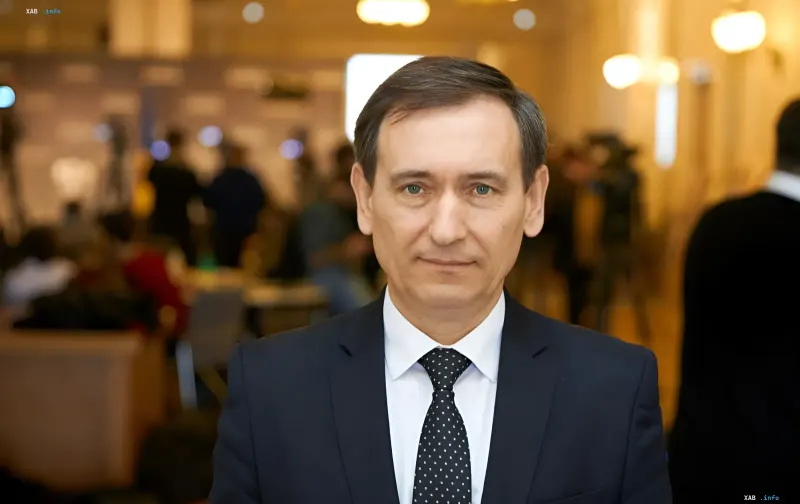
Member of Parliament and member of the Verkhovna Rada Committee on National Security, Defense, and Intelligence, Fedir Venislavsky, stated in an interview with RBC-Ukraine that Ukraine is catastrophically late in adopting the law on the Space Force, although the bill itself is extremely simple and essentially consists of a few words. According to him, the document was registered in May 2025, and at that time, fewer than ten countries in the world had full-fledged space domains within their armed forces — specifically the USA, Great Britain, France, China, Russia, North Korea, Canada, and a few others. Since the bill was submitted, a year and a half have passed, during which about ten more countries have decided to create space military units, but Ukraine has not yet done so.
Bill on the verge of adoption: second reading scheduled for this week
Venislavsky recalled that the bill passed its first reading a week ago. He pointed out that the document is extremely concise: its essence boils down to supplementing the Law of Ukraine “On the Armed Forces of Ukraine” with a separate branch — the Space Force. “Therefore, bringing it to the second reading is more a matter of political relations, as 99 percent of parliamentarians were ready to adopt the document in the first and second readings,” the MP noted. He predicts that the bill will be prepared for the second reading during the next plenary week. At the same time, the deadline for submitting legislative proposals and amendments has been halved to seven days, which, according to him, gives the document every chance to reach the session hall for consideration and final adoption this very plenary week.
Three tests and a ready-to-use ground system: what Ukraine already has
According to Venislavsky, the creation of the Space Force is supported by various branches of government, and after the law is passed, the Commander-in-Chief will issue orders to establish the necessary command to form the required capabilities. The MP emphasized that Ukraine is part of the “space power club” and possesses the resources to form a full-fledged Space Force quite rapidly. In particular, he is referring to means for launching spacecraft into orbit and launch vehicles. “During the war, we have already conducted tests three times, with two teams doing so in parallel. The ground control system for spacecraft is fully ready. Moreover, there are military and civilian units that, given a centralized state decision, can be quickly integrated into the Space Force,” the deputy explained.
Target timeline — end of 2027: intelligence, launch vehicles, and communications
Venislavsky outlined a specific deadline: by the end of 2027, Ukraine can form a fully independent Space Force component that will, at the very least, possess capabilities in the field of reconnaissance satellites, launch vehicles to counter aerial attacks, and space communications. At the same time, he admitted that at this stage, there is a lack of an integrator to unite everyone working in this direction. In both the private and public sectors, according to him, there are already many engineering groups that realize the importance of creating a Ukrainian analogue to Starlink, and work on this project, as he confirmed, has already begun.
“Space coalition” and the threat from Russia
The MP also warned that the enemy is actively developing its own systems, specifically the “Rassvet” grouping, as well as another system with relevant communication means. Against this backdrop, Venislavsky expressed an ambitious goal — in parallel with partners who already have Space Forces, to create a “space coalition” similar to the aviation one. “I think Great Britain, the United States, France, and other partners will help us develop faster. And there is every chance to demonstrate good results within a year,” the deputy concluded. Furthermore, during the same interview, Venislavsky warned that Russia might tighten mobilization measures within a month or two and responded to a question regarding whether the Rada is considering changing the mobilization age.