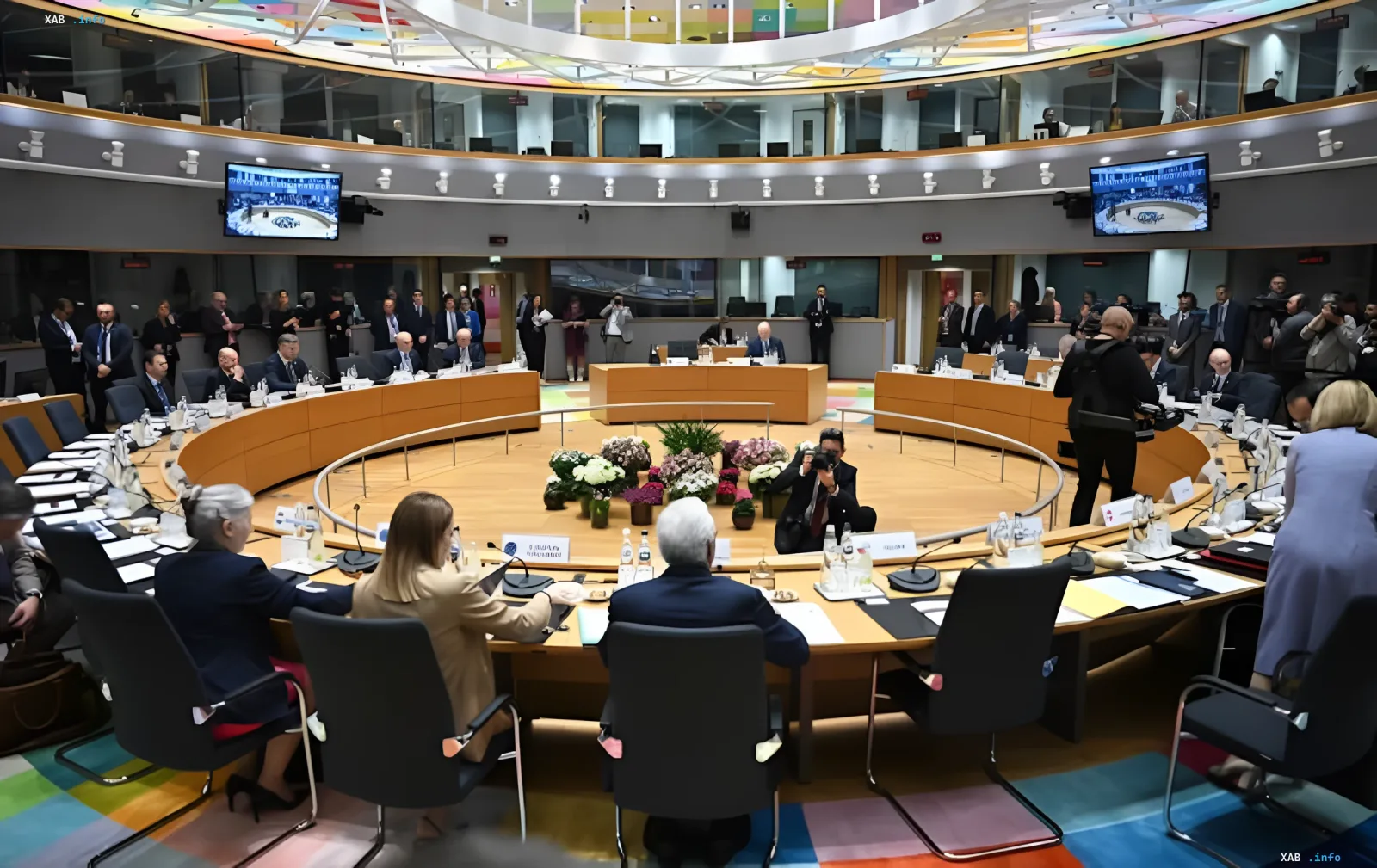
A discussion is gaining momentum within the European Union regarding a revision of the rules for countries planning to join the bloc in the future. Five member states — Germany, France, the Netherlands, Belgium, and Luxembourg — have prepared a document proposing temporary restrictions on the voting rights of new members on certain issues.
The "Safety Valve" Mechanism
The initiative, submitted for discussion within the union, aims to create additional guarantees of stability. The authors of the proposal believe that the EU needs new control mechanisms to avoid disruptions in decision-making following enlargement. This primarily concerns areas where unanimous consent from all bloc participants is traditionally required.
As Reuters notes, the relevance of this idea has grown against the backdrop of prolonged disputes surrounding Hungary. The government of Viktor Orbán has repeatedly been criticized for deviating from democratic principles and blocking important decisions, particularly those concerning aid to Ukraine. This experience has become a catalyst for the search for new governance tools.
Negotiations with Ukraine and Moldova
The discussion on membership rules is taking place at a critical moment when several candidate countries are striving to accelerate the integration process. Last week, Cyprus, holding the presidency of the Council of the EU, announced preparations to open the first cluster of negotiations with Ukraine and Moldova. This stage will focus on the rule of law and compliance with democratic standards.
Enlargement issues are being actively discussed at the level of country leaders. Estonian Prime Minister Kristen Michal, during a meeting with Ukrainian President Volodymyr Zelenskyy in Tallinn, emphasized the necessity of continuing the process of Kyiv's accession to the EU. According to her, all six accession clusters must be opened without delay, and NATO must remain on the negotiating table as a security guarantee.
Compromises and Alternatives
The European Union is considering various scenarios for integration. Earlier, The Guardian reported that the possibility of temporarily depriving new countries of the right of veto is being discussed to avoid blocking decisions. Furthermore, German Chancellor Friedrich Merz proposed the concept of "associated membership" for Ukraine as an intermediate stage.
However, Kyiv rejected the idea of an intermediate status. President Volodymyr Zelenskyy stated that Ukraine must receive full and equal membership, without compromises on status. Thus, the bloc faces a complex task: to find a balance between the need for enlargement and maintaining the efficiency of decision-making.


