
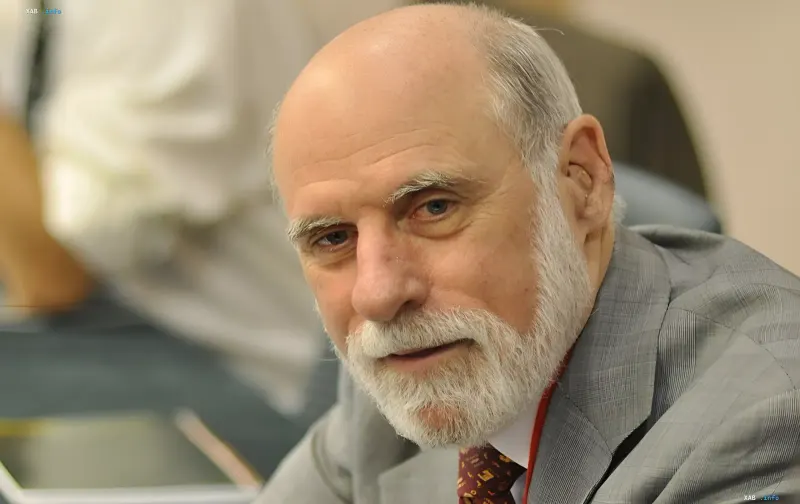
83-year-old Vint Cerf, one of the principal creators of the modern internet, has officially retired. Next week, he will step down from his position as Vice President and Chief Internet Evangelist at Google, a role he has held for over two decades. Cerf, along with Robert Kahn, is considered the chief architect of the modern digital space: it was they who developed the TCP/IP protocols in the 1970s, which became the foundation for data exchange between computer networks.
From TCP/IP to Google's Global Policy
For his fundamental contribution to science, the scientist has received the most prestigious global awards. Since 2005, Cerf has worked at Google, responsible for global network development policy, promoting open standards, and ensuring access to technology. Colleagues remember him not only as a brilliant researcher but also as the "most elegant computer specialist in history".
The Threat of Centralization and the Future of AI
In his farewell address, Vint Cerf focused on critical modern problems. He pointed out the dangerous centralization of large language models in the hands of a few tech giants, which contradicts the originally decentralized nature of the internet.
In the scientist's opinion, the next stage of IT evolution — the emergence of autonomous AI agents capable of coordinating actions without human intervention — will require a return to strict unified standards. Cerf categorically disagrees with the analysts' opinion that natural language, such as English, will be sufficient for communication between robots.
Why English is not suitable for robots
"I don't think English will be the best choice. It has flexibility, but it also has ambiguity. Absolute precision will be critically important for interaction between AI agents. A robot must be 100% sure that another robot clearly understood the terms they just agreed upon," Cerf stated.
The legendary developer compared attempts by artificial intelligence to communicate in human language to the children's game of "telephone," where each retelling distorts the meaning. "When you whispered something to the first participant, by the tenth message it had changed beyond recognition. Imagine a group of autonomous AI agents communicating with each other in natural language and making agreements — you know, that really sounds quite scary," he noted.
The Battle for Future Standards
Vint Cerf is convinced that companies that first develop and implement formal high-precision compatibility protocols for AI will gain colossal influence over the entire future global digital economy. This will repeat the success scenario of the first creators of internet infrastructure, who defined the rules of the game for decades to come.


