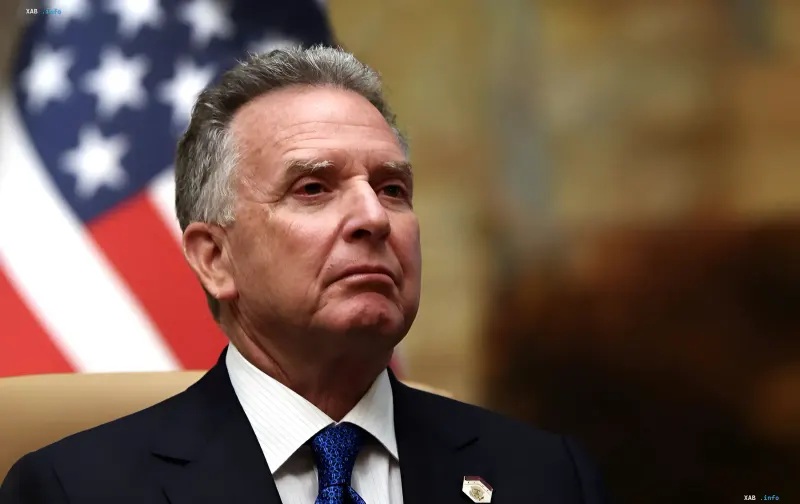
U.S. Presidential Special Envoy Steve Witkoff reported 'substantial progress' in the peace process aimed at ending the Russia-Ukraine war. He made the statement on the social network X following working trips by the U.S. delegation to Moscow and Kyiv, which, according to him, were carried out on the direct instruction of President Donald Trump. In the post, Witkoff emphasized that the key outcome was the agreement on a schedule for additional trilateral negotiations, although no specific dates or other details of the upcoming meetings were provided in the statement.
Chronology of the Visit: From the Kremlin to Kyiv
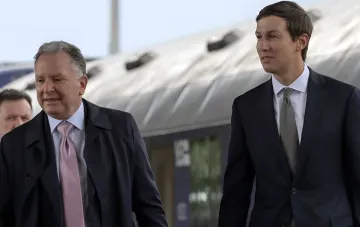
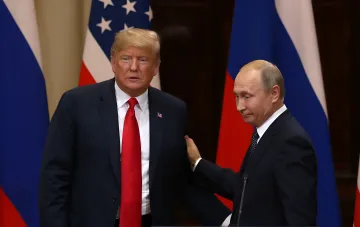
According to available data, the diplomatic marathon began on September 5, when U.S. special envoys Steve Witkoff and Jared Kushner held talks with Russian President Vladimir Putin at the Kremlin; the meeting lasted more than three hours. The very next day, on September 6, the U.S. delegation arrived in Kyiv, where it conducted several rounds of negotiations with Ukrainian President Volodymyr Zelenskyy. Thus, over two days the negotiators completed a full cycle of contacts with both sides of the conflict, which, by Washington's assessment, allowed them to 'feel out' a common framework for further dialogue.
The 'Trilateral' Negotiation Format
The phrasing 'trilateral negotiations' used by Witkoff deserves separate attention. It refers to a format in which, alongside Russia and Ukraine, the United States participates as a mediator and guarantor. It is precisely this mechanism, according to the American side, that is now being brought to the level of an agreed schedule. At the same time, the public statement does not disclose in what specific configuration and at what level the next rounds will be held, nor what specific topics will be on the agenda.
Contradictory Data
There is a noticeable gap between Washington's rhetoric and the actual content of the statement, which should be honestly noted. On the one hand, the American side speaks of 'substantial progress' and President Trump's 'application of all efforts' 'to stop the killings and achieve a long and lasting peace.' On the other hand, the text names neither specific dates for new meetings, nor the composition of delegations, nor a list of agreed points — meaning that the 'progress' is so far confirmed only at the level of intentions and an agreed schedule, not documentary agreements. Moreover, the assessment of 'substantial progress' is one-sided and comes exclusively from the American negotiator; no public mirror statements with a comparable degree of optimism from Moscow and Kyiv are provided in the materials. Thus, the degree of real convergence of the parties' positions remains a matter of interpretation, not a confirmed fact.
Reaction and Further Context
Against the backdrop of the statement, Witkoff cites the position of President Trump, who, according to him, is 'applying all efforts to stop the killings and achieve a long and lasting peace.' For observers, the key indicator will be whether the announced schedule of trilateral meetings can be transformed into specific dates and working documents. Until the parties publish details, the statement about 'substantial progress' should be regarded as a signal of the continuation of the diplomatic track, rather than as confirmation of an approach to a final settlement.