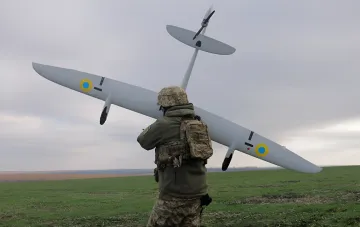
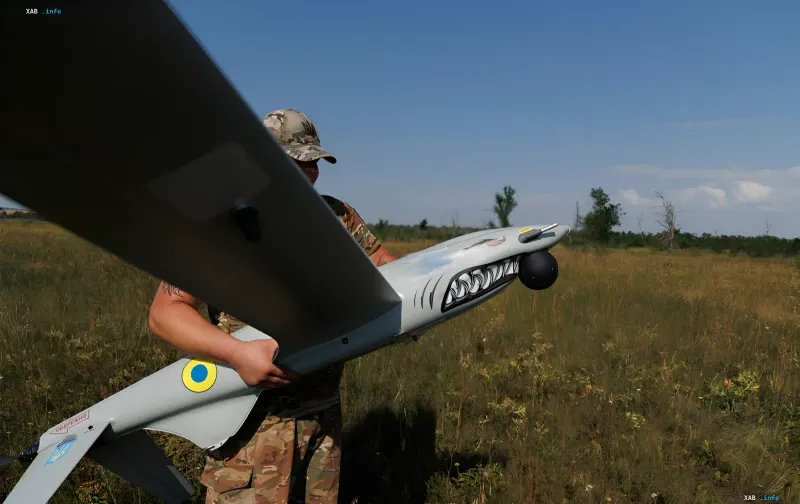
Amid the escalation of the drone war, which by August 2026 has become one of the key factors on the front, Ukrainian forces have focused their efforts on neutralizing the infrastructure for controlling enemy drones. The General Staff of the Armed Forces of Ukraine (AFU) confirmed the successful execution of a series of strikes on critical communication nodes of the enemy in the Kherson region.
Disruption of 'Geran' Communication Channels
On August 13 and during the night of August 14, units of the Armed Forces of Ukraine struck two ground-based repeaters for controlling strike drones of the 'Geran' (known in the West as Shahed) and 'Gerbera' types. The objects were located in the strategically important area of Zhelezny Port in the Kherson region. As noted by the General Staff, it is precisely these ground-based repeaters that ensure the transmission of control and communication signals between the operator and the unmanned aerial vehicle, allowing for an increase in flight range and improved stability in the use of strike systems.
The destruction of such nodes effectively 'blinds' enemy drones, depriving them of the ability to correct their trajectory in the final stages of flight or return in case of a malfunction. This significantly reduces the effectiveness of mass attacks, which Russia regularly carries out in 2026.
Elimination of Control Points
Parallel to the strike on the repeaters, Ukrainian defenders launched successful strikes on five enemy drone control points. These objects, located in various areas, serve as coordination centers from which operators launch and control drone flights. According to the General Staff, work on such targets is carried out sequentially, which allows for a systematic reduction in the capabilities of the Russian aggressor to use unmanned systems and conduct active combat operations.
Contradictory Data
While the Ukrainian side claims the destruction of control channels, Russian sources (specifically materials from July 2026) report their own successes in depriving the AFU of drone control in other regions, for example, in Dobropillya. This creates a picture of a 'mirror' war, where both sides regularly report on the neutralization of the opponent's infrastructure. The difference in versions lies in the geography and date: Kyiv focuses on events in Kherson (August 13-14), while Russian media often refer to earlier incidents or other regions (Kharkiv region, Dobropillya), making it difficult to create a single picture of strike effectiveness at a specific moment in time.
Attacks on Russian Rear Areas
During the night of August 14, activity was recorded not only on the front line but also in the deep rear of Russia. Drones attacked Moscow and the Leningrad region. Damage and fires were recorded in the Ust-Luga port area. According to local authorities, air defense forces destroyed more than 50 drones. There were also reports of an attack on the logistics assets of the Wildberries company in the Tver region, about 150 kilometers from Moscow. Debris from the unmanned aerial vehicle damaged the building's wall, causing brief smoke, but casualties were avoided.