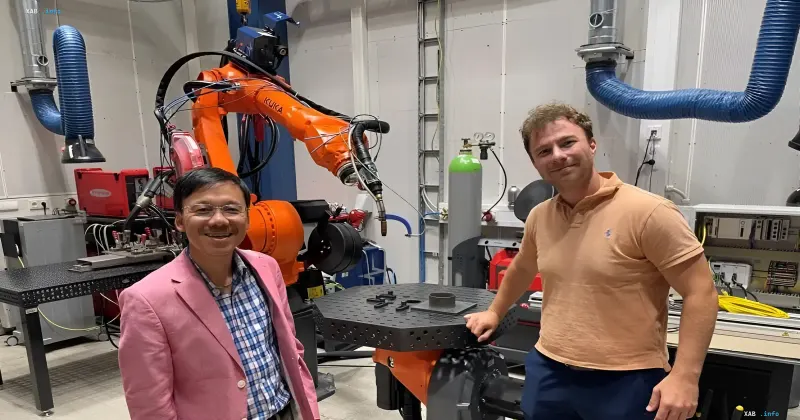
As part of Vietnam's efforts to develop science, technology, and innovation, Associate Professor Vu Viet Hung, Chairman of the Network of Vietnamese Scientists and Experts in Canada (CVSEA) and a faculty member in the Department of Mechanical and Aerospace Engineering at the Royal Military College of Canada, shared insights in an interview with VNA in Canada regarding what makes a country attractive to highly skilled professionals and what lessons Hanoi should draw from this experience. According to him, Vietnam needs to improve educational conditions and develop tech businesses by creating support programs that enable schools, scientists, and enterprises to build cooperation based on real needs and capabilities.
Funding is Just the First Step
Attracting scientists through financial backing, as assessed by Assoc. Prof. Vu Viet Hung, is a first and necessary step, but far from sufficient. For researchers to successfully develop and remain dedicated to their work in the long term, a research environment characterized by autonomy, transparency, and a direct link to the country's development needs is essential. Without these conditions, the expert argues, even the most generous financial packages cannot retain talent for long.
The Canadian Model: Investment Plus Creative Space
Drawing on his own years of experience in Canada, Assoc. Prof. Vu Viet Hung notes that combining investment resources and creative space is a decisive factor in attracting international intellectuals. Canada traditionally attracts highly skilled professionals, including scientists and technology experts, by offering not only acceptable living conditions but also opportunities to pursue groundbreaking research and develop professional skills. A notable feature of the Canadian system is expert recruitment programs in emerging fields that allocate significant financial resources to support research and provide opportunities for families to settle down. Alongside this support, scientists are guaranteed academic freedom, allowing them to actively develop ideas and drive innovation. An additional advantage of Canada, according to the professor, is its integration into the North American scientific and technological ecosystem: proximity and ties with the United States enable Canadian researchers to work in a thriving environment, especially in applied technologies.
Autonomy as a Key Retention Factor
As a concrete example of empowering scientists, Assoc. Prof. Vu Viet Hung cited the postdoctoral fellowship programs currently implemented in Canadian universities. Selected researchers enjoy a high degree of autonomy in their fields of expertise: they independently determine the direction of their research and demonstrate a long-term commitment to the institution. The expert also emphasized the leading professional role of scientists within the university environment, arguing that their utilization must be tied to their ability to set direction, attract resources, and sustain research activities. In this approach, funding and the research environment complement each other: funding facilitates the execution of work, while autonomy opens up space for capable specialists, allowing them to make specialized choices and develop their strengths.
Connecting Science with Business and the Role of the State
Another crucial factor mentioned by Assoc. Prof. Vu Viet Hung is the connection between universities, scientists, and businesses. This connection helps mobilize social resources, align research activities with practical needs, and create economic and social value. However, for such a model to function effectively, certain foundational conditions are required: the knowledge economy and technology ecosystem must develop at an appropriate level, while the legal framework, tech companies, investment capital, and intellectual property protection mechanisms must be ready to support research and application activities. The expert specifically noted the role of the state in fundamental science and in fields that have not yet demonstrated obvious applicability or economic return: these areas require state investment that tolerates risk in order to foster long-term value creation.
Recommendations for Vietnam: Invest at Singapore's Level
In connection with Vietnam's efforts to develop science, technology, and innovation, Assoc. Prof. Vu Viet Hung suggested boldly increasing investments, particularly in advanced and economically promising applied technologies. According to him, adequate financial resources are the initial attractive factor, and for specific projects, the investment level should be competitive compared to developed countries in the region, such as Singapore and Australia. Beyond investment, the expert believes it is necessary to improve conditions for education and scientific research domestically, as well as to encourage the formation of sustainable ties between the academic sector, research institutes, and technology businesses to create a closed loop from fundamental developments to market-demanded applied solutions.