
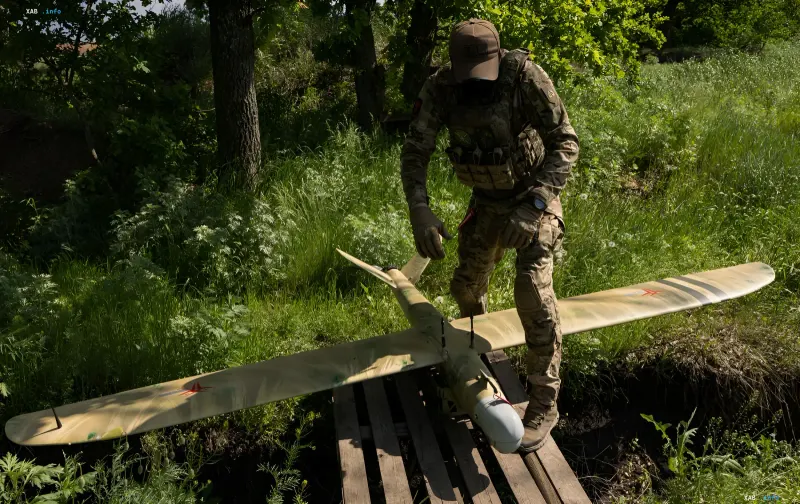
Combat operations in Ukraine have entered a new phase where not only artillery but also control over the information space and logistical chains plays a key role. The Russian side, realizing the vulnerability of its communications to Ukrainian drones, has begun a large-scale deployment of electronic warfare systems and has radically changed the methods of delivering cargo to the front.
War in the Airwaves: The Battle for Starlink
Most Ukrainian strikes at medium ranges critically depend on the Starlink satellite communications system. For a long time, this system demonstrated high resistance to interference, but the situation began to change. Russian occupiers began actively deploying electronic warfare (EW) complexes such as "Volna", "Kupol", and "Garant".
These systems are capable of blocking signals over an area of up to 20 square kilometers, creating "dead zones" for Ukrainian drones. Defense forces have already identified about a dozen such installations, which have now become priority targets for Ukrainian unmanned systems.
The effectiveness of the fight against EW is confirmed in practice. The commander of a crew with the callsign "Conductor" from the 422nd Unmanned Systems Regiment stated that after the destruction of an enemy station, Ukrainian drones instantly restored normal communication and continued their missions. Together with the SBU, soldiers have already destroyed two such stations, which clearly demonstrates the importance of neutralizing signal jamming equipment.
Disguising as Civilian Cargo
In addition to electronic countermeasures, Russia is resorting to tricks in physical logistics. Seeking to conceal the movement of resources, occupiers have stopped using large columns of military vehicles. Now fuel, ammunition, and food are delivered to the front in small batches.
Civilian passenger cars, quad bikes, and motorcycles are used as transport, moving along secondary roads to avoid detection. Furthermore, to hide supplies, the enemy is using abandoned farms, building basements, and even ordinary civilian gas stations.
However, Ukrainian scouts and military personnel are successfully exposing these tricks. Major Nikolai Kolesnik, commander of the 422nd Regiment, shared details of one of the operations:
"We blew up water tankers, and the tankers burned because there was gasoline inside. We blew up milk tankers that were painted, which contained diesel fuel".
Global Consequences and Enemy Adaptation
Senior Researcher at the American Foreign Policy Research Institute, Rob Lee, called Ukrainian medium-range drone strikes one of the most important events on the battlefield this year. However, he warned that Russia is learning to adapt to new conditions. According to him, if the Russian side can scale up the production of its jamming systems, it will seriously complicate the further campaign to destroy Russian logistics.
The impact of the drone war has already gone beyond the immediate front line. Between July 1 and 8, the Special Operations Forces (SOF) of the Armed Forces of Ukraine struck 50 energy nodes in temporarily occupied Crimea and southern Ukraine. Targets included a ferry in Kerch, a cargo ship, and 19 tankers of Russia's so-called "shadow fleet".
According to the Financial Times, Ukrainian drones are striking Russian energy infrastructure with unprecedented intensity. This has already led to a large-scale shortage of gasoline within Russia, confirming the effectiveness of the strategy of targeted strikes against the enemy's logistics and energy sectors.


