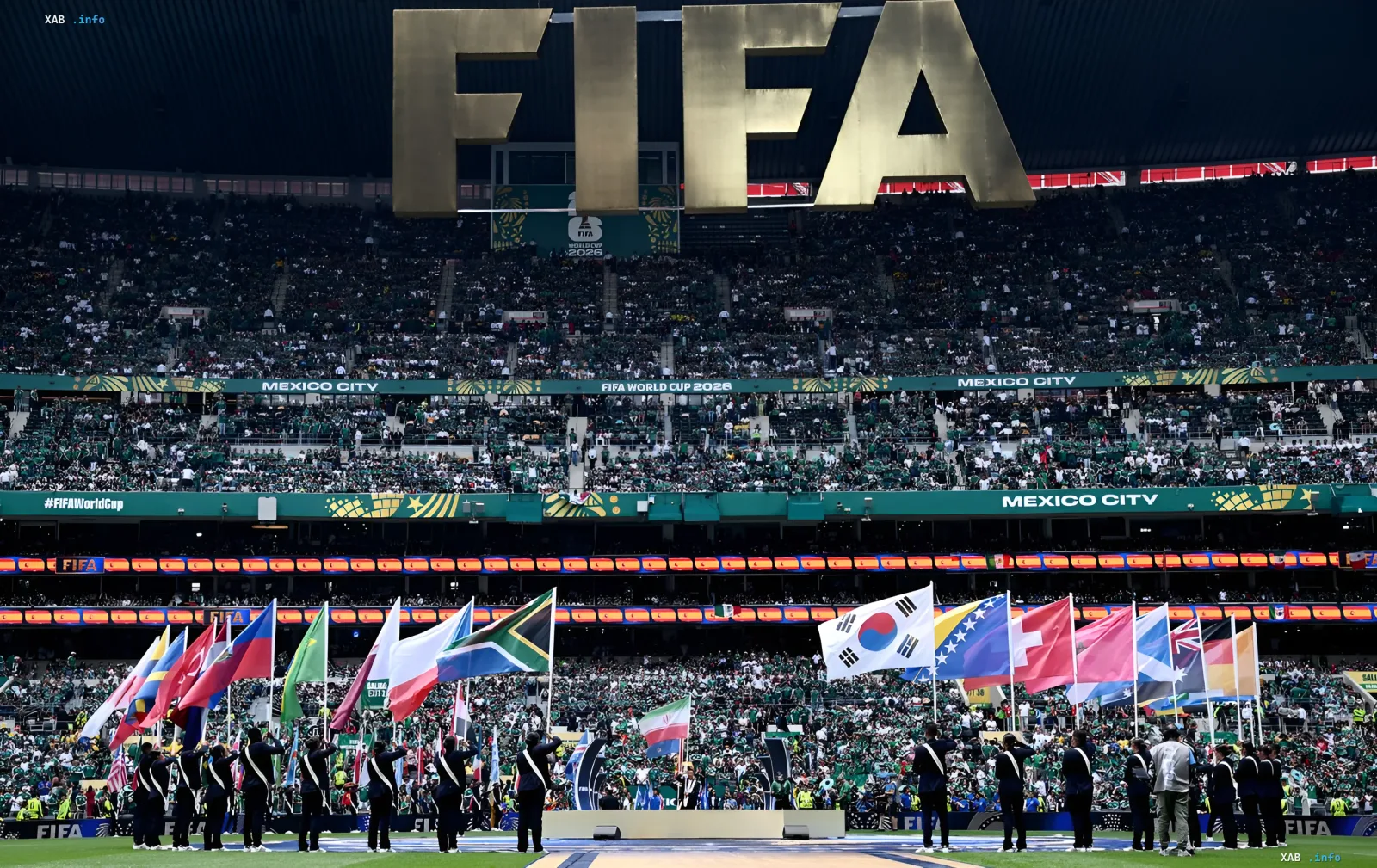
The group stage of the 2026 FIFA World Cup concluded in the early hours of June 28. The tournament, hosted across three nations — the USA, Mexico, and Canada — has reached the final stretch. Following 16 days of intense matches, 16 pairings for the Round of 32 have been established. Commentator Kirill Krutorogov, in his column for RBC-Ukraine, summarized the initial results and shared observations on how the face of world football is changing.
The Era of Records and Accelerated Time
The group stage of one of the most controversial tournaments in history passed in an instant. The expert notes that time will accelerate even further ahead: there will be fewer matches, but more emotions. For many fans who remember the 1998 World Cup, this is already the second consecutive tournament where the innovations of FIFA President Gianni Infantino raise questions. Following the winter World Cup in Qatar, the world received the first championship in history with a record number of participants.
The expansion of tournaments — from the Champions League to the World Cup — combined with an abundance of entertainment and social media blurs the exclusivity of events. Matches cease to be a unique phenomenon, giving way to streaming content on multiple platforms.
Match Quality and a "Conference League" on a Global Scale
The record number of teams led to some groups effectively lacking top-tier opponents. Group A (Mexico, South Korea, South Africa, Czechia), as well as Groups B and D, became examples of such imbalance. Many matches, such as Paraguay vs. Australia or Ecuador vs. Curaçao, resembled Conference League games and were interesting only to a narrow circle of fans from the respective countries.
However, intrigue was present in most encounters. Underdogs offered worthy resistance to favorites, taking points away from them. The expert links this to the tournament strategy of strong teams, which are conserving energy for the knockout stages.
Commercialization: From "Magic of the Moment" to Hydration Breaks
One of the main complaints about modern football is its excessive commercialization. A vivid example was the introduced "hydration break." Under the guise of caring for players' health and the need to catch one's breath, 3–4 minute pauses appear in every half. In reality, this time is used to broadcast advertising blocks.
Players, federations, and spectators are not thrilled by these innovations, but commercial interest, as they say, knows no mercy. In this situation, the chorus of the ABBA hit "Money, Money, Money" echoes, while FIFA President Gianni Infantino remains satisfied with the results.
Surprises and Disappointments of the Group Stage
Despite criticism of the format, the tournament delivered its surprises. The Mexican national team looked convincing in their group. The teams of the USA, Morocco, Japan, and Egypt also pleased, showing that they should not be underestimated. Their level has become a benchmark to strive for.
At the same time, favorites demonstrated vulnerability. Belgium, Germany, and Portugal showed that they may be uncompetitive over a long distance. Spain and England left the impression that they are capable of improving in the knockout stages, while France and Argentina confirmed their strength.
The main disappointment was the Brazilian national team. Despite not losing in the group, Carlo Ancelotti's team looked disorganized in defense. The experienced coach has not yet been able to instill the necessary discipline in the Brazilians, leaving them in "carnival football" mode, where attack is valued higher than defense.


