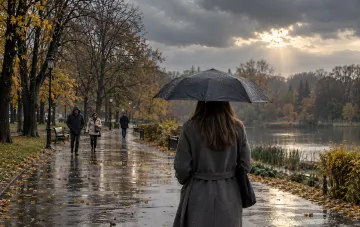
Autumn weather in Ukraine is demonstrating its changeable character: mid-October brings a significant cooling, ground frosts at night, and precipitation across most regions of the country. According to official data from the Ukrhydrometeorological Center, the current synoptic situation for October 15, 2026, is driven by the movement of atmospheric fronts that have brought rains of varying intensity and cool air masses from northern and northwestern Europe.
Precipitation Patterns and Temperature Regimes by Region
Throughout today, forecasters predict light rains, which will be moderate in the east and southeast of Ukraine, and occasionally turn into heavy showers during the day. At the same time, residents of most northern and central oblasts, as well as Odesa and Mykolaiv oblasts, can expect dry weather without significant precipitation. Daytime thermometer readings in most regions will range between a modest +10...+15 degrees Celsius, although the far east of the country will warm up to +19 degrees.
Night Frosts and Forecast for Kyiv and the Region
Particular attention from farmers and gardeners is drawn to the nighttime temperature drop. Ground frosts ranging from 0 to -3 degrees Celsius have been recorded on the soil surface in most northern and central oblasts. The capital region has also felt the breath of autumn: Kyiv and Kyiv Oblast are experiencing cloudy weather with sunny intervals and no precipitation today. Daytime temperatures in the capital will reach +11...+13 degrees, while the region will warm up to +10...+15 degrees, with night ground frosts down to -3 degrees also affecting suburban areas.
Forecasters' Insights and Mid-October Climatic Features
As Ukrhydrometeorological Center representative Natalia Pтуха noted earlier, such processes are typical for mid-October, when a gradual seasonal change occurs. Despite local ground frosts in the western and central oblasts, meteorologists see no prerequisites for dangerous elemental frosts at higher altitudes. In addition, experts draw attention to the existence of local "heat islands" in large cities and in the south of the country, where urban development and water bodies soften the overall cooling trend.