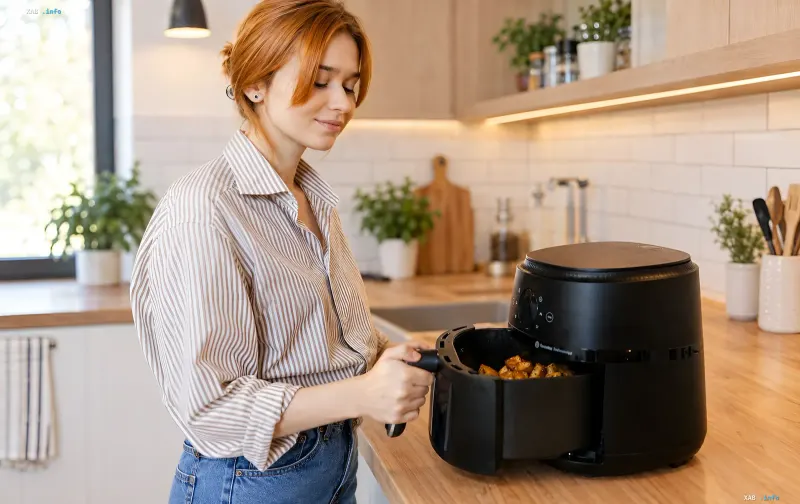
In recent years, the air fryer has transformed from a niche novelty into one of the most sought-after kitchen appliances. Its working principle — intense hot air circulation at temperatures that can exceed 200 degrees depending on the model and mode — allows dishes to cook significantly faster than in a traditional oven. However, this very feature makes the air fryer sensitive to the choice of cookware and items placed inside the basket. Incorrectly selected cookware can melt, crack, or disrupt air circulation, leading not only to ruined food but also to damage to the appliance itself. Citing manufacturer recommendations, particularly from Philips, Styler has compiled a list of materials and items to avoid when using an air fryer.
Plastic and Disposable Tableware: A Direct Path to Breakdown
Regular plastic food storage containers, disposable plates, and lids are categorically not designed for the high temperatures reached inside an air fryer. When heated, such items soften, lose their shape, or melt completely. Melted plastic contaminates the basket and internal surfaces of the appliance, and in some cases can jam the fan or damage the heating element. The Philips Airfryer manual explicitly states that non-heat-resistant plastic, cardboard, and regular paper must not be placed inside the appliance. A common mistake deserves special attention: confusing microwave-safe cookware with oven-safe cookware. The «microwave safe» label only confirms that an item is suitable for use in a microwave under certain conditions and does not guarantee that the container will withstand convection heating in an air fryer.
Paper and Cardboard: Fire Hazard
Paper towels, napkins, cardboard packaging, and regular sheets of paper should not be used in an air fryer. The main danger is that lightweight materials can be lifted by the stream of hot air and come into direct contact with the heating element, creating a real fire hazard. For this reason, food must not be reheated in cardboard boxes, even if they seem sturdy enough. It is also not recommended to place paper towels at the bottom of the basket as an absorbent layer for grease. To clean the appliance, you must use exclusively the methods provided in the manufacturer's instructions.
Parchment and Foil: Rules Depend on the Model
Baking parchment is not a strictly prohibited material; however, the permissibility of its use depends on the specific air fryer model. The official Philips website states that the company does not recommend using parchment and foil in several of its models. The reason is simple: these materials can block airflow, and unsecured paper can fly into the heating element and catch fire. If the manufacturer of a specific appliance permits the use of parchment, several rules must be followed: do not place paper in an empty basket during preheating; place food so that it securely holds the parchment down; do not exceed the maximum temperature specified on the parchment packaging; do not block the openings necessary for air circulation. If the manual prohibits the use of parchment, this prohibition must be followed even if special paper liners for air fryers are available.
Glass and Ceramics: Not All Cookware Can Withstand Heat
Not every glass plate or bowl is suitable for cooking in an air fryer. Ordinary tableware glass may not withstand high temperatures or sudden temperature changes, causing the dish to crack or shatter. Only those glass dishes whose manufacturer explicitly permits heating in an oven at the required temperature can be used. Philips' recommendations regarding baking dishes indicate that heat-resistant glass, ceramic, metal, and silicone molds may be suitable for compatible models. At the same time, before use, you must ensure that the dish matches the size of the basket and does not obstruct air circulation. In addition, do not place cold glassware into a hot air fryer unless the manufacturer allows for such a temperature shock.
Wooden Utensils and Size Matters
Wooden spoons, spatulas, cutting boards, and other kitchen utensils are not designed for prolonged heating inside an air fryer. Under the influence of high temperatures, wood dries out, darkens, or chars. Placing wooden items near the heating element is especially dangerous, so wooden spatulas or spoons should not be left in the basket during cooking. For stirring and turning food, it is better to use silicone or metal tools designed for high temperatures. Finally, it is important to consider not only the heat resistance of the cookware but also its dimensions. According to Philips' recommendations, sufficient free space must be left between the baking dish and the walls of the basket for air circulation. A dish that is too large will block the flow of hot air, causing food to cook unevenly and the appliance to work under increased strain.