By August 2026, the cryptocurrency market has evolved from an exotic niche to a global financial standard. However, despite mass adoption, the barrier to entry for beginners remained high: the need to navigate complex terminals, analyze charts, and constantly monitor volatility deterred many. Today, in the era of mature artificial intelligence, the situation has changed radically. AI has ceased to be just an analytics tool and has transformed into a full-fledged personal assistant capable of managing trading processes, analyzing risks, and interacting with the exchange using natural language.
From Data Analysis to Command Execution: The New Role of AI
Modern AI systems integrated into leading crypto exchanges represent a symbiosis of machine learning, neural networks, and natural language processing (NLP) technologies. Machine learning allows for finding hidden patterns in historical data and adapting to sharp volatility spikes characteristic of digital assets. Neural networks analyze complex interrelationships between trading volumes, prices, and on-chain metrics, while NLP evaluates the impact of the news background and regulator statements in real-time.
But the main difference between current solutions and previous years is the shift from passive observation to active execution. AI assistants, such as those implemented in the WhiteBIT AI Hub ecosystem, work 24/7 without days off. They do not just suggest what to buy but can perform routine actions: place orders, check balances, manage open positions, and even rebalance portfolios. It is important to note that this is not about autonomous investment decision-making, but about executing clear user commands, which keeps control of capital in human hands.
WhiteBIT AI Hub: Security and Integration
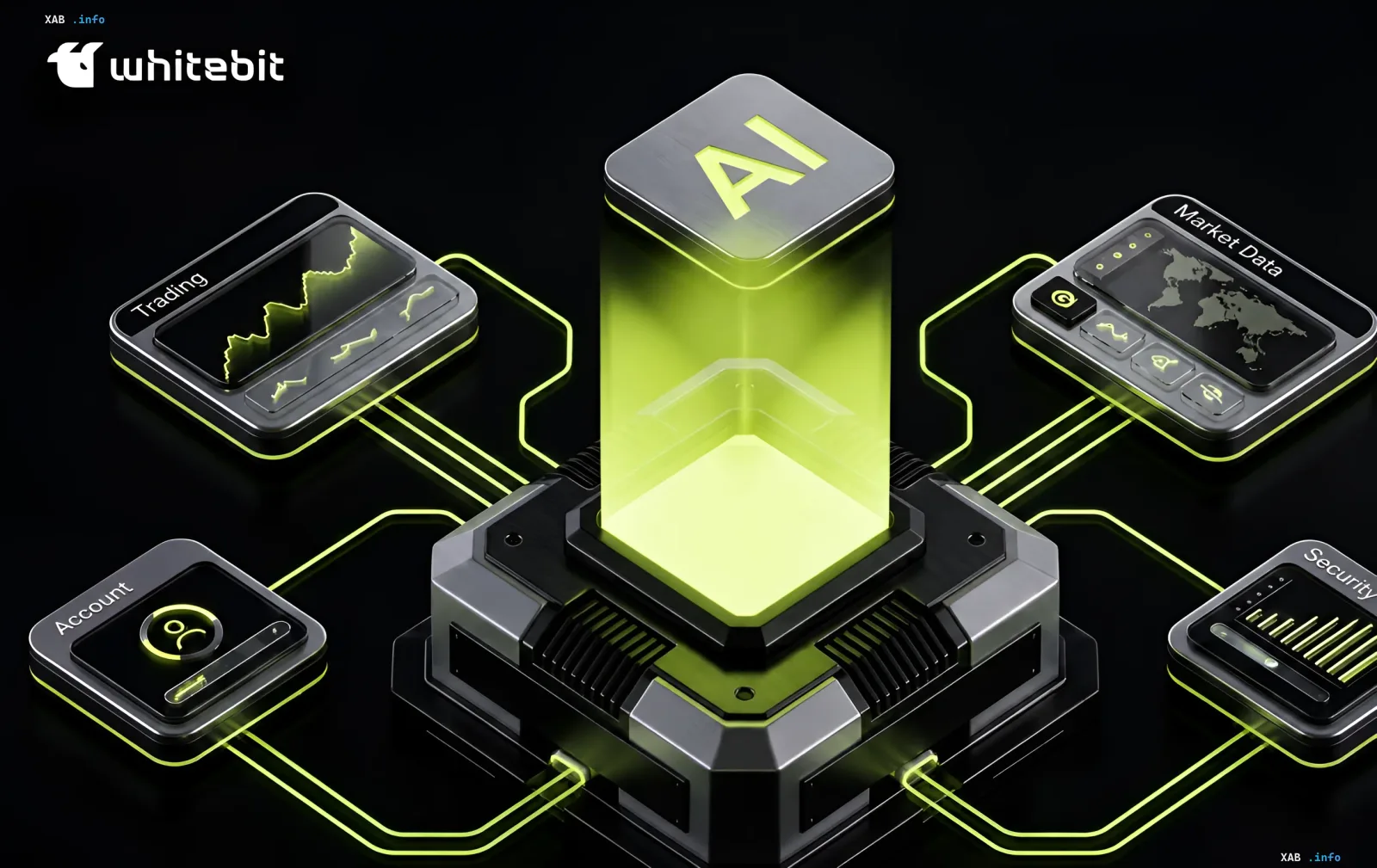
In 2026, WhiteBIT reached a new level of customer interaction by introducing the AI Hub — a platform allowing popular AI assistants (such as Claude, Cursor, Codex, and OpenClaw) to be connected directly to a trading account. This solution eliminates the need to constantly switch between charts, account pages, and documentation. The user formulates a task in plain language, and the AI assistant, within the scope of granted access rights, interacts with market data and trading infrastructure.
The key factor in the success of this system is the local-first security model. Unlike early versions of AI tools, credentials and API keys in WhiteBIT AI Hub remain exclusively on the user's device and are not transmitted to AI platform servers. This fundamentally reduces the risk of access compromise and allows the user to revoke permissions at any time without complex procedures. This approach makes using powerful neural networks safe even for beginner investors.
Fighting Cyber Threats and Lowering the Barrier to Entry
In addition to helping traders, AI is actively used to protect assets. Cyber threats in 2026 have become even more sophisticated, but artificial intelligence allows for identifying atypical account behavior and adapting security systems to new attack scenarios faster than traditional methods can. AI analyzes data streams in real-time, detecting anomalies that may indicate a hack or fraudulent activity.
The integration of AI into the crypto industry is today considered one of the most promising directions, capable of significantly lowering the barrier to entry for new users. By delegating routine processes to artificial intelligence, investors can focus on strategic decisions and risk management without spending time on technical details. This opens an era where capital management becomes accessible to anyone who owns a smartphone and knows how to formulate their goals.