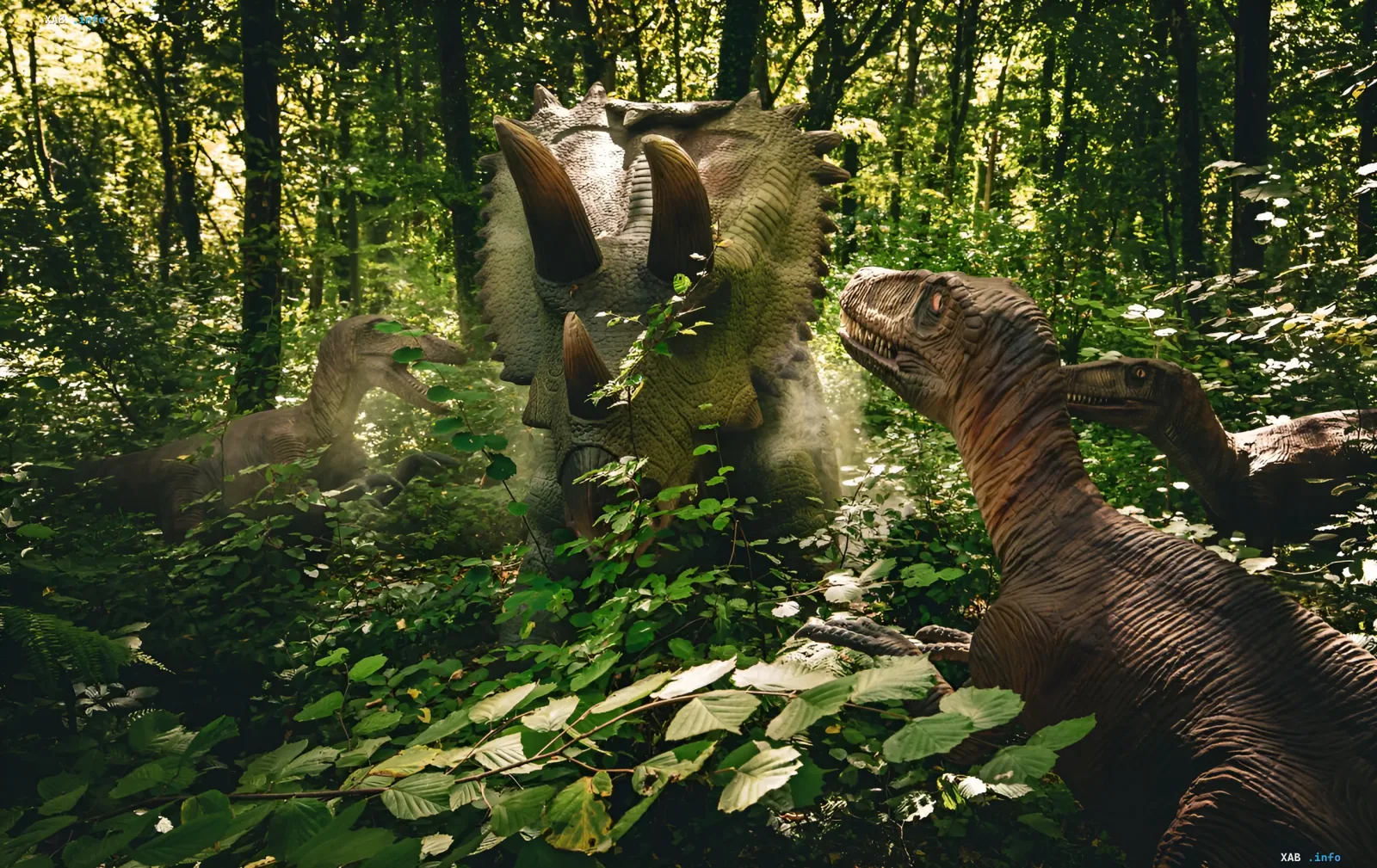
Modern technology has advanced significantly: scientists can already clone animals and edit genomes. However, despite the successes of biotechnology, the scenario from the cult franchise "Jurassic Park" remains pure fiction. Bringing dinosaurs back in their original form is impossible due to fundamental laws of physics and biology.
The fatal vulnerability of DNA
In Hollywood movies, scientists extract genetic material from mosquitoes trapped in ancient amber and reconstruct the genome, filling in gaps with frog DNA. In reality, this approach does not work. DNA molecules are unstable and degrade over time. Research shows that the half-life of DNA is approximately 521 years. This means that every half-millennium, half of the bonds in the molecule break.
The critical threshold for genome recovery is reached after 6.8 million years — by this time, even the slightest traces of the genetic code are gone. Dinosaurs, however, went extinct about 66 million years ago, following an asteroid impact. Finding a complete genome or even fragments suitable for cloning is completely impossible.
To date, the oldest DNA fragments successfully extracted by scientists belong to mammoths and prehistoric horses. Their age does not exceed one million years, which is 60 times less than the time elapsed since the extinction of the Mesozoic giants.
The "Chickenosaurus" project: reverse engineering
Since cloning a dinosaur in its primary form is impossible, a number of scientists are looking for workarounds. One of the most ambitious projects is reverse engineering based on birds. Birds are direct descendants of prehistoric theropods, and "dormant" ancient genes have been preserved in their genome.
Outstanding paleontologist Jack Horner leads the Chickenosaurus project, the goal of which is to activate these ancient genes in chickens. During experiments on embryos, researchers have already managed to change certain traits, bringing them closer to the structure of their ancestors: rudimentary teeth, tails, and typical claws have appeared.
Using genome editing tools such as CRISPR-Cas9, scientists can create hybrid organisms with dinosaur traits. However, it is important to understand: this will only be a modern imitation, not a genuine resurrection of an extinct species.
Dinosaurs among us
The main scientific conclusion reached by researchers is that dinosaurs actually never completely disappeared. Thanks to paleontological finds and genetic studies, it has been proven that modern birds are a direct evolutionary branch of theropods.
"Hollow bones, feathers, and features of posture and behavior of any sparrow, pigeon, or ostrich originate from the Mesozoic era. Therefore, the ancient giants continue to live among us — just in the form of birds," the scientists summarized.


